

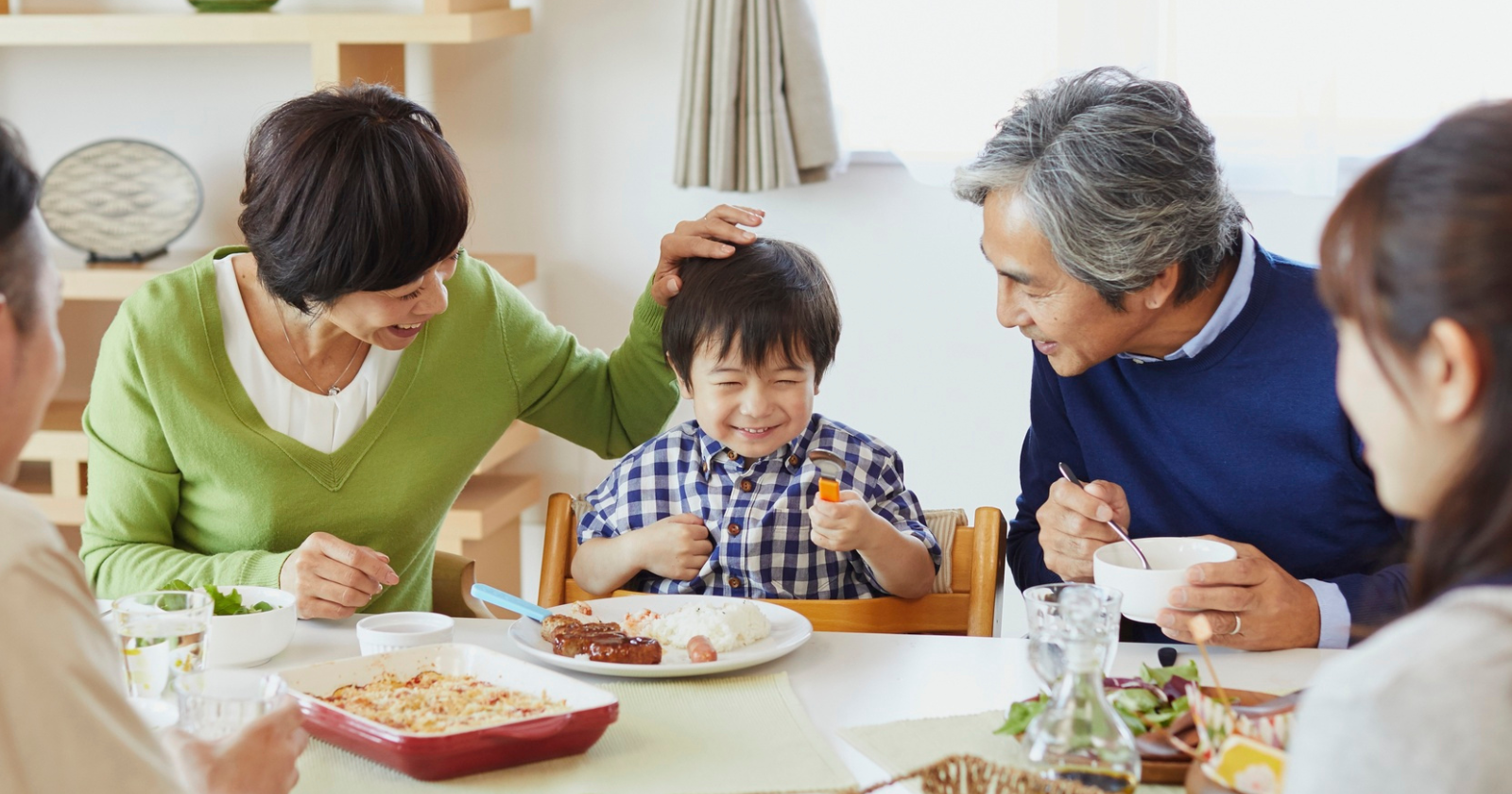
Picture this: My daughter is sprawled on the living room floor, surrounded by construction paper and glitter, making place cards for our upcoming holiday dinner.
She pauses, looks up at me with those big eyes and asks, “Mama, do you think Grandma will want to sit next to me?”
I freeze. Because the truth is, I’m not sure. And that moment hits me like a ton of bricks.
Growing up, family dinners in my house were predictable. We ate together every single night, which sounds wonderful on paper. But our conversations stayed surface-level, floating between “pass the salt” and “how was school?”
My grandparents would visit, take their designated spots at the table, and we kids would count the minutes until we could be excused.
Now, watching my own kids navigate relationships with their grandparents, I’ve noticed something fascinating.
The grandparents whose grandkids genuinely light up around them, who get tackled with hugs at the door, who have little ones fighting over who gets to sit next to them at dinner?
They all share certain qualities that have nothing to do with how many presents they bring or how often they visit.
1) They remember what it feels like to be small
Last week at our monthly craft playdate, one grandmother joined us. While the other adults chatted over coffee, she got down on her hands and knees with the kids, helping them build a blanket fort.
When my two-year-old accidentally knocked it down, instead of sighing or immediately rebuilding it “the right way,” she laughed and said, “Wow, what a big crash! Should we make an even bigger one?”
The kids adored her.
Related Stories from The Artful Parent
- Most people assume the grandmother who keeps calling even when nobody picks up is lonely — they don’t realize she’s doing the only thing she knows how to do with love that no longer has anywhere to land
- The hardest lesson of parenthood doesn’t arrive when your children are small, it arrives when they’re grown and you hear yourself described through their memories — because the parent you thought you were and the parent they experienced are almost never the same person, and sitting with that gap is the real work of later life
- Cognitive scientists say the single best predictor of a child’s long-term creativity isn’t talent or encouragement — it’s whether they regularly watched an adult struggle with something difficult and keep going anyway
Too many grandparents forget what childhood actually feels like. They remember the milestones and the photos, but not the feeling of having your tower knocked down, or being told you colored outside the lines, or having adults talk over your head like you’re not there.
The magical grandparents? They remember. They get on the floor. They make messes. They understand that to a five-year-old, finding a really good stick is headline news.
2) They show up without an agenda
Have you ever noticed how some grandparents arrive with a mental checklist? They need photos for Facebook. They want to hear about grades.
They have opinions about screen time, bedtime, vegetable consumption, and exactly how you’re raising your kids.
The grandparents who get the dinner invitations and genuine excitement? They show up just to be there, present without being prescriptive.
My friend’s mother visits weekly, and she simply asks, “What are we doing today?” Sometimes they bake. Sometimes they watch cartoons.
Sometimes they sit in the backyard and watch clouds. There’s no curriculum. No agenda. Just presence.
3) They share real stories, not just success highlights
Kids can smell fake from a mile away.
The grandparents who only share stories about their achievements, their perfect childhoods, their flawless parenting? Kids tune out.
But the ones who share real stories, including the messy parts? Pure gold.
One grandfather I know tells his grandkids about the time he got lost at the county fair and cried until his mom found him.
Another shares how she failed her driving test three times. These stories do something magical: they make grandparents human.
Suddenly, Grandpa isn’t just the guy with the rules and the boring stories about walking uphill both ways. He’s someone who understands what it’s like to feel scared, embarrassed, excited, or proud.
4) They respect the child’s world as legitimate
Your grandchild’s favorite YouTube channel might seem ridiculous. Their obsession with dinosaurs or unicorns or that one specific shade of purple might test your patience.
But here’s the thing: to them, these interests are as real and important as your mortgage or your book club.
The grandparents who get it? They learn the dinosaur names. They ask genuine questions about the YouTube characters. They remember that purple is THE color, not just any purple, but that specific purple.
They treat their grandchild’s world as legitimate because they understand that respect is something you give to build connection.
5) They apologize when they mess up
This might be the most powerful one. The grandparents who maintain strong relationships with their grandchildren as they grow? They apologize.
When they lose their temper, they own it; when they break a promise, they acknowledge it.
“I’m sorry I snapped at you. I was feeling frustrated, but that wasn’t fair to you.”
“I forgot about our plan to read together. That must have been disappointing. Can we do it now?”
These simple acknowledgments teach children that everyone makes mistakes, that relationships can weather imperfection, and that they’re worth an apology.
6) They create rituals that belong just to them
The best grandparent relationships have their own special traditions. Not big, expensive productions, but small, consistent rituals.
Maybe it’s pancakes shaped like letters every Sunday. Perhaps it’s a secret handshake. Could be a bedtime story told the exact same way every single time.
My kids have a neighbor who isn’t their biological grandmother, but might as well be. Every time they visit, she lets them pick one item from her jewelry box to wear for the visit. It’s such a simple thing, but they talk about it for days before and after.
These rituals create a sense of specialness, of belonging, of having something that’s just theirs.
7) They let the relationship evolve
What works with a two-year-old won’t work with a twelve-year-old. The grandparents who stay close to their grandchildren understand this.
They don’t try to freeze the relationship in the “good old days” when the kids were little and cuddly.
This means learning new games, understanding new interests, and accepting that the child who once thought you hung the moon might now think you’re embarrassing. And that’s okay.
The grandparents who navigate these transitions with grace, who adjust without taking it personally, who find new ways to connect? They’re the ones who get the voluntary hugs from teenagers.
Finding your way forward
If you’re reading this and feeling a pang of recognition, maybe even some regret, here’s the good news: it’s never too late to change the dynamic.
Kids are remarkably forgiving and incredibly responsive to genuine effort.
Start small, get on the floor, and ask a real question and really listen to the answer.
Admit you don’t know something, share a story about a time you felt scared or made a mistake, and let them teach you something.
The truth is, being the grandparent whose presence is genuinely desired isn’t about being perfect. It’s about being real, being present, and being willing to enter their world rather than always expecting them to enter yours.
Those place cards my daughter was making? Her grandmother did end up sitting next to her at dinner. And instead of asking about school or commenting on table manners, Grandma asked about the fairy house they’d discovered in the garden and whether the fairies might like some dinner too.
They spent the entire meal planning an elaborate fairy feast, complete with acorn cups and flower petal plates.
That’s the magic. That’s what most grandparents never figure out. It’s not about being the authority or the elder or the wisdom-keeper. It’s about being the person who sees them, really sees them, and thinks their world is worth exploring.
When you get that right, you won’t have to ask to sit next to them at dinner. They’ll save your seat before you even arrive.
