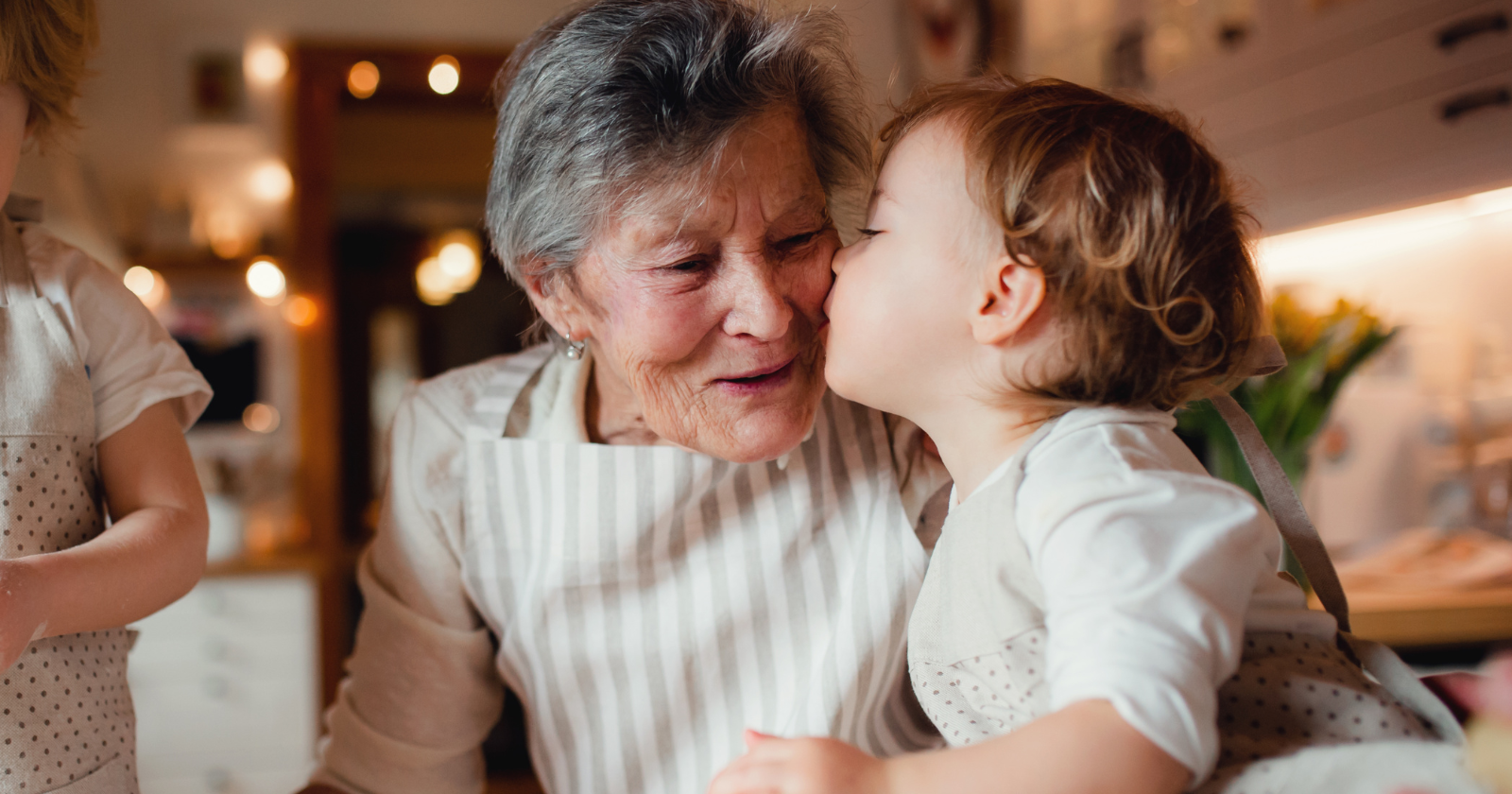
You know that feeling when you’re at a family gathering and someone casually mentions how wonderful it is that “both grandmas love the kids equally”?
Meanwhile, you’re biting your tongue because you know one grandmother has been there for every scraped knee, every school play, every Tuesday afternoon pickup—while the other swoops in for birthdays and holidays like some kind of visiting celebrity.
I’ve been thinking about this a lot lately, especially after watching my own mother navigate this exact situation with my kids. She’s the one who knows which foods they won’t eat, which stuffed animal helps them sleep, which friend hurt their feelings last week.
But when the other grandmother visits from out of state, my five-year-old runs to her with the same enthusiasm, the same tight squeeze, the same “I missed you so much!”
And I watch my mom’s face do that thing—you know the one—where she smiles genuinely because she loves seeing her grandchild happy, but there’s something else there too. A flicker of something unspoken.
The invisible labor of everyday grandparenting
Let’s talk about what everyday grandparenting actually looks like. It’s not glamorous. It’s shuttling kids to swimming lessons in rush hour traffic. It’s having goldfish crackers permanently embedded in the car seats. It’s knowing that your Tuesday plans will always revolve around school pickup.
My mom keeps a spare booster seat in her car, extra clothes in her hall closet, and the specific brand of apple juice my two-year-old insists on. She’s memorized the preschool pickup protocol, befriended the crossing guard, and knows which playground has the cleanest bathrooms.
When my daughter had her library reading last month, guess who was there in the front row? Not the grandmother who posts Facebook photos with captions about being “blessed to be a grandma.” The one who was there doesn’t even have Facebook. She’s too busy actually grandmothering.
Why we don’t talk about the imbalance
Here’s the thing nobody wants to admit: pointing out this imbalance makes you sound petty. Jealous. Keeping score. We’re supposed to be grateful for any help we get, right? We’re supposed to celebrate all expressions of love equally.
But feelings don’t work that way. When you’re the one buying school supplies every August, attending every parent-teacher conference because mom has to work, and keeping track of which kid needs new shoes, it stings to watch someone else get equal credit for showing up twice a year with expensive toys.
I’ve watched my mother navigate this with such grace, but I know it hurts. She mentioned once, while helping me fold tiny clothes during our babysitting co-op afternoon, that she sometimes wonders if she’s doing too much. “Maybe if I did less,” she said, “the special moments would feel more special.”
That broke my heart a little.
The emotional complexity of gratitude and resentment
Can we be honest about how complicated this makes us feel as parents too? On one hand, I’m incredibly grateful for my mother’s constant presence. She makes our chaotic life possible. When our emergency fund had to go toward a burst pipe last winter, she quietly covered school pictures without being asked.
On the other hand, I feel guilty that she carries so much of the load. I see her exhaustion after a full day of grandparenting. I notice when she has to reschedule her own appointments around our needs.
And then there’s this weird protective anger I feel on her behalf. When the other grandmother breezes in with gifts and grand gestures, taking photos for social media, planning elaborate outings that disrupt our routine—I want to shout about who really keeps this ship afloat.
But I don’t. Because that would make me the bad guy, wouldn’t it?
Teaching kids about different kinds of love
Recently, my daughter asked why one grandma lives close and one lives far away. Simple question, complicated feelings. How do you explain that love shows up differently without creating a hierarchy? How do you honor the everyday grandmother without diminishing the long-distance one?
What I’ve started doing is naming the specific ways people show love. “Grandma shows her love by reading stories at the library with you every month.” “Your other grandma shows her love by calling you on video chat.” Both true, both valid, but definitely not equal in terms of investment and sacrifice.
During our monthly craft playdate rotation, I overheard another mom dealing with this exact issue. Her solution? She started calling them “everyday heroes” and “special visit friends.” It helps kids understand that some people are part of the daily fabric of life while others are occasional bright spots.
Finding peace with the unfairness
You know what? Maybe it’s okay that it’s unfair. Maybe it’s okay to acknowledge that the grandmother who shows up every week IS doing more. That her love is expressed through consistency and reliability rather than grand gestures.
My mother told me something profound last week while we were organizing the dress-up clothes for our playdate group. She said she doesn’t do it for the recognition. She does it because being woven into her grandchildren’s daily lives is its own reward. She knows their current fears, their inside jokes, their evolving interests. She’s not just a grandmother; she’s a witness to their becoming.
The other grandmother? She gets highlights and milestones. Beautiful, Instagram-worthy moments. But she misses the quiet magic of everyday life—the made-up songs, the questions about bugs, the way they smell after playing outside all afternoon.
Closing thoughts
Maybe the real issue isn’t the equal hug at all. Maybe it’s that we’ve been conditioned to pretend that all contributions are equal when they’re plainly not. Maybe it’s okay to acknowledge that the grandmother who shows up every single week is a damn superhero, even if she never gets a cape.
To all the everyday grandmothers out there—the ones with car seats permanently installed, the ones who know which vegetable might actually get eaten if served with ranch, the ones who’ve memorized bedtime routines that aren’t their own—we see you.
Your grandchildren might not understand the magnitude of your sacrifice yet. They might run with equal enthusiasm to the grandmother who brings presents twice a year.
But one day, when they’re adults trying to piece together their childhood memories, guess whose presence will be woven through every single chapter? The one who was there for the ordinary Tuesdays. The one who showed them that love is spelled T-I-M-E.