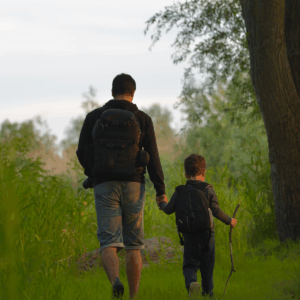

The house went quiet on a Tuesday afternoon in September. Not the temporary quiet when everyone’s out for the day, but that deep, permanent silence that settles in when your youngest loads the last box into their car and drives away to start their own life.
I stood in my son’s empty bedroom for what felt like hours, staring at the indent his bed frame had left in the carpet.
And then it hit me—a loneliness so profound it actually knocked the wind out of me. I’m sixty-something years old, supposedly mature and wise, yet there I was, crying like a baby in an empty room.
Here’s what nobody tells you: that wave of loneliness isn’t just sadness. It’s grief mixed with relief mixed with guilt about feeling relieved mixed with panic about what comes next. It’s messy and complicated and absolutely normal, even though almost nobody admits it.
The silence becomes deafening
Remember when you used to dream about peace and quiet? When you’d lock yourself in the bathroom just for five minutes of solitude? Well, be careful what you wish for.
After my youngest son moved out, the quiet felt wrong. No music blaring from upstairs. No late-night refrigerator raids. No arguments about whose turn it was to take out the trash. Just me, my wife, and the ticking of the kitchen clock we’d never noticed before.
The strangest part? I found myself leaving the TV on just for background noise. I’d never been a TV person, but suddenly the voices of news anchors became my dinner companions. How’s that for irony—spending decades telling the kids to turn down the volume, only to crank it up myself when they’re gone?
Your identity goes through a blender
For nearly three decades, I was “Dad” first, everything else second. Soccer practice chauffeur, homework helper, midnight fever checker, college application proofreader. These weren’t just tasks; they were who I was.
When that role suddenly shrinks from full-time to occasional, you’re left wondering who you actually are. I went through something similar when I retired from my office job—that feeling of falling off a cliff when your identity has been wrapped up in being useful and suddenly no one needs you for anything.
But this was different. Retirement was a choice. This? This was biology and time marching forward whether I was ready or not.
The question that kept rattling around my head was: “Now what?” Not in terms of activities or hobbies, but in terms of purpose. If I’m not actively parenting, what’s my role? Turns out, figuring that out takes time, and that’s okay.
Related Stories from The Artful Parent
- Psychology says people who were raised by emotionally distant parents don’t struggle with love — they struggle with believing they’re worth staying for, and these 9 behavioral patterns reveal how deeply that belief runs
- 7 signs an adult child is starting to pull away emotionally — and the one that always comes first before any of the others
- Children who were raised by grandparents instead of parents often display these 9 traits as adults — and psychology says the impact shows up in ways most people would never connect to their childhood
You grieve for a life that’s over
Nobody died, yet I was grieving. Does that sound dramatic? Maybe, but it’s true.
I grieved for Saturday morning pancakes that nobody was around to eat. For family movie nights that would never happen quite the same way again. For the chaos and noise and constant motion that had defined my life for so long.
There’s this social expectation that we should be thrilled when our kids launch successfully. And we are! But we’re also allowed to be sad about it. Those two feelings can coexist, even though people rarely talk about it.
I remember mentioning this to a friend over coffee, and he looked at me like I’d grown a second head. “But you’re free now!” he said. Sure, free to do what exactly? Rattle around in a house full of memories?
Your marriage needs a reboot
My wife and I looked at each other across the dinner table about a week after our youngest left and realized we hadn’t had a conversation that wasn’t about the kids in years. Who were we as a couple anymore?
We’d been co-parents for so long that we’d forgotten how to just be partners. Those first few months were awkward, like a really long first date with someone you’d been married to for thirty years. We had to relearn each other’s rhythms without the buffer of children between us.
- Psychology says the boomer men now entering their late 60s and 70s are carrying a specific kind of unhappiness that has almost no cultural language—they were raised to provide, protect and endure, and most of them did all three brilliantly, and the cruelest reward for a lifetime of quiet service is silence from the very people it was all for - Global English Editing
- I’m 55 and I recently calculated that I spent roughly eleven thousand hours commuting to a job I tolerated so I could fund a life I was too tired to enjoy, and that number has been sitting in my chest ever since - Global English Editing
- I spent thirty-two years dreaming about retirement the way some people dream about Paris – and then I got there and discovered that the brochure had lied about almost everything, especially the part where you finally get to be the person you always wanted to be - Global English Editing
Some couples don’t make it through this transition, and I understand why. It’s scary to realize the person across from you is both intimately familiar and somehow a stranger. But if you push through the awkwardness, you might find something beautiful on the other side.
The guilt hits from unexpected angles
As I’ve covered in previous posts, guilt and parenting go hand in hand. But empty nest guilt has its own special flavor.
I felt guilty for feeling sad when my kids were doing exactly what they were supposed to do—building independent lives.
Guilty for sometimes enjoying the peace and quiet. Guilty for not enjoying it more. Guilty for all the times I’d been too busy with work when they were teenagers, especially during those crucial years when work got more demanding and I pulled back from being a hands-on dad.
The regret about timing still stings. You can’t get those years back, and when the house is empty, you have plenty of time to think about what you could have done differently.
Connection takes on new forms
Here’s something I discovered that surprised me: my relationship with my sons actually improved after they moved out. Once I stopped trying to parent them and started just relating to them as adults, our conversations got richer.
I learned to ask questions instead of offering opinions. Revolutionary concept, right? Instead of launching into advice mode, I’d ask, “How are you handling that?” or “What do you think you’ll do?” Turns out, they talk to me more now that I’ve learned to listen rather than lecture.
The Sunday phone calls, the random text messages, the occasional dinner visits—they mean more now because they’re chosen, not obligated. My sons want to spend time with me, not because they have to, but because they want to. That realization helps fill some of the lonely spaces.
Closing thoughts
If you’re reading this with tears in your eyes because your last kid just left, or is about to leave, know this: the wave of loneliness is real, it’s normal, and it will ease with time. Not disappear, but ease.
You’re not weak for feeling it. You’re not ungrateful for your children’s success. You’re just human, adjusting to one of life’s biggest transitions.
So here’s my question for you: What if we started being honest about this loneliness instead of hiding it behind fake smiles and “We’re so proud!” proclamations? What if we admitted that being proud and being heartbroken can exist in the same moment?
Maybe then, the next parent standing in an empty bedroom, staring at carpet indents, would know they’re not alone in feeling utterly, completely alone.