
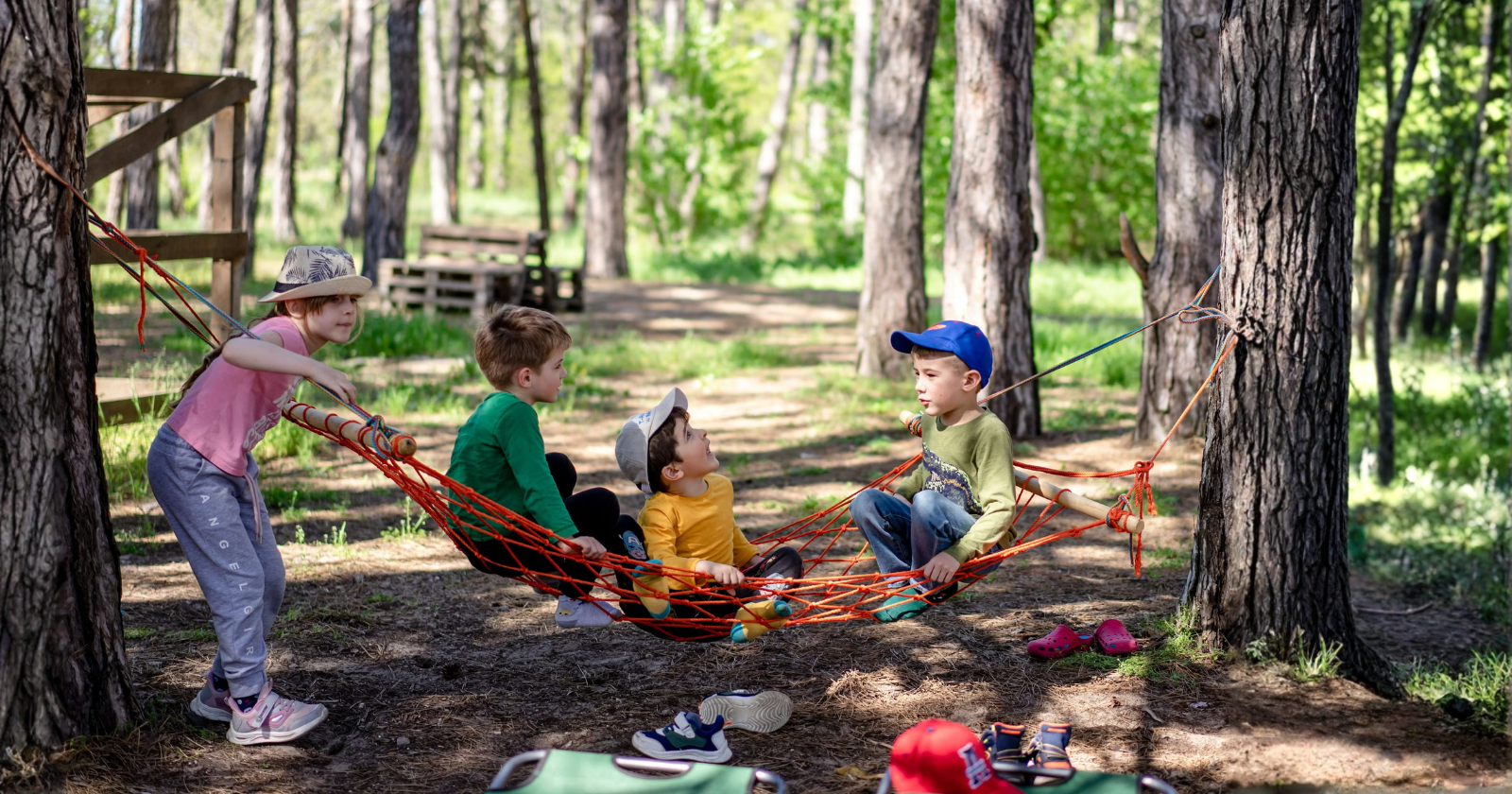
Talk to anyone who grew up in the 1970s and the stories sound vaguely the same. Kids vanishing after breakfast. Cars without seatbelts. Parents at home who had no real idea where their children were and didn’t seem too bothered about it.
We’ve heard these stories around enough dinner tables to notice something. The people telling them rarely sound traumatized. Mostly they sound nostalgic, sometimes a little wistful.
What’s interesting is the gap. The things that felt ordinary fifty years ago would make many modern parents deeply uncomfortable. We’re not arguing the 70s was better. We are saying it’s worth looking honestly at what changed.
The Artful Parent
Family-life ideas and sharp reads, in your inbox.
Here are eight things kids did then that would make most parents today flinch.
1. They left the house in the morning and came back for dinner
There was a kind of unstructured day that doesn’t really exist anymore. A child would eat breakfast, get on a bike, and not be seen again until the light started fading. No phone. No way to check in. No one expected check-ins.
Parents seemed to operate on a baseline assumption that the kid would turn up. They usually did. Sometimes they didn’t, and someone’s mother would drive around the neighborhood at dusk until they were found.
It would horrify most parents today, and probably should in some ways. But there was a kind of competence kids built when they had to navigate a whole afternoon without an adult in sight.
2. They rode in the back of the station wagon
The way families packed into cars was its own genre. Kids in the front seat. Kids on parents’ laps. Kids lying flat in the back of the station wagon, looking up at the trees go by through the rear window.
No seatbelts. No car seats. Sometimes no shoes.
We watch grandparents tell these stories with a sort of disbelief, like they can’t quite believe their parents let them do it. Most of them survived, which is the line that always comes next. But of course the ones who didn’t aren’t around to tell it.
3. They drank from the garden hose
This is the small one. Hot day, sweaty kid, garden hose. Drink. Move on.
Nobody filtered anything. Nobody checked the hose for chemicals or how long the water had been sitting in there warming up. You drank, you sprayed your sister, you went back to whatever you were doing.
Today’s parents would probably never. It’s the least dramatic example on this list, but it captures the difference in mindset more cleanly than almost any of the others.
4. They walked to school from about age five
Walking yourself to school is one of those things that changed quietly and almost completely. In the 70s, kids of five or six often walked the route alone, or with a slightly older sibling who was meant to be in charge but wasn’t really.
Now even kids of ten or eleven are usually driven or supervised. Whole school traffic ecosystems have been built around the assumption that no child walks alone.
The change reflects real worries about traffic, about strangers, about a thousand things that have shown up in the news over the years. But something else went with it. The route to school used to be where kids learned to navigate. To remember which corner was theirs. To handle being alone in the world for fifteen minutes.
5. They played on properly dangerous playgrounds
Metal slides that became scorching in the summer sun. Concrete under the jungle gym. Seesaws that could launch a child off the end. Merry-go-rounds that spun fast enough to throw you off if you didn’t hold on.
Kids got hurt. They came home with grazed knees, sometimes worse, and a sense that the playground was a place where you could fall.
We’ve made playgrounds safer. We’ve also made them more boring. We don’t know quite what to do with that observation, but we notice that kids in our own families gravitate toward the slightly dangerous corners of any park: the climbing tree, the rocky bit, the place that wasn’t designed for them.
6. They went trick or treating with no adult
On Halloween night in the 70s, a group of children in homemade costumes would set off down the street with a pillowcase each and no parent in sight. The older kids would notionally be in charge. The candy was unwrapped, sometimes homemade, and nobody examined it before eating it.
The fear of contaminated candy that took over the 80s changed all of that. Now Halloween is largely a supervised event. Parents on every corner. Costumes from the shop. Candy checked, sorted, sometimes limited.
There’s nothing wrong with that. We just remember when there was a different shape to the night.
7. They rode bikes with no helmets and no plan
You got on a bike. You went. You came back when you were hungry. You crashed sometimes and you walked the bike home with blood on your shins.
Helmets weren’t a thing.
The idea that a parent should be able to reach a child at any moment hadn’t been invented yet. Most kids in the 70s knew their bike better than they knew anything else. It was the first piece of equipment they were responsible for. They oiled the chain. They fixed the flat. They figured out how to get themselves home with a broken pedal and a long walk.
8. They were raised by the whole neighborhood
This is the one that’s hardest to explain to younger parents. In a 70s neighborhood, a child’s parents were not the only adults responsible for them. The mother three doors down would feed you lunch if you were there at lunchtime. The father across the road would tell you off if he caught you doing something stupid. The grandmother on the corner would put a band-aid on your knee.
You didn’t have to call ahead. You didn’t have to schedule a playdate.
The other adults were a kind of soft net under the whole childhood. It’s mostly gone now, in most places. Some families recreate small versions of it. But the assumption that other adults will help raise your child has become rare, and a lot of us miss it without quite knowing what we’re missing.
What we trade for what
None of this is an argument for going back. Cars are safer now. So are playgrounds. Knowing where your child is on a Friday afternoon is not a failure of parenting, it’s the world we live in.
But something did trade out. The 70s child had less protection and more autonomy. The modern child has more protection and less of the kind of unstructured time where you figure out who you are.
A lot of parents we know are trying, in small ways, to give some of it back. Letting a kid walk to the corner store. Sending them out the back door with the words “be home by dark.” Not answering the phone every time it buzzes.
Whether any of that adds up to anything we don’t yet know. But you can see the impulse.