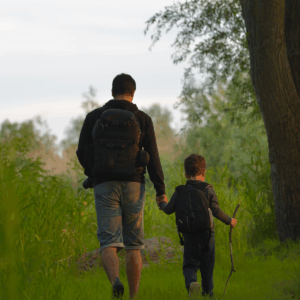

Picture this: I’m at my younger son’s house last month, watching him help his eleven-year-old with homework. My grandson was struggling with a math problem, getting frustrated, and I was itching to jump in with the solution. But I kept quiet. My son patiently guided him through it, asking questions instead of giving answers.
When they finished, my son caught my eye and smiled. “Thanks for letting me handle that, Dad.”
That’s when it hit me. He was thanking me for something I didn’t do. And in that moment, I realized how much our relationship had evolved since he’d told me years ago that my constant advice felt like criticism.
You know, when your kids are little, respect is pretty straightforward. They listen (mostly), they follow rules (sometimes), and they tell you they love you with sticky hands and gap-toothed grins. But when they’re adults? The signs become more subtle, more nuanced. They might not say “I respect you” out loud, but if you know what to look for, the evidence is everywhere.
1. They ask for your opinion (but not on everything)
Here’s something that took me years to understand: respect doesn’t mean they’ll consult you on every decision. My older son calls me maybe once a week, and we rarely talk about his work or major life choices unless he brings them up. At first, this stung a bit. Wasn’t I supposed to be the wise elder with all the answers?
But then I noticed something. When he does ask for my input—about refinancing his house, dealing with a difficult neighbor, or navigating his daughter’s school issues—he really listens. He’s not asking out of obligation or to make me feel included. He genuinely values what I have to say on those specific topics.
The respect is in the selectivity. They’ve learned to think for themselves, but they still recognize when your experience might help.
2. They set boundaries without apologizing
This might sound counterintuitive, but bear with me. My younger son texts occasionally rather than calling, and family dinners happen when they work for everyone’s schedule, not automatically every Sunday like when they were kids.
Initially, I interpreted these boundaries as distance. But I’ve come to see them differently. When adult children can tell you “That doesn’t work for us” or “We’re doing things differently with our kids,” they’re showing they trust the relationship enough to be honest. They’re not worried you’ll fall apart or withdraw your love.
As Prentis Hemphill once said, “Boundaries are the distance at which I can love you and me simultaneously.” When your adult children maintain healthy boundaries, they’re respecting both themselves and you.
3. They share their real lives with you
Remember when your kids were teenagers and getting information was like pulling teeth? “How was school?” “Fine.” “What did you do?” “Nothing.”
Related Stories from The Artful Parent
- There’s a specific kind of anger that builds in mothers who spent 30 years putting everyone first—and it doesn’t arrive when you expect it, it arrives when the house goes quiet
- 8 things your teenager is doing that look like disrespect but are actually the healthiest signs of development a parent could ask for
- The way you speak to your partner in front of your children becomes the voice they expect love to sound like—and most parents never make the connection
Now, I find my sons share more authentic pieces of their lives—not everything, but the real stuff. They’ll tell me when they’re struggling at work, when marriage gets tough, when parenting feels impossible. They don’t sugarcoat or pretend everything’s perfect.
This vulnerability is actually a profound form of respect. They trust you enough to show their imperfect selves, knowing you won’t judge or immediately try to fix everything.
4. They’ve incorporated your values (in their own way)
Watching my sons parent their own children has been like looking in a funhouse mirror—some things are exactly the same, others are completely different, but you can still see the connection.
They might not do bedtime the way we did, or handle discipline exactly as I would, but the core values are there. Kindness, hard work, treating people fairly—these lessons took root, even if they bloom differently in their gardens.
When I see my older son teaching his three-year-old to say “please” and “thank you,” or my younger son volunteering with his kids at a food bank, I recognize the seeds we planted years ago. They respect those values enough to pass them on.
5. They protect your dignity in public
As I’ve mentioned in previous posts, getting older isn’t always graceful. Sometimes I repeat stories, sometimes I’m not as sharp as I used to be, and technology often baffles me completely.
- Behavioral scientists found that the single strongest predictor of whether someone improves their nutrition after 50 isn’t knowledge or willpower. It’s whether they have someone to share meals with, because human beings will rarely nourish themselves for their own sake alone - Global English Editing
- The art of growing old with dignity: 8 daily decisions people over 70 make that no one sees but that determine whether they age with grace or slide into invisibility - Global English Editing
- The art of self-education: 8 things the most capable self-taught people over 70 do completely differently from the way formal education taught the rest of us to approach learning anything - Global English Editing
But here’s what I’ve noticed: my sons never roll their eyes when I tell the same story at a family gathering. They don’t make jokes at my expense when I can’t figure out my phone. If I say something outdated or mix up current events, they might gently correct me later, privately, but never in front of others.
This public protection of your dignity? That’s respect in action.
6. They make an effort to include you (on adult terms)
Both my sons include me in their lives, but as an adult, not as the authority figure I once was. They invite me to school plays and soccer games, but they don’t expect me to drop everything and attend each one. They ask if I want to join them for activities I might enjoy, not out of duty.
Last month, my older son invited me to a baseball game—just the two of us. Not because it was Father’s Day or my birthday, but because he got tickets and thought it would be fun. We talked about everything and nothing, two adults enjoying each other’s company.
That’s the key: they want you there as a person, not just as “Dad” or “Mom.”
7. They defend you to others (including their spouse)
This one’s tricky because you might never witness it directly. But occasionally, I’ll hear through the grapevine—maybe from a daughter-in-law or a family friend—about times my sons stood up for me when I wasn’t there.
Not blind defense of everything I do, but reasonable protection of my character and intentions. “My dad means well,” or “He’s actually pretty progressive for his generation,” or “Give him a chance, he grows on you.”
They’ve learned to see you as a whole person, flaws and all, and they respect you enough to ensure others do too.
Closing thoughts
The transition from parent-child to adult-adult relationships isn’t always smooth. There were years when I wondered if my sons actually liked me, let alone respected me. But respect between adult children and parents looks different than it did when they were young.
It’s quieter, more nuanced, shown in choices rather than words. It’s in the phone calls that come not from obligation but from desire to connect. It’s in the way they parent their own children, carrying forward the best of what you gave them while confidently leaving behind what didn’t work.
So if you’re wondering whether your adult children respect you, look beyond the words. Watch their actions, notice the small gestures, pay attention to how they include you in their lives.
Do they treat you as a whole person rather than just a role? That’s your answer right there.