
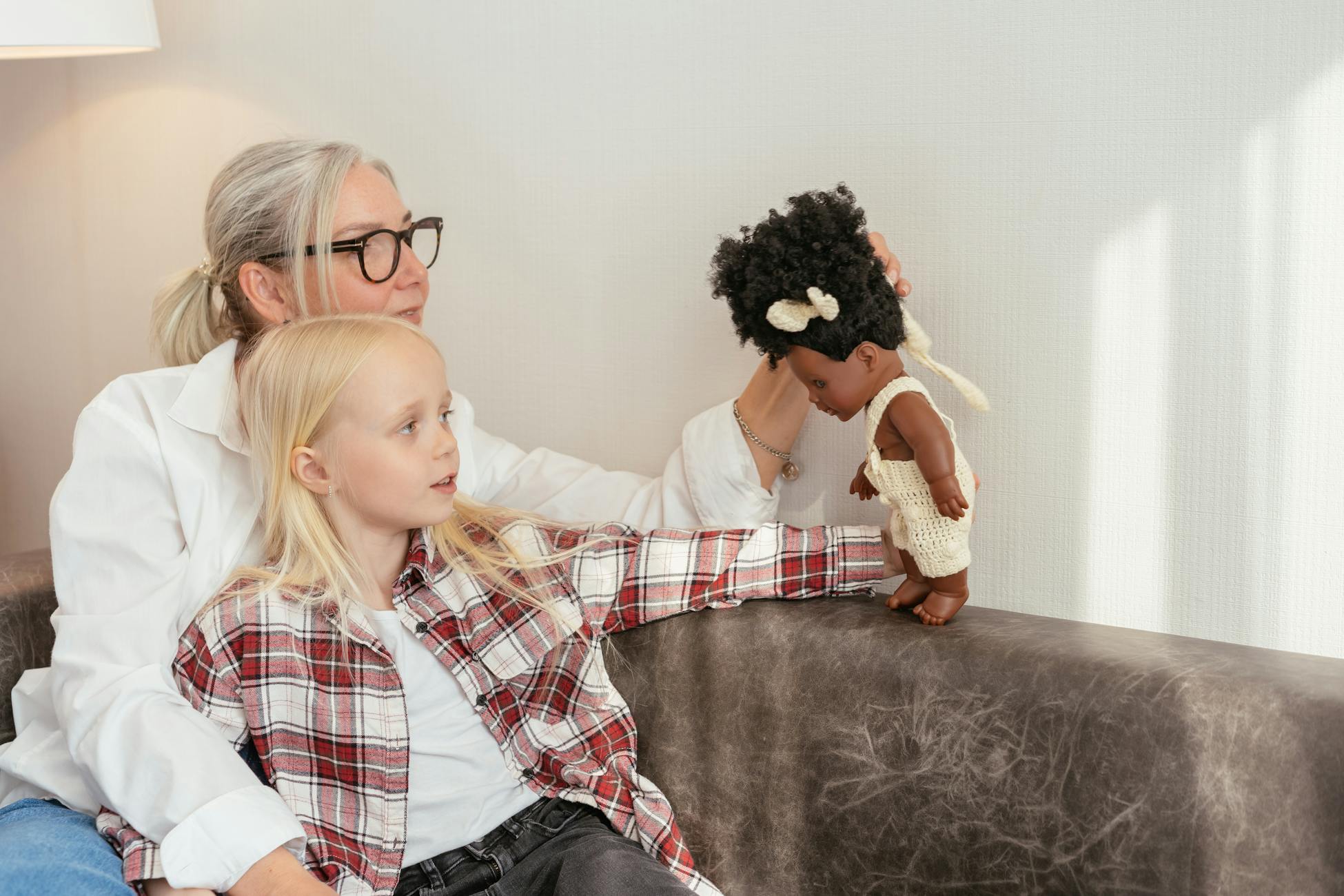
The grandparent a child remembers most is not always the one with the biggest toy basket, the softest rules, or the secret drawer full of sweets.
Often, it is the grandparent who listens in a way that makes a child feel unexpectedly real.
That distinction matters. There is a familiar script around grandparent love: treats, sleepovers, little indulgences parents would never allow at home. Those things can be warm and fun. They can become part of a family’s private language. But they are not usually what turns a grandparent into a lifelong emotional anchor.
The Artful Parent
Family-life ideas and sharp reads, in your inbox.
The deeper bond tends to come from something quieter. A child says something odd, serious, half-formed, or wildly impractical, and the adult does not laugh it away. The adult pauses. They ask a question. They treat the thought as something worth meeting.
That is the kind of attention children often carry long after the presents are forgotten.
The spoiling myth misses what children are actually looking for
It is easy to assume that children are won over by indulgence. Candy works quickly. A new toy gets an immediate reaction. A later bedtime can make a grandparent feel like the fun one.
But excitement and attachment are not the same thing.
A child can be thrilled by a treat and still not feel especially known. They can love visiting a grandparent’s house because the snacks are better, the television rules are looser, or the atmosphere feels easier than home. That kind of fondness is real. It can be sweet. But it is often built around what the grandparent provides.
The more durable kind of closeness is built around how the grandparent responds.
Children notice when an adult remembers what they said last time. They notice when a question is not just a polite prompt before the adult returns to something else. They notice when their worries, theories, jokes, and opinions are handled as more than noise passing through the room.
This is especially powerful in a grandparent relationship because the grandparent is not usually the main manager of the child’s life. Parents have to get children dressed, fed, bathed, corrected, transported, and asleep. Grandparents often have more room to simply be with the child.
Used well, that room becomes a gift.
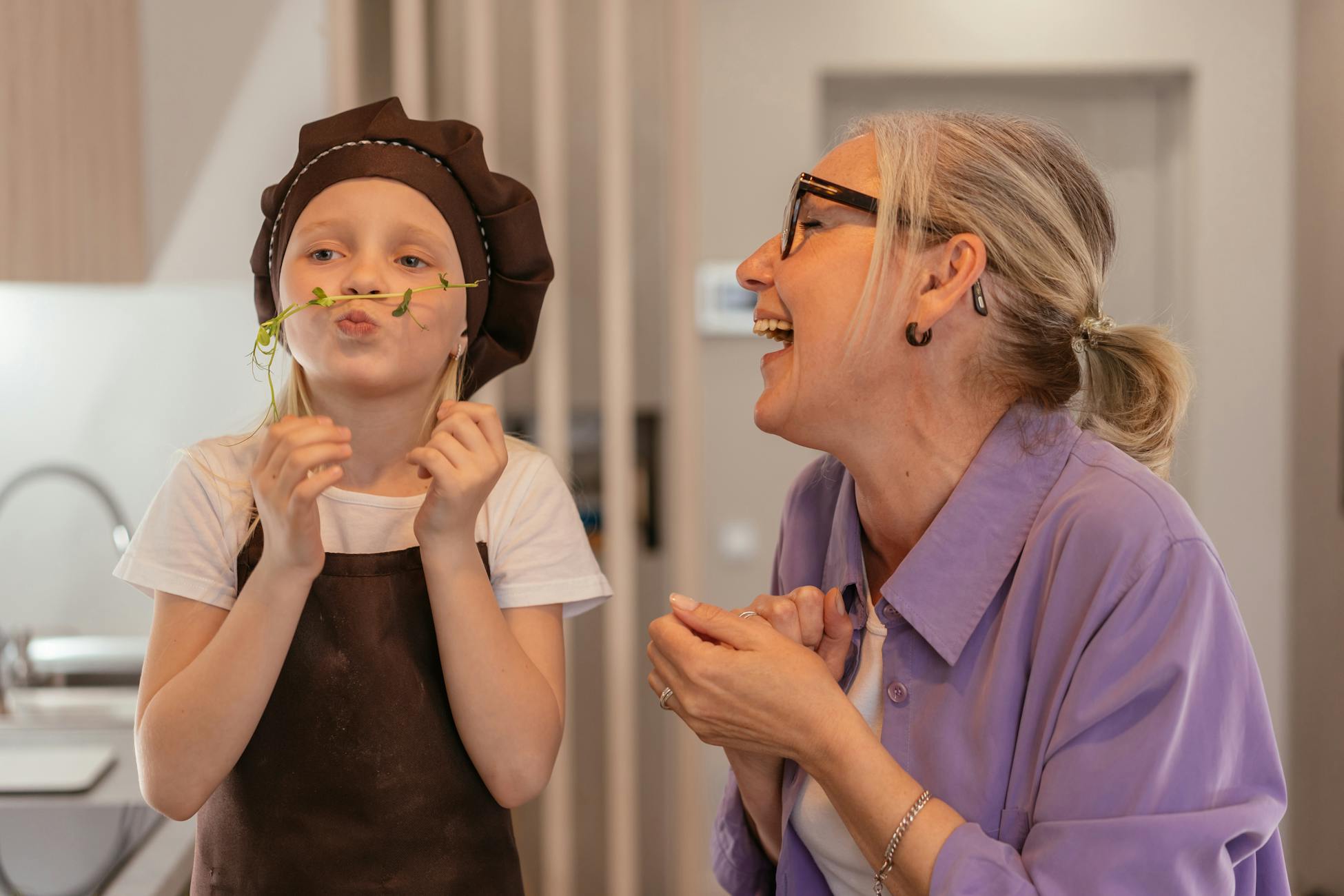
What treating a child like a full person actually looks like
Treating a child like a full person does not mean handing them adult authority. It does not mean pretending a five-year-old gets the final vote on dinner, bedtime, screen time, or safety. It also does not mean treating every passing mood as profound.
It means assuming there is an inner life there.
It looks like asking, “What made you think that?” instead of immediately correcting the child’s conclusion. It looks like saying, “Tell me more,” when a child is trying to explain something in their own strange, looping way. It looks like leaving enough silence for a child to find the rest of the sentence.
Sometimes it means taking a child’s small theory seriously for a moment before explaining the facts. A child who says the moon is following the car does not always need to be corrected in the first breath. They may need someone to wonder with them first. “What does it do when we turn the corner?” is a different kind of answer from “No, that is not how the moon works.”
The first answer keeps the child’s curiosity alive. The second may be true, but it can end the conversation before the child has had a chance to enjoy having a mind.
The grandparents who do this well often have a few habits in common. They ask open questions. They remember names, fears, obsessions, and unfinished stories. They circle back to things the child mentioned days or weeks earlier. They are willing to discuss a movie, a playground disagreement, a bug on the windowsill, or a very serious theory about dragons as though the child’s thoughts deserve real engagement.
That kind of attention tells a child something no gift can say as clearly: you exist in my mind even when you are not performing, achieving, behaving perfectly, or asking for anything.
Why opinions matter so much
Children are used to being loved. Most children in caring families know, at least in some basic way, that the adults around them love them.
Being taken seriously is rarer.
A child can sense when adults are only humoring them. They may not have the words for it, but they know the difference between a smile that says “that’s cute” and a response that says “I am actually listening.”
This is why opinions matter. When a grandparent asks a child what they thought of a book, which route they would take to the park, why they think a friend acted strangely, or what they would do if they were in charge of the garden, the question gives the child a role beyond being looked after.
They are not just the small person in the room. They are a participant.
Even gentle disagreement can become a form of respect. A grandparent who says, “I see why you think that, but I am not sure I agree,” is doing something more meaningful than automatic praise. They are meeting the child’s thinking with real thinking. They are showing the child that an idea can be considered, challenged, revised, and still belong to someone worth listening to.
That is very different from indulgence. Indulgence often keeps the adult in the role of giver and the child in the role of receiver. Conversation creates exchange. It lets the relationship become less about what the child can get and more about who the child gets to be.
The special power of the non-parent adult
Grandparents can hold a particular kind of space in a child’s life. They are close enough to matter, but often far enough from the daily pressure of parenting to offer a different emotional rhythm.
A parent may hear a child’s long explanation and also be thinking about homework, dinner, shoes by the door, and whether there is enough clean laundry for tomorrow. That is not a failure of love. It is the reality of raising children.
A grandparent may be able to listen without needing the conversation to become useful immediately. They can ask what the child thinks without turning the answer into a lesson. They can offer perspective without making it a rule. They can let a child try on a thought before the world rushes in to grade it.
For a child, that can feel enormous.
There are not many places in childhood where a young person gets to practice being interesting without also being evaluated. School evaluates. Parents, even loving ones, must often correct. Peers compare. A thoughtful grandparent can become one of the few adults who says, in effect, “I want to know how your mind works.”
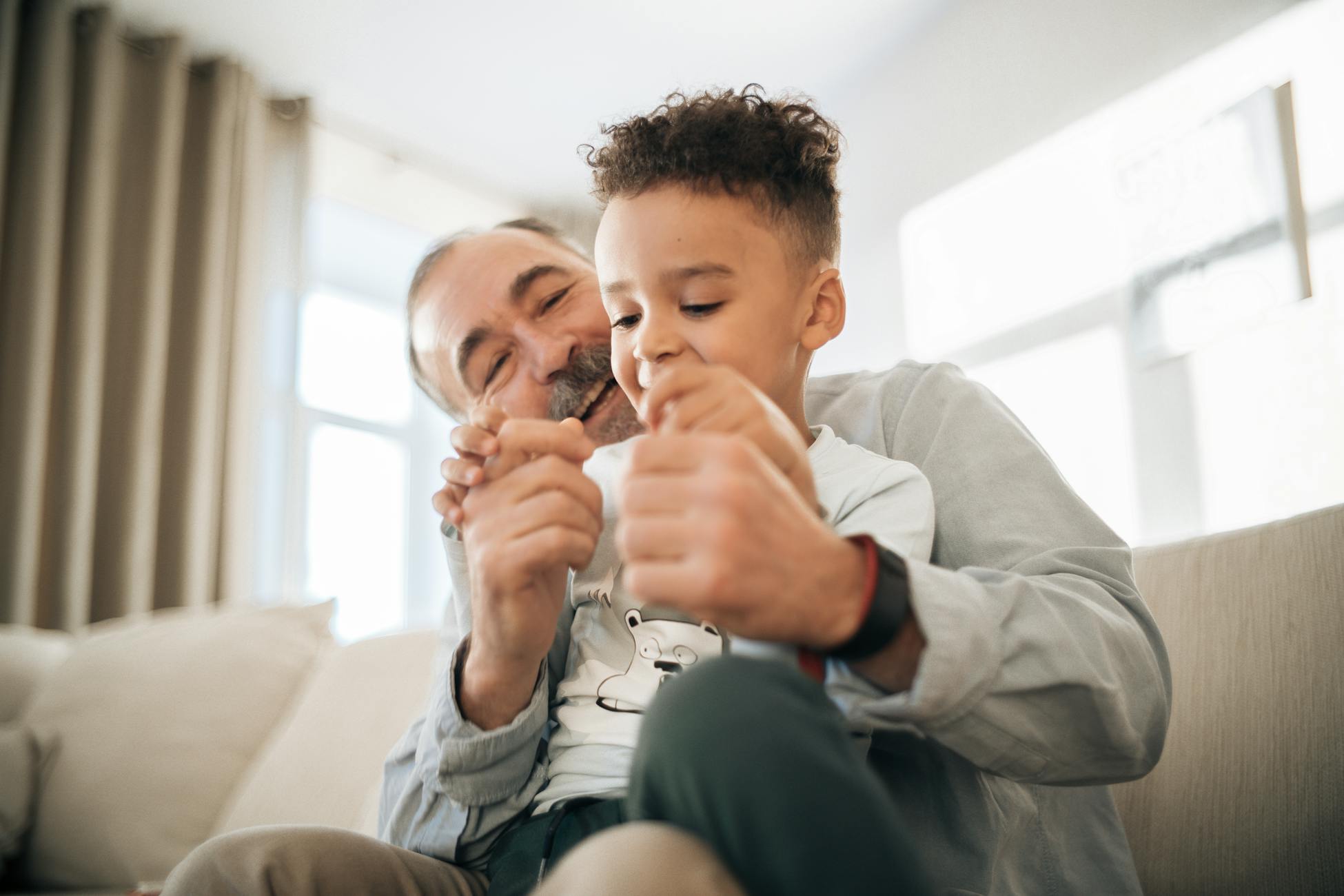
That does not require grand speeches. It happens in the smallest exchanges.
“You were worried about that friend at lunch. What happened?”
“Last time you said you wanted to build a cardboard city. Did you ever decide where the roads go?”
“You did not like the ending of that movie. What would you have changed?”
These questions are simple, but they tell a child that their thoughts leave a trace.
What children tend to remember later
When adults talk about grandparents who shaped them, the stories often become very specific.
They remember sitting in a kitchen and being allowed to ask a difficult question. They remember a walk where no one rushed them to get to the point. They remember being taken seriously during a family argument, a school worry, a friendship shift, or a moment of embarrassment that another adult might have dismissed.
They remember the feeling of not being treated as a miniature adult, exactly, but as a real person in progress.
The grandparents remembered mostly for indulgence are often described warmly: the one who always had cookies, the one who let everyone stay up late, the one who said yes when parents said no. Those memories can be lovely. They belong in families.
But the grandparents remembered as foundational are usually described differently. They are remembered as the adult who listened. The adult who made a child feel clever without needing to perform. The adult who could be playful without being patronizing. The adult who made room for a child’s seriousness.
That is a different kind of love. It does not sparkle as much in the moment, but it often lasts longer.
What this approach actually builds
Grandparents who rely on treats and gifts are not doing something wrong. Often, they are reaching for the easiest visible form of affection. Giving is concrete. Listening is more vulnerable.
A gift can be wrapped. A real conversation cannot be controlled in the same way.
When an adult asks a child what they think, the answer may be inconvenient, confusing, repetitive, funny, or unexpectedly honest. The child may reveal a worry the adult does not know how to solve. They may notice something the adult would rather not discuss. They may ask a question that deserves a slower answer than the day has room for.
That is partly why this kind of grandparenting matters. It asks something of the adult too.
It asks the adult to be patient. It asks them not to hide behind cheerfulness. It asks them to resist the urge to smooth every feeling, correct every mistake, or turn every conversation into a lesson. It asks them to enjoy the child not only as someone adorable, but as someone becoming.
Over time, a child who receives that kind of attention may come to expect something important from relationships: that their thoughts are not a nuisance. Their feelings are not automatically too much. Their questions are not interruptions. Their perspective can be heard, considered, and sometimes even taken seriously by someone older and wiser.
That expectation can become part of how they move through the world.
The toy eventually breaks. The sweets get eaten. The special outing becomes one memory among many. But the steady experience of being listened to can settle much deeper.
The grandparent who treats a child’s mind as worth meeting is giving something that does not look like spoiling at all. It looks quieter than that. It looks like attention. It looks like patience. It looks like the child growing up with a small but powerful certainty: someone I admired wanted to know what I thought.