
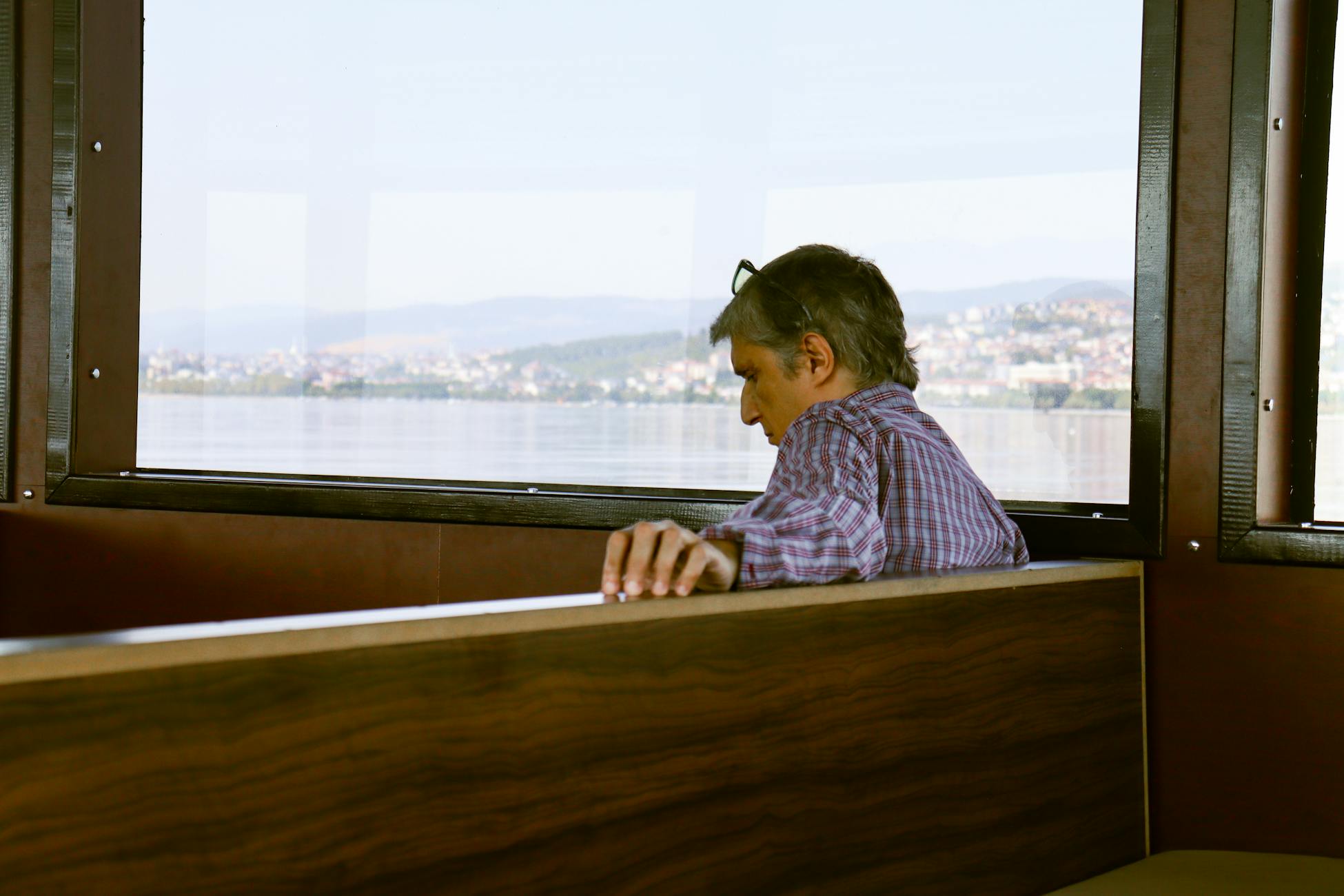
There is a particular kind of person who arrives at sixty without a single close friend left, and the wider cultural register tends to read them as cold, avoidant, or socially underdeveloped. The reading is almost always wrong. On close examination, this person is frequently the one who, for thirty or forty years, was the designated holder of other people’s feelings — the one who remembered the birthdays, who took the late-night call, who absorbed the divorce details and the job grievances and the half-formed worries about aging parents — and who, somewhere in their fifties, ran out of the interior room required to keep doing it.
The conventional wisdom says that close friendships in later life are a sign of social health, and that the friendless older adult must have done something wrong. The framing is real. The framing is also incomplete. It assumes friendship is symmetrical by default, that the people who fall out of it must have failed at it. What it fails to register is that many long friendships are, by structural design, asymmetrical — and the person who carried the heavier end for decades is not the one who failed. They are the one who finally stopped.
The ledger nobody was keeping
Emotional labor was originally developed to describe paid work — flight attendants managing their faces, nurses managing their voices. The concept has since been extended, accurately, to the unpaid version that happens in friendships and families. A recently developed psychological measure for emotional labor attempts to quantify the kind of interior work that has no visible output: the anticipating, the soothing, the holding-back-of-one’s-own-bad-day so that someone else can have theirs.
In a friendship of two people, this labor is rarely split evenly. In most long friendships, one person is the keeper of the thread. They initiate the calls. They remember which child was struggling at school. They follow up two weeks later to ask how the doctor’s appointment went. They are, more accurately, the relationship’s infrastructure — and infrastructure tends to be invisible until it fails.
The person carrying that infrastructure does not, in most cases, experience themselves as overburdened in any single moment. The weight is distributed across decades and across many friendships at once. It is a Tuesday text checking in on a sick mother. It is a Saturday lunch that was scheduled because someone else needed company. It is the mental note to send flowers on the anniversary of a loss. None of these are heavy on their own. The accumulated effect is considerable.
What burnout looks like when it arrives quietly
Sustained emotional caretaking — particularly when it is one-directional — produces a specific kind of depletion. The hidden emotional labor that drains women in leadership roles has been described as a slow erosion rather than a dramatic collapse. The same pattern, transposed onto personal relationships, looks less like burnout and more like a gradual withdrawal of availability.
The withdrawal is rarely announced. The person who has carried the emotional weight in their friendships for decades does not, in most cases, sit down at fifty-five and decide to stop. They simply notice that they are answering the phone a little later than they used to. That the prospect of a long catch-up dinner produces a small interior flinch. That when a friend opens with the familiar phrase — so, you won’t believe what happened — something inside them tightens rather than leans forward.

This is not coldness. It is a body that has been listening for forty years and has begun, finally, to register the cost. Research on the midlife friendship gap has noted that friendship dissolution in this stage of life is rarely the result of conflict. More often, it is the result of one person — usually the one who was doing more — quietly running out of the capacity to initiate, and the friendship collapsing for lack of upkeep.
The asymmetry that hides inside “closeness”
It is worth being precise about what closeness actually consisted of in many of these friendships. The friend who called every week to talk about her difficult marriage may have experienced the friendship as close. The friend who listened to her talk about her difficult marriage every week, for twenty-two years, may have experienced something more complicated — a sense of being needed, certainly, but also a sense of being used as a regulating mechanism for someone else’s life, with very few questions ever directed back across the table.
This is the asymmetry the wider cultural register has not adequately registered. Two people can describe the same friendship as close and mean entirely different things by the word. For one, closeness meant being heard. For the other, closeness meant doing the hearing. When the hearer eventually steps back, the speaker is often genuinely confused. They thought the friendship was reciprocal. By their own metric, it was. By the other person’s metric, it had been a long, unpaid shift.
Some of this dynamic is gendered, though not exclusively. Women have historically been socialized into the role of emotional caretaker across all their relationships — romantic, familial, professional, platonic — and the cumulative weight of that role tends to surface in midlife as a quiet refusal to keep performing it. Men, increasingly, are reshaping male friendships around more open emotional expression, though the same exhaustion pattern can appear in men who took on the listener role within their own networks.
What looks like avoidance is often discernment
The person who has done the emotional labor for decades and is now in their early sixties often gets read, by their remaining acquaintances and sometimes by their adult children, as having become withdrawn or difficult. The reading mistakes a developed discernment for a deficit. After forty years of carrying other people’s interior weather, this person has, in most cases, become extremely accurate about which interactions will deplete them and which will not. They turn down invitations that they would once have accepted out of obligation. They let calls go to voicemail when they sense the call will be a long one.
This is not avoidance. It is the conservation of a resource that has been spent without replenishment for a very long time. Emotional self-sufficiency in older adults is often misread as isolation, when it is more accurately a hard-won capacity to be alone without distress. The same misreading applies here. The friendless sixty-three-year-old is not failing at sociability. They have, by structural necessity, learned to ration it.

The friendships that did not survive the recalibration
Some of these people are not, in fact, entirely without close relationships. They tend to have one or two — often a sibling, sometimes a long partner, occasionally a single friend who happened to be a reciprocal listener from the beginning. What they have lost, more accurately, is the wide outer ring of social connections that they previously sustained through sheer effort.
The friendships that did not survive were, in most cases, the ones that had been running on their labor alone. When the labor stopped, the friendship stopped, which suggests something honest about what the friendship had actually been. Research on friendship and happiness in older adults has found that the small reciprocal gestures — the rides, the favors, the unprompted checking in — are what sustain late-life friendships. The friendships that lacked that reciprocity for thirty years did not suddenly fail at sixty. They had been failing the whole time. The exhaustion of the listener only made the failure visible.
There is a related observation worth noting, which is that the people who do keep close friendships into their seventies are not the ones who needed to be carried. They are the ones who carried something back.
The reframing that most people in their sixties do alone
The cultural script for late-life friendlessness produces, in many of these people, a private sense of shame. They have absorbed the assumption that their lack of close friends reflects something defective in them — that they are colder, more difficult, less likable than they should be. The shame is, on the available evidence, unearned. Adult relational patterns are shaped by what people were taught to do with their own needs in childhood, and the children who were taught to attend to other people’s needs first tend to grow into adults who do the same — at considerable cost — for the rest of their lives, until something gives.
What gives, in many cases, is not the person’s warmth. It is their capacity to perform warmth on demand for people who have never asked how their day was. The warmth itself remains. It is simply being directed inward, possibly for the first time in fifty years, and outward toward a much smaller circle of people who can be trusted to direct some of their own warmth back.
The accumulated effect is a kind of late-life quiet that the wider culture, on the available evidence, has misread as loneliness. Some of it is loneliness. Much of it, more accurately, is rest.
