
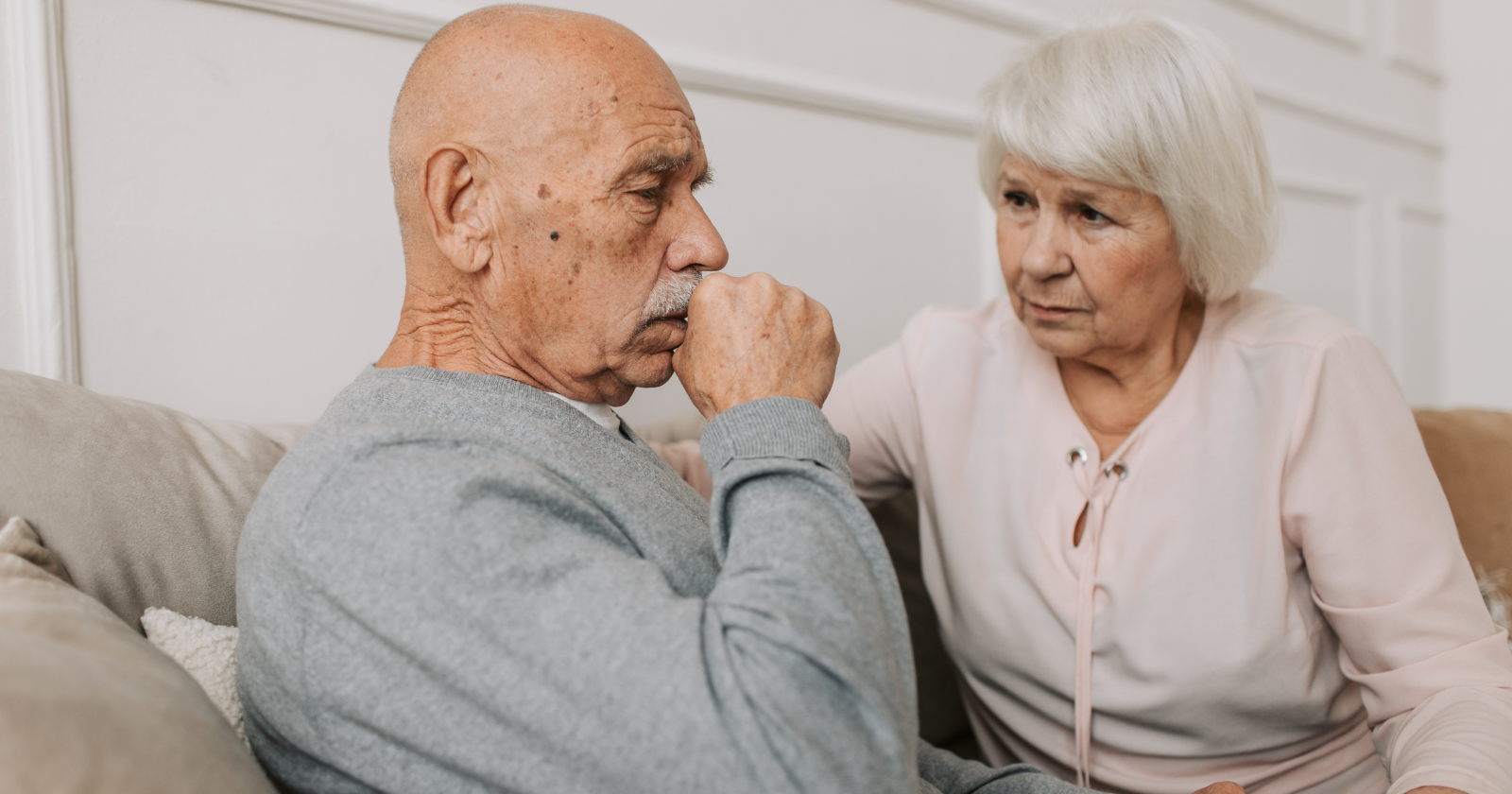

There’s an argument I’ve had with my father maybe four hundred times. I win it every single time. It’s a flawless record, really, because he isn’t there for any of it.
It runs while I’m in the shower, or stuck in traffic, or lying awake at 3am for no good reason. I deliver the line I should have delivered at nineteen, the perfect cold sentence that finally makes him understand exactly how he got it wrong. He absorbs it. He goes quiet. I feel briefly magnificent. Then the water runs cold, or the lights change, and I lose interest until the next rerun.
It took me until thirty-eight to notice that the man I’m beating in these matches retired from the role about two decades ago. The dad I’m arguing with doesn’t exist anymore. I’ve been thrashing a ghost, and getting good at it.
The Artful Parent
Family-life ideas and sharp reads, in your inbox.
The parents in my head are frozen at nineteen
Here’s the strange physics of it. When you leave home young, you take a snapshot of your parents on the way out the door, and that snapshot quietly becomes the official photo. Mine were taken somewhere around my late teens, which is to say at the precise moment a parent and child are least capable of seeing each other clearly.
So the dad in my head is the one from my final furious year under his roof. Rigid. Impossible to please. A man who treated feelings as a structural weakness and silence as a sport. That’s the version I’ve been carrying around, fully formed, for twenty years, like a passport photo from an era I’d rather forget but can’t quite throw away.
The trouble is, photos don’t age. People do. And while I was busy maintaining my grudge against a teenager’s idea of him, the actual man kept living, and changing, entirely without my permission.
The phone call that broke the photo
It happened on an ordinary Tuesday, which is how these things always seem to go. No drama. No occasion. We’d had one of our standard calls, the kind that mostly consist of him asking about the weather in Bangkok and me asking about his knee.
And right at the end, just before he hung up, my father said, “Love you, son.”
I actually held the dead phone to my ear for a second afterwards, like an idiot, checking I’d heard it. Because the man in my official photo would sooner have eaten the handset than said that. He was a love-is-shown-not-said sort, and what it was shown through was a tank of petrol or a fixed bike chain, never words. Words were for people who couldn’t cope.
But this man, the seventy-year-old on the other end of the line, just said it. Plainly. Like it was the easiest thing in the world. And then, presumably, went to put the kettle on, while six thousand miles away his son sat staring at a black screen having his entire filing system rearranged.
Somewhere in the last twenty years, while I wasn’t watching, my father had softened into someone I’d never been introduced to. And I’d been so busy defending myself against the old one that I’d nearly missed the new one entirely.
Why we keep the old version on file
You’d think this would be pure good news. Your parents got gentler, congratulations, all’s well. But there’s a reason we cling to the frozen photo, and it isn’t pretty.
The old version is useful. The rigid, impossible dad explains things. He explains why I’m guarded. Why I struggle to say certain words out loud. Why I once went a full decade convinced that needing people was a kind of failure. If I keep him exactly as he was, I get to keep the whole tidy story of how I came to be the way I am. He stays the cause. I stay the effect. Case closed.
Let him soften, though, and the story develops a crack. Because if he could change, then maybe I can too, and maybe some of the armour I’ve been blaming on him is just armour I’m now choosing to keep wearing out of habit. That’s a far more uncomfortable thought than any grievance. It’s much cosier to have a villain than to admit the villain quietly resigned and left you holding the costume.
The thing about meeting people you already know
There’s a tidy bit of psychology here that I find oddly comforting. Researchers talk about how memory isn’t a recording, it’s a reconstruction. Every time you recall something, you rebuild it from parts, and you tend to rebuild it to match how you currently feel. So a grudge doesn’t just sit in storage. It gets renovated. Each time I ran that shower argument, I was quietly reinforcing the old photo, touching up the paint, keeping him villainous and fresh.
Which means the frozen parent in your head isn’t even an accurate memory. It’s a memory you’ve been editing for years to keep the plot consistent. You’re not remembering them. You’re maintaining them.
And the actual people, the ones on the other end of the Sunday phone, have been getting on with the slow business of becoming someone else. Mellower. More frightened of running out of time. More willing, finally, to say the unsayable thing before the kettle boils.
What I’m trying to do about it now
I’d love to report a clean reconciliation, the kind that ends with a hug at a train station and swelling strings. It hasn’t been like that, because real life rarely cooperates with the soundtrack.
What it’s actually looked like is smaller and harder. It’s catching myself mid-rerun, in the shower, halfway through winning the old argument, and quietly putting the script down. Reminding myself that the man it’s aimed at hasn’t lived in that house, or that mood, for twenty years.
It’s letting the new sentence land instead of swatting it away. When my dad says the unfamiliar thing, my instinct is still to go stiff, to treat the warmth as suspicious, as though he’s trying to slip one past my defences. The work is in not doing that. In letting a seventy-year-old man be different from the thirty-something he used to be, and resisting the urge to keep him locked in the old role just because I’ve memorised my lines for it.
And it’s saying it back. The first time I managed “love you too, Dad” my voice did something undignified in the middle of it and I was glad we were on the phone and not face to face. But I said it. To the man who’s actually there now, not the one in the photo.
Go and meet them while they’re still in
So here’s where I’ve landed, and I’ll keep it short because it’s simple and a bit terrifying.
The parents you’re annoyed with might not be the parents you actually have. There’s a decent chance you’ve been in a long cold war with people who quietly signed the peace treaty years ago, and just never managed to get the message through, because every time they tried, you were busy rehearsing the old fight.
They’re changing. They’re running out of road, the same as the rest of us, only further along it. And the version of them you’re still cross with may have moved out of that house, and that personality, a long time ago, leaving a forwarding address you’ve never bothered to visit.
Go and visit. Pick up the phone to the people who are actually on the line, not the ghosts you’ve been fighting in the shower. You might find, as I did, that the argument you’ve been winning for twenty years was over before it started, and the man on the other end has been waiting, patiently, with the kettle on, to say something you’ve spent your whole life refusing to hear.