
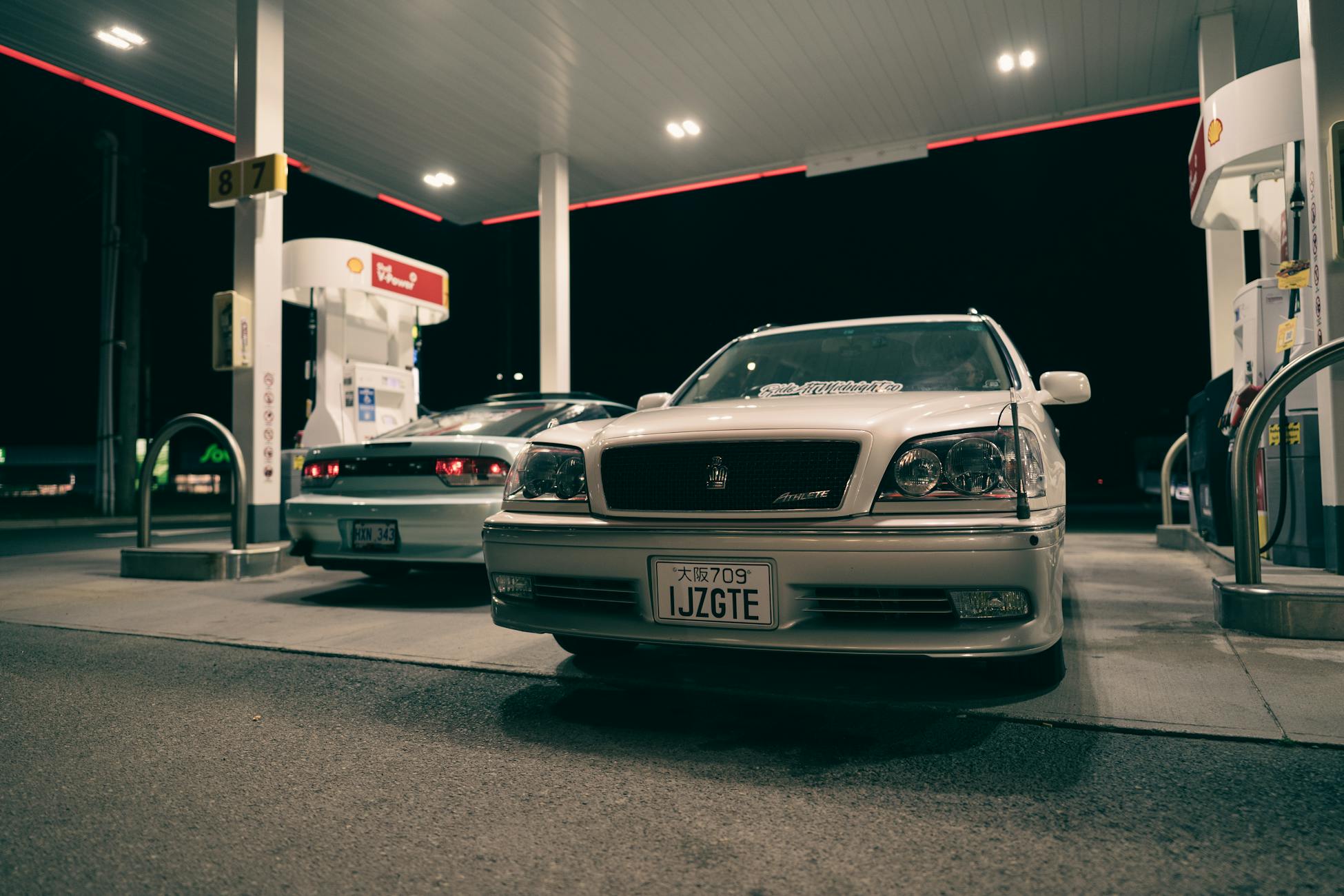
On October 17, 1973, the Organization of Arab Petroleum Exporting Countries announced an oil embargo against the United States, and within weeks American gasoline supplies had fallen by roughly a quarter, leaving drivers idling for hours at filling stations from New Jersey to California. By the time the embargo lifted in March 1974, the price of a barrel of crude had quadrupled, the national speed limit had been cut to 55 miles per hour, and a generation of homeowners had learned to wear sweaters indoors and squint at their thermostats with a new kind of suspicion.
The lines were the part people remembered. Photographs from that winter show stations in Queens with cars backed up around three corners, drivers reading paperbacks against steering wheels, folding lawn chairs unfolded on the asphalt next to open driver-side doors. Some states issued odd-even rationing based on license plate numbers. Stations posted hand-lettered signs reading SORRY NO GAS and closed by lunch. Truckers staged shutdowns on interstates. The humiliation of it, the sheer waiting, did something to the American household that the price hike alone might not have.
How a 25 percent cut became a national reset
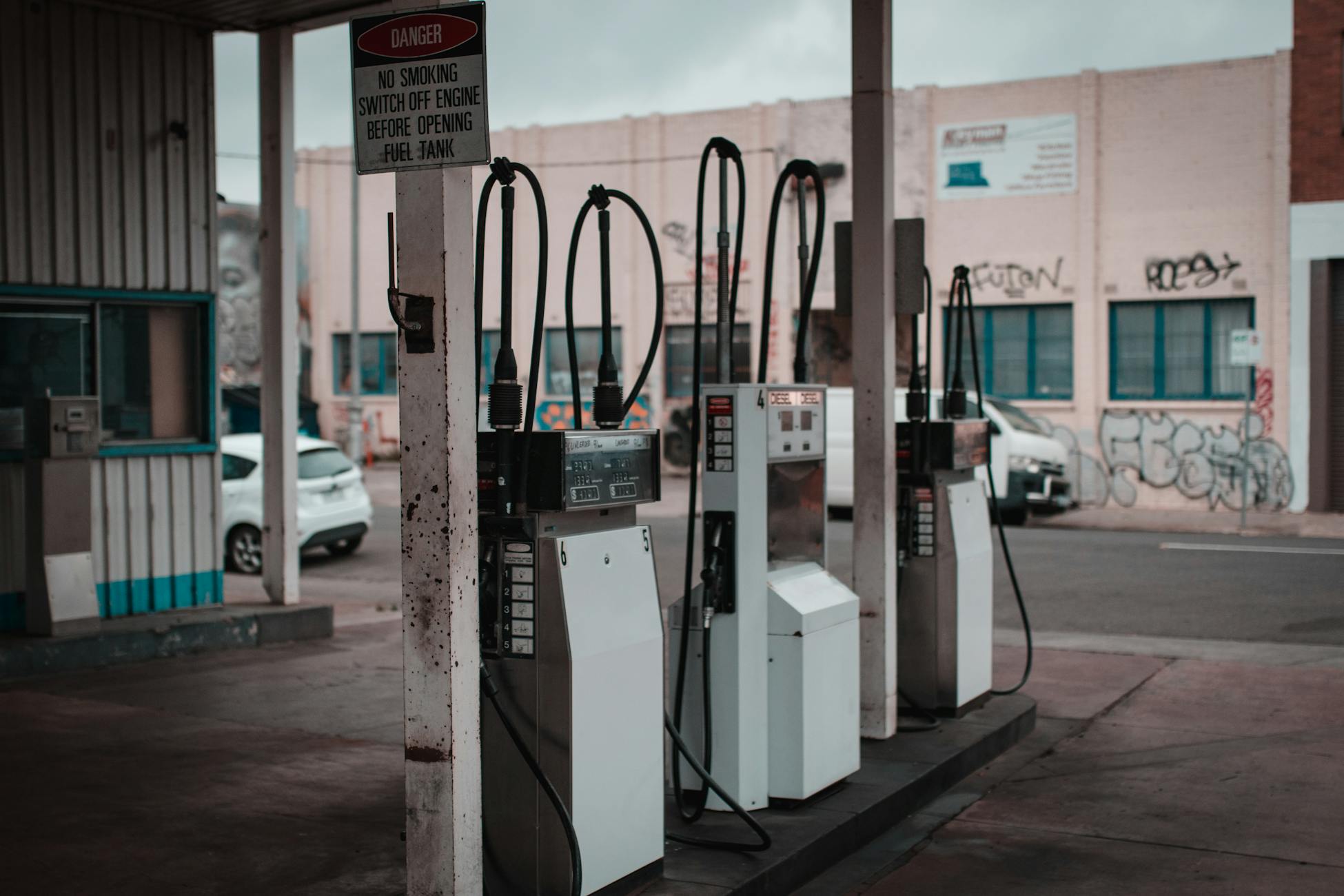
The embargo itself was a political response to American resupply of Israel during the Yom Kippur War. OAPEC announced production cuts of five percent per month and a total ban on shipments to the United States and the Netherlands. American refineries, accustomed to cheap and effectively unlimited Middle Eastern crude, had no slack in the system. Domestic production had peaked in 1970 and was already in decline. The result was a supply shock that hit retail pumps almost immediately.
Gasoline that had sold for 38 cents a gallon in the spring of 1973 was selling for 55 cents by the following summer, and in many places it could not be bought at all. The federal government, under Nixon and then Ford, issued allocation rules that tried to spread shortages evenly across regions, which mostly succeeded in spreading the lines evenly across regions.
A recent Forbes analysis comparing 1973 to the 2026 disruption notes that the earlier embargo cut roughly 25 percent of U.S. supply almost overnight, a magnitude no shock since has matched in proportional terms.
The thermostat war that started in the den
Heating oil was rationed too. New England, which depended on oil furnaces for the majority of its winter heat, was hit hardest. Nixon went on television in November 1973 and asked Americans to lower their thermostats, to a daytime setting of 68 and a nighttime setting around 60. Federal buildings were ordered to comply. Schools shortened their days. The White House Christmas tree was lit for fewer hours, and the National Christmas Tree on the Ellipse was not lit at all that year.
Sixty-eight degrees became something close to a moral standard. Magazines ran features on layering. Sears sold out of sweaters. The phrase “put on a sweater” entered family arguments that would continue for the next fifty years, because the children who shivered through the winter of 1973 grew up to be the adults setting the thermostats in the 1990s and 2000s, and many of them never quite stopped setting them low.
The study, summarized by ScienceDaily, traced thermostat habits across generations and found that people who grew up in cooler houses kept cooler houses as adults, regardless of income or local climate. The embargo cohort, the children of 1973, are now in their fifties and sixties, and they tend to run their homes a few degrees colder than their neighbors.
The cars got smaller, then they got smaller again
Detroit had spent the 1960s building heavier and longer cars with bigger engines. The 1973 Cadillac Eldorado weighed over 5,000 pounds and got about 10 miles per gallon. By the spring of 1974, dealerships could not move them. Japanese imports, the Toyota Corolla and the Honda Civic in particular, started selling faster than the dealers could ship them. The Civic, introduced in the United States in 1973, got about 40 miles per gallon and arrived at exactly the moment the country was willing to consider a car that small.
Congress passed the Energy Policy and Conservation Act in 1975, which created the Corporate Average Fuel Economy standards. CAFE required automakers to hit a fleet average of 18 miles per gallon by 1978 and 27.5 by 1985. The standard reshaped American manufacturing for the next two decades. The Big Three lost market share they would never fully recover, and the long American romance with cheap fuel acquired an asterisk.
Why the lines mattered more than the price
Economists who have studied the embargo argue that the price increase alone, painful as it was, would not have produced the cultural shift that followed. It was the waiting that did it. Standing in a line for hours to buy 10 gallons of gasoline, with a stranger in a Chevy Impala ahead of you and a stranger in a Pinto behind, is a form of forced attention. You think about the car. You think about the trip. You think about whether the trip was necessary. You think about it for hours.
A 2025 piece in Psychology Today on scarcity and the brain describes how shortages of any kind, time, money, fuel, food, push the mind into a narrow band of vigilance about that one resource, and the vigilance can persist long after the supply returns to normal. The drivers of 1973 came out of the winter with a permanent low-grade alertness to the cost of a tank of gas.
The academic literature on scarcity effects documents the same pattern in laboratory and field studies: limited availability heightens perceived value and changes purchasing behavior in durable ways. Households that lived through 1973 reported insulating their attics at higher rates than households that did not, and the gap persisted into the 1980s.
Insulation, storm windows, and the birth of the energy audit
The Department of Energy was created in 1977, largely as a response to the embargo and the second oil shock that followed the Iranian Revolution in 1979. Federal tax credits for home insulation, storm windows, and solar water heaters appeared in the late 1970s. The Residential Conservation Service required utilities to offer free home energy audits to their customers. Pink fiberglass batts started showing up in suburban attics. Plastic film kits for sealing single-pane windows became a hardware-store staple, and the kits are still sold in the same packaging today.
The yellow EnergyGuide label, the one that appears on every refrigerator and dishwasher sold in the United States, was mandated in 1980. It is a direct descendant of the embargo. So is the habit of buying compact fluorescents and then LEDs. So is the slow death of the incandescent bulb. The 1973 winter set in motion a regulatory and consumer architecture that took thirty years to fully mature.
The long memory of a short crisis
The embargo lasted five months. Gasoline supply was largely back to normal by the summer of 1974. The lines disappeared. The 55 mile per hour speed limit lingered until 1995. The Civic kept selling. The thermostats stayed low.
A framework on long-term behavior change argues that interventions stick when they reshape the physical or institutional environment around the person, not just the person’s intentions. The embargo did both. It changed what cars were available, what insulation was in the walls, what label was on the refrigerator, and what number the parents wrote on the thermostat note taped to the wall when they left for the weekend.
Children read that note. They grew up. They set their own thermostats. The folding chairs went back into the garage, and the paperbacks went back on the shelf, but the temperature in the living room never quite came back up.
