

Ask anyone over thirty-five how they found their favourite band, and watch their face change. They don’t recite a playlist. They tell you a story. A scratchy tape an older cousin made. A clerk in a record shop who looked at their choices and quietly took the CD out of their hands. A song leaking through a bedroom wall at 2am, sounding like a transmission from a better life.
Now ask someone half my age the same thing. You’ll get a shrug, and the word “Spotify.” Not because they’re soulless. Because the question doesn’t compute anymore. They didn’t find anything. It found them.
How I actually got my favourite band
I was nineteen and skint, living in a damp flat in north London with three other lads and a heating system that ran on optimism. The bloke in the room next to mine, whose name I’ve genuinely forgotten, kept playing the same record through the wall, late, always late.
The Artful Parent
Family-life ideas and sharp reads, in your inbox.
I hated it at first. It was the wrong sort of music, by which I mean it wasn’t the music my mates and I had decided was correct that year. We were all very certain about what was correct. Certainty is what you have instead of taste when you’re nineteen.
But you can’t unhear something played through plasterboard forty nights running. It got in. One particular track would come through around midnight, muffled and warm, and I’d lie there pretending to be annoyed while quietly waiting for it. I never asked him what it was. Asking would have meant admitting I cared, and admitting I cared was not something a nineteen-year-old does about his neighbour’s taste.
So instead I did something faintly unhinged. I started recognising the rhythm of the bassline through the wall, and one afternoon when he was out, I went into a record shop on the high street and tried to hum it to the man behind the counter.
The clerk who refused to be efficient
The clerk, a bloke with the patience of a saint and the haircut of a man who’d given up on the nineties reluctantly, let me hum this rubbish at him for a full two minutes. No melody, just me approximating a bassline like a broken fridge. Anyone sane would have told me to clear off.
He didn’t. He frowned, asked me three questions, what time of night did I hear it, was it sad or angry, did it sound old or new, and then he disappeared into the racks and came back with a record I’d never heard of by a band I couldn’t have named at gunpoint.
And it was the one. The wall band. He’d identified it from a teenager’s tuneless humming and a couple of mood questions, because he’d spent years actually listening to people, not just to music. He could have sold me the chart stuff by the till in ten seconds. Instead he spent a quarter of an hour solving a puzzle for a kid who could barely afford the record at the end of it.
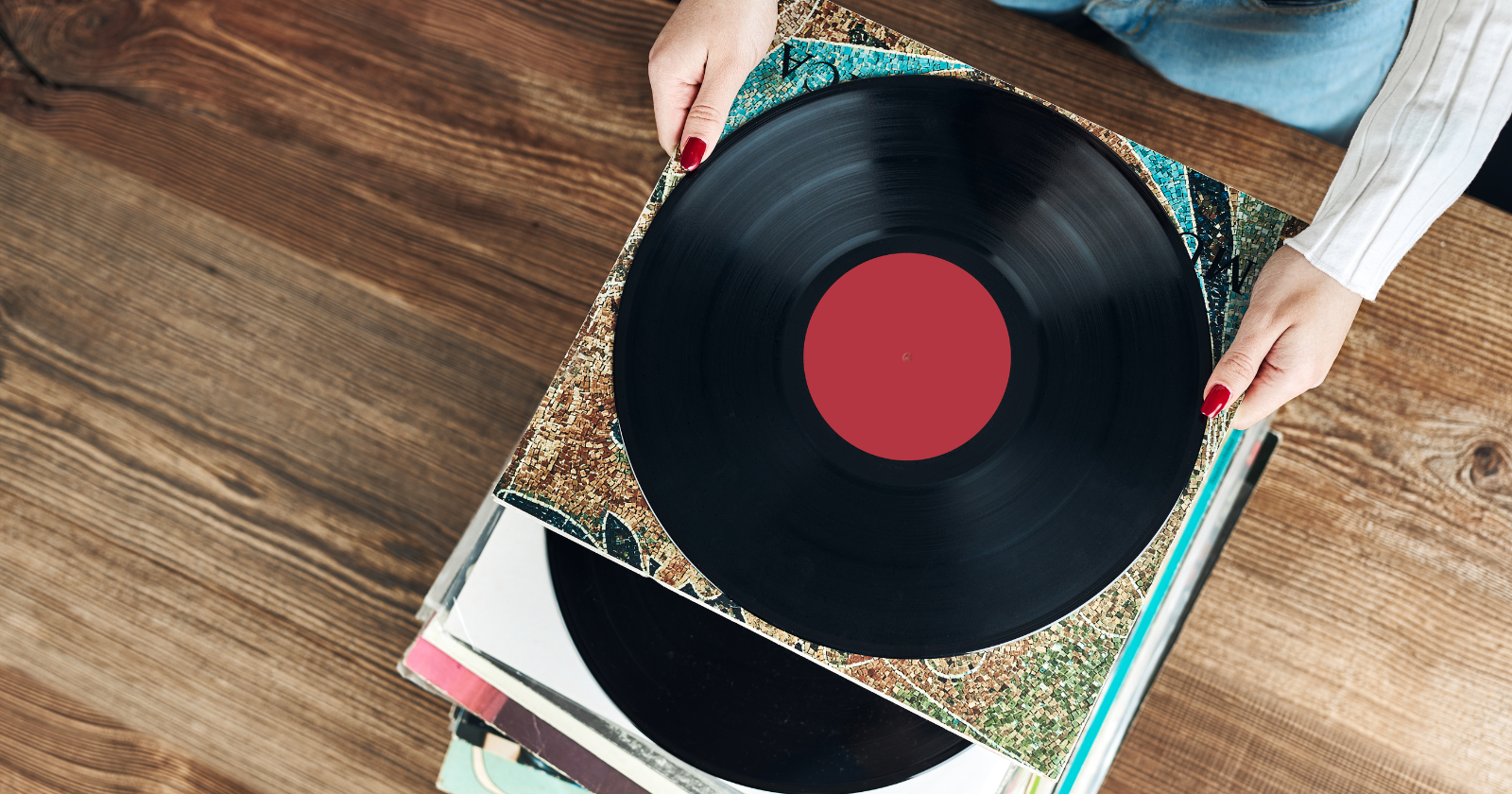
I still have that album. It is, to this day, my favourite. And not one second of finding it could happen now. A machine would have served me the right song on day two and saved me the wall, the humming, the saint behind the counter, and the entire stupid lovely quest. It would have been efficient. It would have meant nothing.
Friction is where the meaning hides
Here’s what I’ve come to believe, and it goes further than music. The effort of finding a thing is not a bug to be smoothed away. The effort is where the thing gets welded to you.
That record means everything to me partly because of the music, sure, but mostly because of the path I took to it. The damp flat. The neighbour I never thanked. The clerk. The humming. The whole ridiculous pilgrimage is baked into the songs now, so I can’t hear them without hearing all of it. The friction didn’t ruin the discovery. The friction was the discovery.
Get something handed to you frictionless, perfectly matched, zero effort, and it slides off just as easily. Easy come, easy forget. The stuff that sticks is the stuff you had to chase.
The difference between being fed and choosing
Now, I’m not going to stand here in a city I love, on a phone I adore, and pretend technology is the devil. I’d be a hypocrite, and a boring one. The algorithm is astonishing. It knows me unnervingly well. That’s exactly the problem.
Because what it knows is the person I already am. It studies my past and serves me more of it, an endless buffet of slight variations on what I’ve already swallowed. It has never once handed me something that made me go “what on earth is this,” because that’s precisely the thing it’s built not to do. Its entire job is to remove surprise. To eliminate the wall, the cousin’s tape, the leak through the plasterboard.
And here’s the sleight of hand we’ve all fallen for. We get fed a smooth diet of things we’ll probably like, and we call the result our taste. But taste isn’t a list of things you enjoy. Taste is what you’ve built from the collisions, the recommendations that went wrong, the records that baffled you for a year before clicking, the friend who made you sit through something you initially hated. A machine that only shows you what you’ll like is, by definition, the death of all of that. It’s not feeding your taste. It’s freezing it.
The cul-de-sac of liking what you like
There’s a clever phrase for the trap, the “filter bubble,” coined by an activist named Eli Pariser years before it got this bad. The idea is simple and a bit chilling. The more a system tailors itself to you, the smaller your world quietly becomes, until you’re living in a cosy little echo chamber that mistakes its own walls for the horizon.
You feel like you’re exploring. The catalogue is enormous, after all, millions of songs, infinite scroll. But you’re exploring a corridor that’s been built to curve gently back towards you. Every turn returns you to yourself. It’s the most comfortable cul-de-sac ever designed, and most of us have moved in without noticing we stopped travelling.
That’s what scares me, more for the kids than for me. Not that the music’s worse. It isn’t. But that the muscle for being surprised, for tolerating something you don’t immediately get, for letting a stranger’s taste crash into yours and rearrange the furniture, that muscle is going soft from lack of use.
How to put some grit back in
So lately I’ve been deliberately making my life less efficient, which sounds like a breakdown but is actually a plan.
I ask people. Properly. Not “what should I listen to” but “what’s the song that got into you when you were young and stupid, and why.” You learn more about a person from that answer than from a year of small talk, and occasionally you walk away with something that detonates in your chest.
I let myself get lost on purpose. Wrong turns into music, books, neighbourhoods, whole cuisines I’d never have been served. Half of it’s rubbish. The other half is the only stuff I’ll remember in ten years.
And when something baffles me, I sit with the bafflement instead of swiping past it. Some of the best things I own took a while to make sense. They’d never have survived a system that demands I like everything by the second listen.
The machine will keep offering you a flawless reflection of who you already are. Lovely. Comfortable. A trap. Go and find the wall to lie awake next to instead. Go and hum the tune badly at a stranger who might, if you’re lucky, take the time to actually listen.