
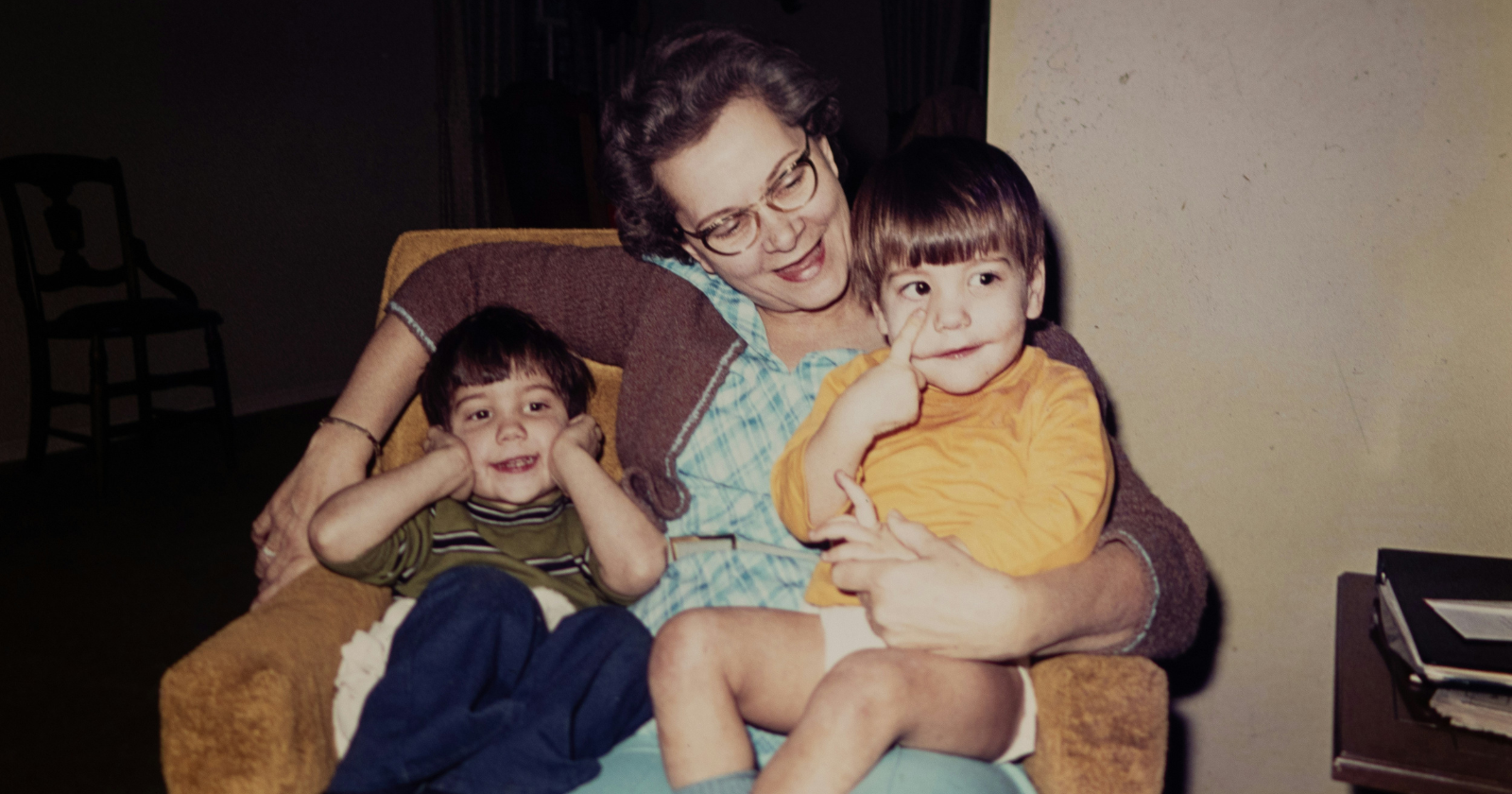
The claim in the title is partly true and partly mislabeled. The true part: children of the 1960s and 70s generally were not asked, in the way contemporary children are asked, about how they were feeling. The mislabeled part: the result, in the adults those children became, is rarely the thing the word resilience is supposed to describe. It is something narrower, with costs the title does not name.
This piece is about that gap. We are writers and parents, not clinicians, and what follows is a reading of two lines of research alongside careful observation, not a diagnosis of anyone’s parents or anyone’s childhood.
What was actually different about the 1960s and 70s
The cultural pattern the title is pointing at is real. Parents of that era, on average, asked their children fewer questions about how they were feeling, used a smaller working vocabulary for emotion in the household, and treated unhappiness, anxiety, or distress in children as something to be moved through rather than named and discussed. A child who fell off a bike was told to get back on. A child who came home upset was told to wash up for dinner. A child whose pet died was told the pet had gone away. The emotional content of the day was, for the most part, the child’s own private problem, and the language for sharing it was thin in most households even when the household was warm.
The Artful Parent
Family-life ideas and sharp reads, in your inbox.
None of this was abuse. Many of those households were loving, stable, and good places to grow up. What they were not, by current standards, was emotionally articulate. The default level of parental check-in was lower, and the implicit instruction to the child was to handle it.
Compared to today’s parenting, children were far more independent. We recently came across this video, which explains the psychology behind why children today lack resilience. It’s worth watching to understand how society has shifted from the way children were raised in the 60s and 70s.
Children, back then, were adaptable and learned to handle things on their own. The form the handling took, in many adults from that generation, is recognizable: a competence at proceeding through difficulty without stopping to feel it, a fluency at functioning when something is wrong, a relative quiet on the inner channel when asked what they are experiencing. The title calls this resilience. The research suggests it is closer to something else.
Why “resilience” is probably the wrong word
The most cited body of work on the distinction is the line of research by James Gross and colleagues on emotion regulation strategies. The major review, Oliver John and James Gross’s 2004 paper “Healthy and Unhealthy Emotion Regulation,” in the Journal of Personality, distinguishes two common strategies: cognitive reappraisal, which involves changing how one thinks about a situation that prompts an emotion, and expressive suppression, which involves managing the outward expression of the emotion without changing the underlying experience. The review consolidates a substantial body of experimental and individual-difference evidence. Reappraisal is associated with better outcomes across affective, cognitive, and social measures. Suppression is associated with worse ones, including higher rates of negative affect, lower well-being, poorer memory for emotional material, and elevated physiological responding in the person doing the suppressing.
The pattern being called resilience in the title overlaps substantially with the second category. The adult who proceeds through difficulty without stopping to feel it is, in many cases, suppressing the experience rather than reappraising it. The competence is real. So is the cost. The cost shows up in long-running irritability, in physical complaints that have no clear cause, in difficulty in close relationships where the other person needs an emotional response and is met instead with capable silence, and in the experience some adults report of not quite knowing what they feel about something important until well after the moment has passed.
This is a different state from genuine resilience, which the research generally describes as the capacity to recover function and well-being after adversity, often with active processing of what happened rather than its avoidance. The two states can look similar from the outside in the short term. They tend to come apart over years.
What the research says about asking
The foundational review on parental emotion socialization, by Nancy Eisenberg, Amanda Cumberland, and Tracy Spinrad in Psychological Inquiry in 1998, surveyed several decades of research on how parents shape children’s emotional development. The literature, by the authors’ own assessment, is largely correlational and not conclusive on every point. The general direction is fairly clear. Parental responses to children’s emotions matter. Parental discussion of emotions matters. Parental modeling of emotion matters. Children whose parents respond to their emotional signals in supportive, contingent ways tend to develop better emotion-related competence than children whose parents respond punitively, dismissively, or not at all.
None of this proves that the 1960s and 70s style of parenting produced damaged adults, and it does not say that. Many adults from that generation function very well. What the research does not support is the inverse claim, that the absence of being asked produces resilience as a positive developmental outcome. The available evidence runs in the other direction. Children who were asked, who were helped to name what they were feeling, and whose feelings were taken seriously, tend on average to develop the emotional competence that the older generation is sometimes credited with having despite, rather than because of, how they were raised.
The contemporary critique worth taking seriously
This is not the whole story. There is a real critique of contemporary parenting culture, in which every passing feeling gets named, every small distress gets a conversation, and children develop a kind of running internal commentary on their own emotional states that can itself become exhausting and self-focused. The critique has merits. Some emotional moments are better moved through than stopped for. Some feelings do not benefit from being articulated in the moment, and some children find too much asking intrusive or destabilizing.
The careful version of the contemporary practice is not the one in which a parent narrates the child’s inner life back to them in continuous detail. It is the one in which the parent stays available, notices what the child is going through, asks when it would help, and lets the child handle what they can handle on their own. That practice is closer to what the research supports than either the 1960s default or its modern caricature.
What the careful version of the title’s claim is
The careful version goes something like this. Children of the 1960s and 70s were asked less than children today, and many of them developed a particular adult capacity to function through difficulty without stopping to feel it. That capacity is useful in many situations and has been mistaken, in the cultural conversation, for resilience. What the research suggests is that it tends to be closer to expressive suppression, which is associated with measurable costs over time, and that it is not the same thing as the resilience produced by actually processing difficulty as it occurs.
An adult who recognizes this pattern in themselves, and wants to do something about it, generally cannot fix it through reading. Therapy, particularly the kinds that help a person reconnect with their own emotional signals, is what the relevant clinical literature points to. An essay can name the pattern. The work of changing it sits elsewhere.
What the older generation did get, from the parenting style of their era, was a workable adult life lived on a quieter inner channel than the one most of us would now choose to give our children. That is not nothing. It is also not what the word resilience usually means, and it is worth being clear about the difference, because the framing of the title is the kind of cultural memory that gets handed down, and the version handed down to the next generation should probably be more accurate than the one the previous generation told itself.