
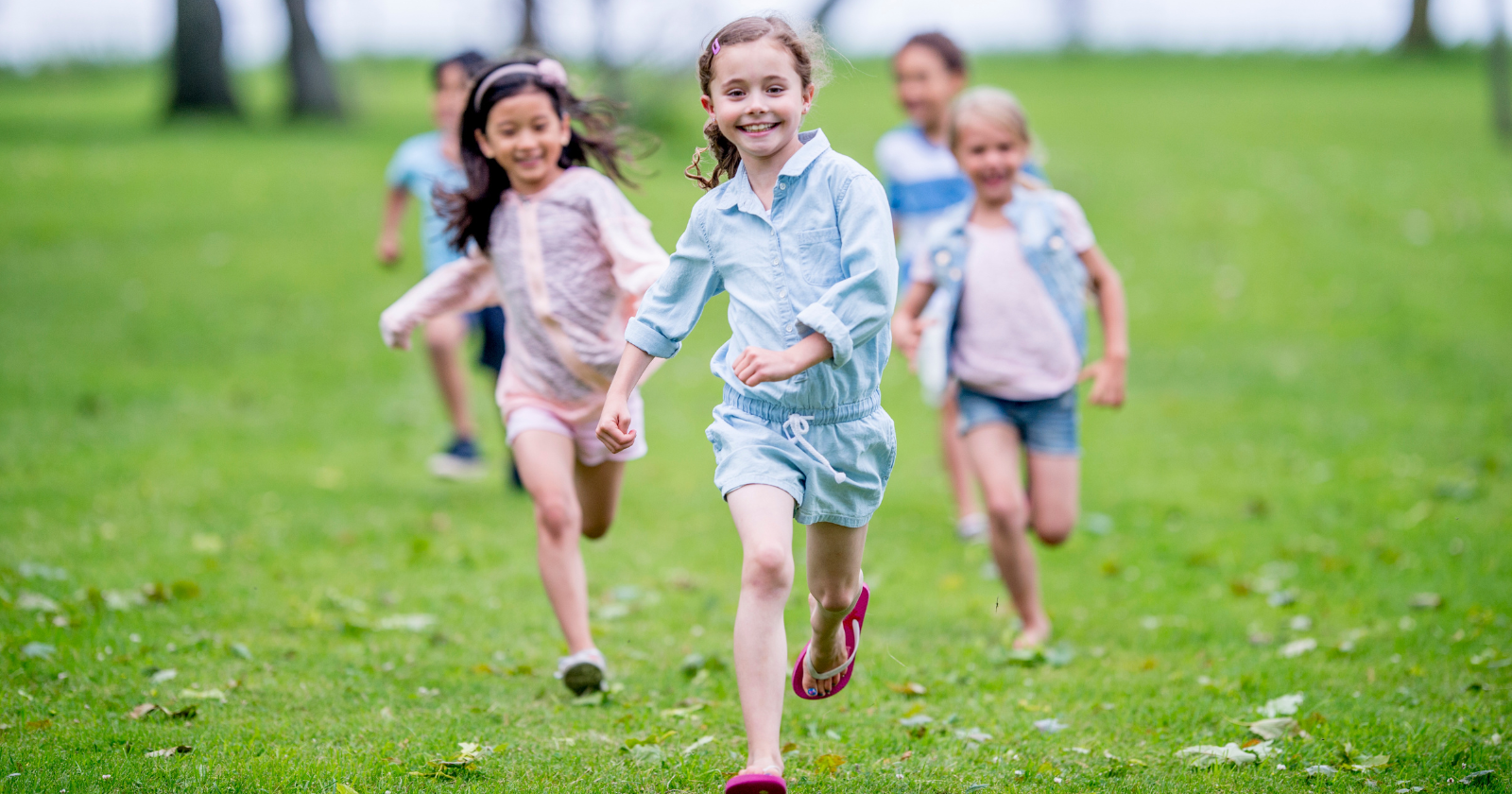
Ask people in their forties and fifties about the summers of their childhood and a particular kind of story tends to come up. They left the house after breakfast. They came back when they were hungry or when the light went. In between, no adult knew exactly where they were, and that absence of knowing was not treated as a problem. It was the ordinary condition of being a child.
What is striking is how often people reach for the word trust when they describe it. Not freedom, not neglect, not danger. Trust. They felt entrusted with their own afternoons, and that feeling seems to have lodged somewhere durable.
The harder question is the one many of them are still working through: why is it so difficult to hand the same thing to their own children, even when they say they want to.
The Artful Parent
Family-life ideas and sharp reads, in your inbox.
The change is real, and it is measurable
This is not only nostalgia rearranging the past into something softer than it was. The decline in how far children are allowed to move through the world on their own has been documented. In 1990, the Policy Studies Institute in London published One False Move: A Study of Children’s Independent Mobility, by Mayer Hillman, John Adams, and John Whitelegg. Its most quoted finding concerns the trip to school. In 1971, about 80 percent of English seven and eight year olds were allowed to travel to school without an adult. By 1990, that share had fallen to roughly 9 percent.
A later follow-up, the 2015 report Children’s Independent Mobility: A Comparative Study in England and Germany (1971-2010), found that the restriction had largely held, and that German children in comparable areas were granted considerably more independence than English ones. The point of citing these is narrow. The license to roam that older parents remember did not vanish in their imaginations. It contracted, and the contraction can be tracked in the data on something as plain as walking to school.
What the freedom was actually doing
It is tempting to treat the old arrangement as simply more relaxed, a function of parents who worried less. That reading misses what the children were doing with the time.
The developmental psychologist Peter Gray has spent years arguing that unsupervised play is not idle. In Free to Learn, published by Basic Books in 2013, he makes the case that play without adults present is where children practice settling disputes, managing risk, and running their own lives in miniature. When adults are always within earshot, the negotiation gets outsourced. The referee is already on the field.
That is the part the word trust seems to capture. A child left to organize a long afternoon is being told, in effect, that they are competent to handle whatever the afternoon contains. The message is delivered not in words but in the simple fact of being let go.
Why the handover feels so hard now
Parents who want to extend the same trust often find themselves unable to, and the reasons are not reducible to personal anxiety.
Some of it is structural. Streets carry more traffic than they did. Fewer children are out, so the loose supervision that came from other kids and other families being around has thinned. A child sent out alone today is genuinely more alone than a child sent out in 1980, because the sidewalk is emptier. The collective arrangement that made independence ordinary has partly dissolved, and one family cannot rebuild it by deciding to.
Some of it is social. There is now a watching quality to parenting that earlier generations did not face in the same form. A parent who lets a nine year old walk to the shop alone is aware that the decision could be seen, questioned, or reported. The calculation is no longer only about the child’s safety. It is also about how the parent will be judged for the choice.
And some of it is the strange effect of information. Older parents did not have a phone that could tell them, at any moment, where their child was and was not. The absence of that knowledge was uncomfortable in theory and unremarkable in practice. Once the tool exists, not using it starts to feel like a decision rather than a default.
What the memory is and is not
It is worth being careful about what the fond memory proves. It does not establish that the past was safer. Child road fatalities in England fell over the same decades that independent mobility collapsed, even as traffic rose, which is a reminder that the felt risk and the measured risk do not move together in any simple way. Nor does the memory show that every child thrived on being left alone. Some were frightened, some were bored, and some would have welcomed an adult who knew where they were.
What the memory does carry is information about how trust feels from the inside when you are eight, and how long that feeling lasts. People remember being believed in. They are trying to work out how to pass that on inside a world that has quietly raised the cost of doing so.
The interesting tension is that the thing they value was never really about distance or danger at all. It was about being treated as capable. That can be offered in smaller forms than a whole unsupervised summer, and many parents are finding their way toward those forms, one slightly longer leash at a time. The wish to be trusted, it turns out, is easier to honor than the specific landscape that once delivered it.