
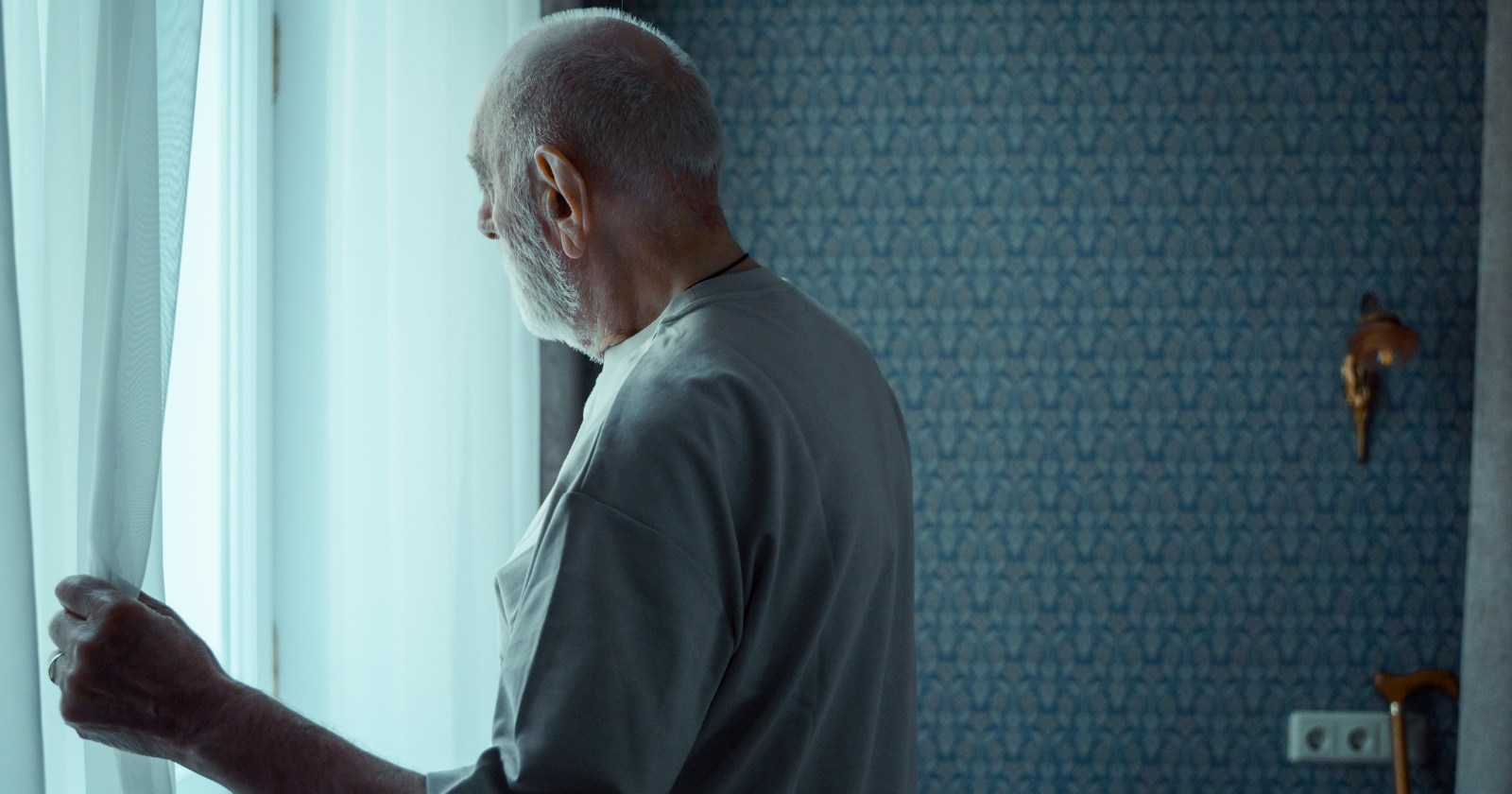

My dad is sixty-seven and, as far as I can tell, has not one close friend. People he nods to, plenty. A couple of neighbours he’ll pass the time of day with, the chap he buys his paper from, faces he knows on the high street. But nobody he’d phone with real news. Nobody who’d be asked to carry the coffin. Nobody, if I’m honest, who would notice for a worryingly long stretch if he simply stopped answering his door.
The hard part isn’t the fact of it. The hard part is that he would never, in a thousand years, call it loneliness. He calls it being independent. Being low-maintenance. Not wanting to be a bother to anyone. And I’ve slowly learned to hear those phrases for what they actually are, which is the vocabulary you get handed to describe loneliness when you were raised to believe that needing people is a weakness.
The words underneath the words
Once you learn to translate it, you can’t switch the translation off. Every one of his cheerful, self-sufficient little catchphrases turns out to have a second meaning running underneath.
The Artful Parent
Family-life ideas and sharp reads, in your inbox.
“I’m very independent, me” means I have trained myself to need no one, and I wear it like a medal because the alternative doesn’t bear thinking about. “I don’t like to be a bother” means I have decided my needs are a burden to other people, so I’ve stopped having them out loud. “I’m low-maintenance” means I ask for nothing, which sounds like strength and operates like a bolted door. And the part that gets me most is how proud he sounds delivering them. He isn’t complaining. He sincerely believes he’s describing a virtue, and in the world he was raised in, he is.
Where the language came from
Men of my dad’s vintage were issued a very particular rulebook. Self-reliance sat at the top of it, unchallenged. You stood on your own two feet. You didn’t air your business. You certainly didn’t lean on anybody, and above all you did not need, because needing was for the weak, the soft, the ones who hadn’t been brought up properly. Stiff upper lip, delivered without a trace of irony. Feeling things was an indulgence. Depending on others was close to a moral failing.
Hand a small boy that rulebook and he grows into a man for whom loneliness is, quite literally, unsayable. Not because he doesn’t feel it, but because the only honest words for it, I am lonely, I would like to be needed and to need someone in return, are banned outright by the entire framework he was built on. So he does the one thing left available. He takes the ache and files it under a heading his upbringing approves of. Independence. And the relabelling is so complete, so long-practised, that he’s no longer aware it’s happening. To him it stopped being a cover story decades ago. It’s simply the truth about himself.
Why I can’t just hand him the word
My obvious move, the one I’ve fantasised about, is to sit him down and say it straight. Dad, I think you might be lonely, and that’s allowed, and it is not a weakness. I have tried, gently, more than once. It goes nowhere, because the word lonely doesn’t compute inside his operating system. To accept it, he’d first have to accept the thing beneath it, that he has needs, that he’d like to be less alone, and that admission is precisely the one his whole life was engineered to prevent. Offering a proud, self-reliant man the word “lonely” registers, to him, as an accusation of failure. So he bats it away, good-naturedly, and reaches for “independent” again, and we are back exactly where we began.
You cannot re-language a sixty-seven-year-old man. The rulebook went in too early and set too hard. I’ve stopped trying to argue him out of his own vocabulary, because all the arguing does is make him grip it tighter.
The side door
What I found instead was a way around the front. If my dad can’t ask for connection, because asking is the forbidden act, he can still receive it in the single form his rulebook waves through, which is being useful. Being needed. So I started, on purpose, needing him.
I ask his advice on things I could perfectly well work out for myself. I get him to help with jobs I could pay a man to do in an afternoon. I ring him with a problem rather than just to talk, because a problem hands him a role, and a role is a thing he knows how to accept without it costing him his dignity. Give my dad a task, a way to be genuinely of use to his son, and he comes alive on the spot, because for a little while he is needed, and being needed is connection wearing the one costume he’ll let past the door. He would never call our long phone calls about my leaking gutter what they really are, which is two men keeping each other company. He calls it helping me out. And I let him, because the helping is the closeness, and if the closeness has to turn up disguised as a favour, I’ll take it in disguise.
The inheritance I’m trying to refuse
What unsettles me about all of this is that I can hear the opening notes of his vocabulary in my own mouth. I’m independent. I’m low-maintenance. I don’t like to bother people. The exact phrases, passed down like a pocket watch. I’m thirty years back along the same road he’s near the end of, and I can see with horrible clarity where it goes. To a pleasant, capable, entirely self-sufficient man with a nodding acquaintance at the paper shop and no one at all to ring.
So when I catch those phrases reaching for the exit, I’ve started treating them as a warning rather than a boast. The moment I hear myself insisting I don’t need anyone, I try to read it as a symptom I ought to attend to, not a medal I should polish. It’s the one thing my father handed me that I’m genuinely determined to give back.
I love the man. I’d give a great deal to hear him, just once, say the true thing in place of the approved one. But I’ve made a kind of peace with the likelihood that he never will, that the rulebook holds clean through to the end, and that he’ll go on calling it independence because the honest word was made unsayable long before he was old enough to choose. The most I can do is keep needing him, keep giving the loneliness somewhere to go that doesn’t force him to name it, and make very sure that when I’m sixty-seven and someone asks how I’m doing, I’ve held on to a word my father was never allowed to use.