
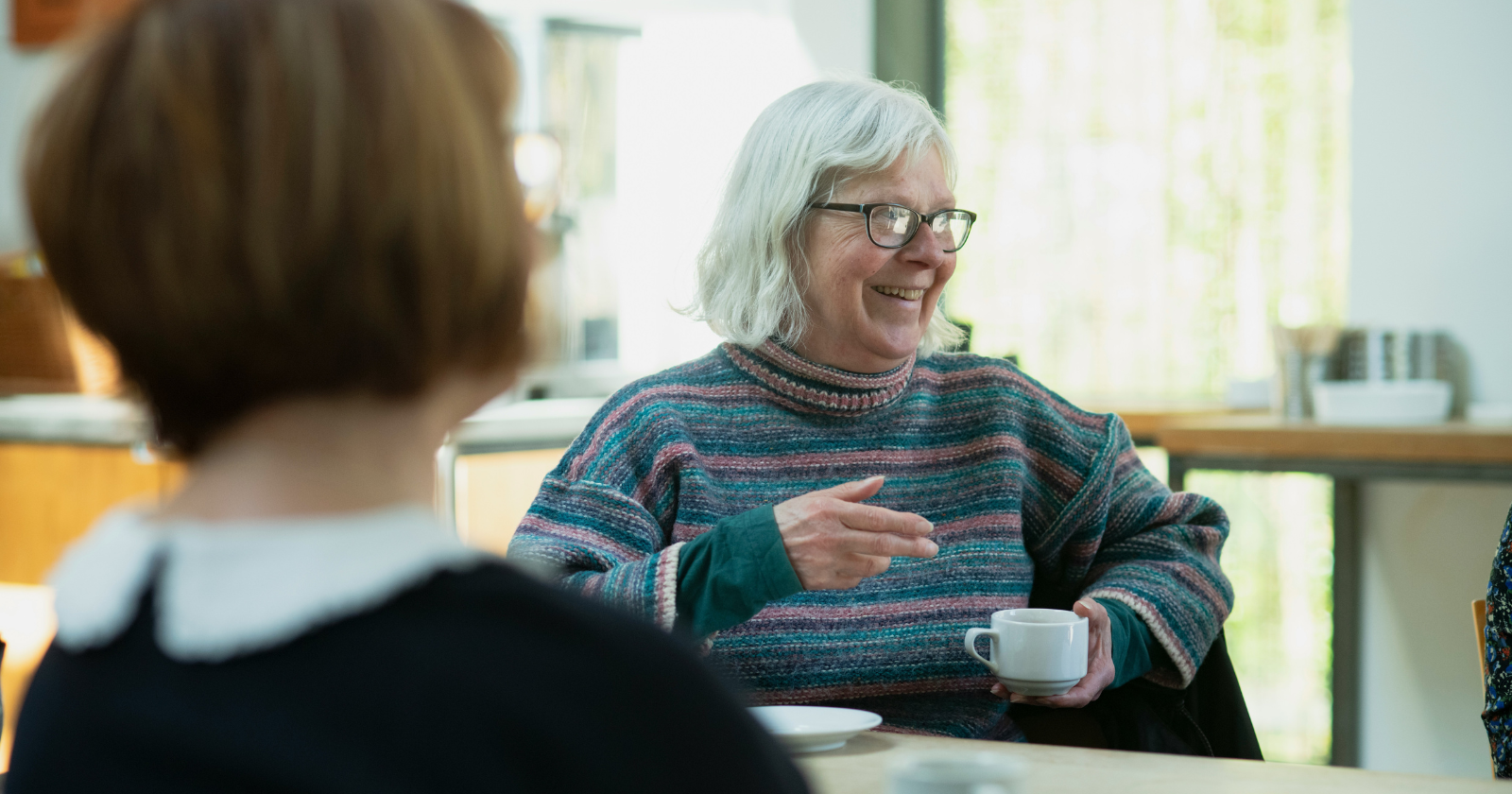
Somebody says the thing at dinner — the comment about your job, the dig disguised as a question — and you watch the oldest person at the table decline to take the bait. A small shrug. A change of subject. Twenty years ago they might have met it head-on; tonight they let it go by, and they seem genuinely unbothered as they reach for the potatoes.
It is easy to read that moment wrongly. The younger people often do, deciding the older person is biting their tongue, keeping the peace at their own expense, or simply no longer has the fire for it. The research on how people handle everyday conflict suggests a different reading: that letting the remark pass was neither suppression nor surrender, and that it cost them surprisingly little.
A week of small frictions
Two studies, drawing on the same large national project, mapped this with unusual care. Both used the National Study of Daily Experiences, in which adults aged twenty-five to seventy-four were called every evening for eight days running and asked, among other things, about the day’s tensions — not big life crises, but the ordinary friction of disagreements with a spouse, a grown child, a coworker, a neighbor.
In the first, published in Psychology and Aging in 2005, Kira Birditt, Karen Fingerman, and David Almeida found that older adults simply reported fewer interpersonal tensions than younger ones, felt less stress from the ones they had, and were more likely, when something flared up, to do nothing at all rather than argue. The difference was not simply that older people lived quieter lives with fewer provocations: even accounting for how often tensions arose, they responded differently.
The second study, led by Susan Turk Charles and published in the same journal in 2009, drew the sharpest line. It separated two kinds of daily moment: the times people actually had an argument, and the times something happened that they could have argued about but deliberately let pass to avoid a disagreement. Across more than a thousand people, the older a person was, the fewer of both they reported. But the telling result was emotional. On the days when people let a potential argument slide, older adults absorbed far less of an emotional hit than younger ones did — for every ten years of age, the spike in distress that came with swallowing a conflict shrank by about sixteen percent.
In short, the advice we all dispense and rarely manage — let it go, don’t let it get to you — appears to actually work for older people in a way it does not for the young.
The catch worth keeping
There is a detail in the 2009 findings that keeps the picture honest, and it is the part most likely to be lost in the retelling. The age advantage showed up only when people let the conflict pass. On the days they actually got into the argument, age bought them nothing: the older adults were rattled just as much as anyone else.
So this is not a story about unflappable elders who have risen above being hurt. When the fight actually happens, it lands on a seventy-year-old as hard as on a thirty-year-old. The benefit lives entirely in the stepping-around — in not having the argument in the first place. What seems to grow with age is not a thicker skin but a better instinct for which battles to skip, paired with the ability to skip them without stewing.
The fights that are left
There is a second pattern in the 2009 data worth noting, because it says something about where the remaining friction goes. As people aged, the arguments they did report narrowed toward home. Among older adults, well over half of their arguments — close to three in five — were with a spouse or partner, while a much smaller share involved other relatives, friends, or people at work; among younger adults the disputes were spread more evenly, with a sizable portion aimed at coworkers and associates. Some of that is simply the arithmetic of a smaller world after retirement, with fewer offices and committees to generate conflict. But it also means that the person an older adult is most likely to still argue with is the one sitting across the breakfast table — which makes the ability to let the small things pass less a private virtue than a kind of daily maintenance on the relationship that remains closest.
Why the skill arrives late
We write about research, not from a therapist’s chair, and what follows is a reading of the evidence rather than counsel for any particular family. With that said, the researchers offer a couple of plausible reasons for the pattern. One is a shift in what people are after: with the years ahead feeling fewer, older adults tend to prize a calm afternoon over the satisfaction of winning a point, and they say so directly, naming the wish to preserve goodwill as their main goal in a tense exchange. The other is plain experience — decades of navigating the same kinds of people teach you which provocations will pass on their own if you let them.
Younger adults, by contrast, often have something to accomplish in a disagreement: a boundary to set, a fact to establish, a relationship still being negotiated. For them, walking away can mean leaving the matter unresolved, and the mind keeps chewing on it. That difference may be why the same act of letting go soothes one person and gnaws at another.
What this can and cannot do
This is one line of research, not the last word, and its limits matter. Both studies compared people of different ages at a single stretch of time rather than following the same people as they aged, which leaves open the possibility of generational differences — older adults today were raised in an era with its own rules about showing feeling, and some of the effect could trace to that rather than to aging itself. The samples were overwhelmingly white and American, and a week of evening phone calls is a thin slice of a life.
The finding is also easy to romanticize, and worth guarding against. Letting things pass is not always the healthy choice, and the same researchers note that passive strategies are poor ones when a problem genuinely needs to be faced. There is a real difference between releasing a petty remark at dinner and silently absorbing a pattern of disrespect for years, and this research speaks only to the first. The relief older adults feel comes from skipping fights that were never worth having — not from swallowing the ones that were.
For families living with deeper or lasting strain — estrangement, a relationship that leaves someone diminished, conflict that doesn’t resolve — a study about everyday frictions is the wrong tool, and a family therapist or counselor is the right one. Nothing here is meant to stand in for that.
The quiet math of an argument skipped
What looks from across the table like a person going quiet is, more often, a person doing a sum the rest of us haven’t learned yet — weighing what a remark would cost to answer against what it costs to let drift by, and finding, more reliably with each passing decade, that the second number is smaller.
The young win more arguments. The old, it seems, more often decline to have them, and sleep better for it.
