
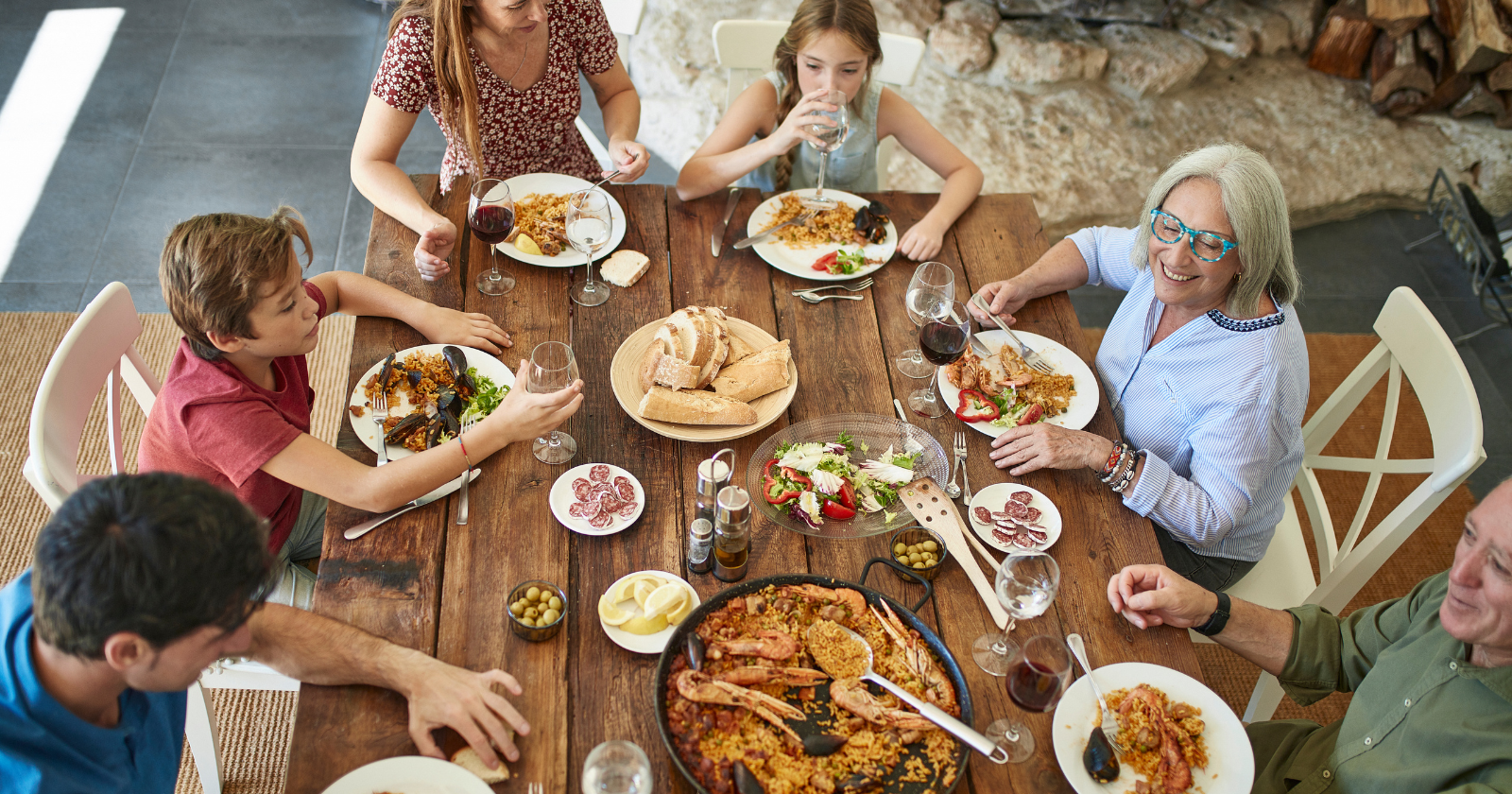

I was never sent to bed as a child. Not in the way most children were, marched off at seven so the grown-ups could talk freely. I stayed. I sat at the table while the adults carried on around me, the plates cleared, the conversation drifting to whatever it was adults discussed, and I was simply there for it, a small permanent fixture among people three and four times my age. I thought nothing of it at the time. Looking back, I suspect it shaped me more than almost anything else that happened to me.
What it gave me, without my ever noticing the gift arriving, was an ease around adults. A more or less total absence of the nervousness most people carry into a room full of older or more important figures. I’ve spent my own adult life watching other people work hard to build that exact ease, the very thing I was handed for nothing, simply because no one ever told me to go upstairs.
Children who get sent away learn there’s a velvet rope
When you send a child off to bed so the adults can talk, you teach them something you never meant to. You teach them that there is an adult world, a real one, with a door on it, and that they are on the outside. The talk that counts happens elsewhere, after they’ve gone, in a room they aren’t admitted to. Most children absorb this completely, and it installs a low, lasting barrier, a sense that grown-ups are a separate and faintly intimidating species who gather somewhere you’re not allowed.
The Artful Parent
Family-life ideas and sharp reads, in your inbox.
That barrier doesn’t dissolve when you grow up. It just changes shape. The adult who was sent away as a child often becomes the adult who tightens in front of seniority, who feels junior in the room long after they’ve earned their place in it, who treats anyone older or more senior as a member of that closed grown-up club they were once shut out of. The ease they’re missing is really the taking-down of a wall that went up in childhood, and walls built that early are stubborn to shift.
I never had the wall put up in the first place
Nobody ever built that wall in me, which is the sole reason I have the ease, and I should be honest that it reflects no credit on me whatsoever. I wasn’t a confident child. I was just a present one. Because I was always already in the room where the adults talked, I never learned there was a room I wasn’t in. Grown-ups weren’t a separate species convening behind a closed door. They were the people at my table, talking, now and then pausing to explain something to me or let me have my say. By the time I was an adult myself, sitting across from other adults carried no charge at all, because I’d been doing precisely that since before my memory starts.
It showed up most when the stakes were highest
Where this paid off most plainly was in business. Through my late twenties and early thirties, running restaurants, I spent a great deal of time across tables from people far older and more powerful than me. Bank managers. Landlords. Suppliers who’d been at the game for forty years. The sort of people my peers found genuinely frightening to sit opposite. I watched friends my own age go stiff and deferential in those rooms, over-explaining themselves, laughing a beat too eagerly, shrinking down into their chairs.
What I never did was any of that, and it had nothing to do with being braver than them. It simply never occurred to me that the man across the table was a different order of creature merely because he was older and held more of the cards. He was another adult at a table, and I’d been at home at that table my whole life. The fifty-year-old banker and my uncle holding forth over the Sunday washing-up occupied, somewhere in my nervous system, the identical category.
It wasn’t a clean gift, though
There’s no dressing this up as an unbroken win, because it wasn’t one. There’s a price to being sat among adults that early, and I’ve paid some of it. You grow up a touch too fast. You take in adult conversation, adult worry, adult weather, long before you’ve any means of processing it, and a fair amount of it lodges somewhere and stays. You can wind up slightly out of step with other children, more at ease among forty-year-olds than among your own kind, which is its own peculiar loneliness when you’re nine years old.
I was, in certain respects, a small adult before I’d ever properly been a child, and I’m genuinely not sure that’s something to recommend across the board. The ease I gained came bundled with an early seriousness, a sense of being a junior participant in a grown-up world rather than a child loose in a children’s one. If I could redraw it, I might ask to have been sent up to bed just often enough to know a childhood was also on offer. So when I call it a gift, I mean a complicated one, the kind that takes something even as it gives.
The ease is built, not born
The useful part, for anyone who never got the early seat and feels its absence, is that the ease was never a personality trait to begin with. It was exposure, plain and simple. I’m not naturally blessed with people. I merely had a twenty-year head start on being in rooms with adults, and all that head start did was render those rooms ordinary. Which means the wall, for anyone carrying one, is made of nothing sturdier than unfamiliarity, and unfamiliarity is about the most curable condition going. You dissolve it the same way I never had to, through sheer repetition. By putting yourself in the rooms that intimidate you, the ones with the senior people and the real stakes, often enough that they stop being a separate world and become just another table.
The barrier between you and the people who seem to belong more than you do is almost never as solid as it feels from where you’re standing. It’s mostly a door you were sent to the wrong side of, once, as a child, and have gone on believing in ever since. I was lucky enough never to have the door pointed out to me, so I grew up assuming there wasn’t one, and a barrier you don’t believe in turns out to hold almost no power over you. The grown-ups, it emerges, were only ever us. There was never a club, and there was never a velvet rope. There was just a table, and a single question of whether anybody ever told you that you were allowed to stay at it.