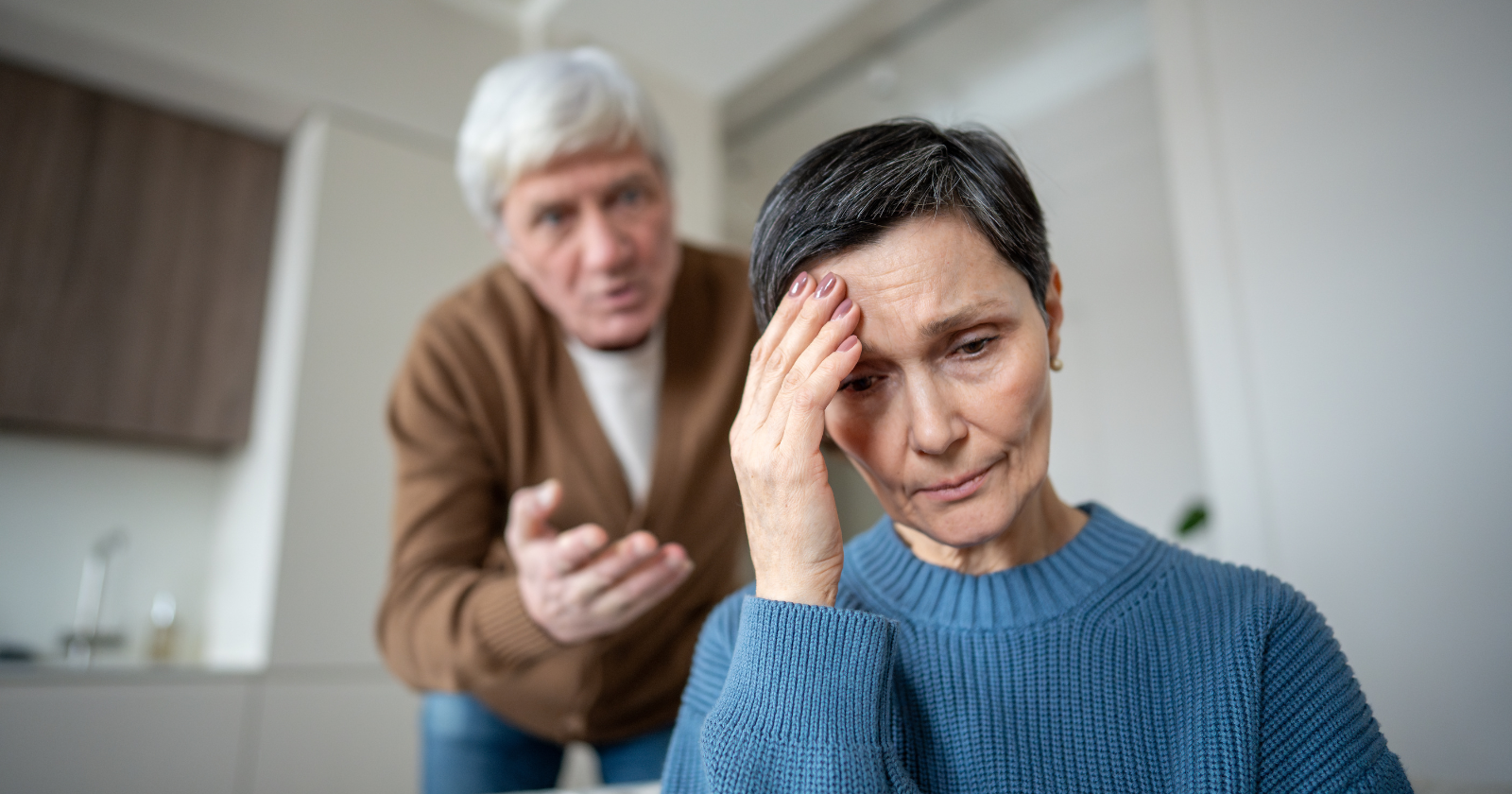
Every family seems to acquire one eventually. The older relative who’s become “difficult”. The one who snaps at the nurse, refuses the help, digs their heels in over nothing, turns awkward in waiting rooms and shops. The word that gets reached for is stubborn, or contrary, or, in the worse moments, a euphemism with a sigh attached, as in “she’s become a bit of a handful”. Almost everyone assumes the difficulty is simply what happens to some people with age, a souring of the temperament, a hardening into obstinacy as the years pile up.
I used to think that too, until I watched it happen up close to my great-aunt Sylvia and worked out that the difficulty wasn’t coming from inside her at all. She was reacting, with complete reasonableness, to the way she had started being treated. The stubbornness everyone complained about was a response, and once you saw what it was a response to, it stopped looking like stubbornness and started looking like the only dignified option she had left.
The small erasures we don’t notice ourselves doing
It happens in tiny increments, none of them cruel, most of them well-meant. The voice goes first. People begin speaking to someone in their seventies in a slightly slower, slightly louder, faintly sing-song register, the tone you’d use with a small and easily startled child. Then the speed of everything around them drops, as though they have become fragile and dim rather than simply older. And then comes the worst one of all, the point at which questions about their own life stop being addressed to them.
This was the one that did the real damage with Sylvia. At the doctor’s, the GP would ask how she’d been sleeping, how her appetite was, whether the new tablets were helping, and would ask every bit of it while looking at me, the person who had driven her there, as though Sylvia were a piece of luggage I’d carried in rather than the patient sitting eighteen inches to my left. She was right there. She could hear every syllable. She knew precisely how she had been sleeping. And the entire conversation about her own body proceeded over her head, between two other people, as if she had stepped out of the room she was still sitting in.
What that does to a person
Picture it happening to you. Picture spending seventy-odd years as a capable adult, running a household, raising children, holding down work, making every decision a life demands, and then finding, by slow degrees, that people have started treating you as though you are no longer quite present. Your opinion gets double-checked with somebody else. Your speech gets waited out with visible, theatrical patience. Your own doctor discusses you with your daughter while you sit and listen. You would not take that gracefully. Nobody would. You would, I rather suspect, become precisely what we have agreed to call difficult.
Difficulty, in that situation, is not a character flaw at all. It’s the last assertion of personhood still available. When the polite, cooperative version of you is being steadily treated as absent, being difficult is one of the few moves guaranteed to make people remember you are in the room. Refusing the help, bristling at the redirected question, digging in over something small and winnable, these are not the acts of someone who has lost their reason. They are the acts of someone insisting, in the only language still getting through, that they have not yet gone anywhere.
The cruel loop it sets up
The genuinely unfair part is what the difficulty then triggers. The family sees the snapping and the resistance and concludes that the relative is declining, turning unreasonable, no longer someone you can deal with in the ordinary way. So they increase the exact treatment that caused it. They speak more slowly still, manage a little more, consult the patient less and the carer more, talk over the head a little more often. Which generates more difficulty, which confirms the diagnosis, which licenses still more managing. The patronising handling manufactures the behaviour it then holds up as proof that the handling was needed. Round and round it goes, and the person at the centre shrinks a little with every revolution.
It was never really about capability
What I came to understand watching Sylvia is that the thing being stripped from her was not capability. She had lost some, certainly, as every one of us eventually will. It was standing. The plain status of being addressed as the author of her own life, the subject of her own sentences rather than the object of everybody else’s. People can absorb the loss of a startling amount of capability without much fuss. What they cannot absorb, what none of us could, is being demoted from a person into a situation to be handled, and being lucid enough to watch it happen in real time.
How easily the whole thing reverses
What convinced me beyond any doubt was the speed at which it undid itself. I started, on purpose, doing the opposite of everyone else. At the next appointment, when the doctor aimed a question at me, I would look at Sylvia and say nothing, leaving the gap there for her to fill, until the doctor took the hint and asked her directly. At home I spoke to her exactly as I always had, ordinary speed, ordinary volume, no bright nursery lilt. When something needed deciding, I asked her first, ahead of the room. The difficult woman I’d been warned about more or less evaporated. She was sharp, dry, perfectly reasonable, sometimes wrong in the way any of us are wrong, and thoroughly good company. The difficulty had never lived in Sylvia. It had lived in the mirror people kept holding up to her, and the instant the mirror changed, so did the reflection.
None of which is to claim that genuine decline doesn’t exist, or that every difficult older person is purely the victim of bad handling. Sometimes there is real illness, real pain, real confusion, and difficulty that owes nothing to anyone’s behaviour. But the reflex to file a prickly seventy-year-old under stubborn and stop there skips the explanation that fits far more often, which is that they are responding, entirely sanely, to being slowly rubbed out. And even where real decline is present, being talked over and managed and discussed in the third person makes all of it worse, never better.
Sylvia died a few years ago, sharp to the last, still selectively difficult with the people who had earned it. I think of her whenever I catch someone bouncing a question over an older person’s head, or dropping into that slow, bright, careful voice, and I think of how fast a human being can be made to feel they have vanished while they sit there watching it done to them. The older relatives we label difficult are, far more often than not, simply refusing to disappear on cue. And given what’s being done to them, that refusal looks less like a problem to be managed than the most reasonable response left in the room.