
The address book that quietly empties
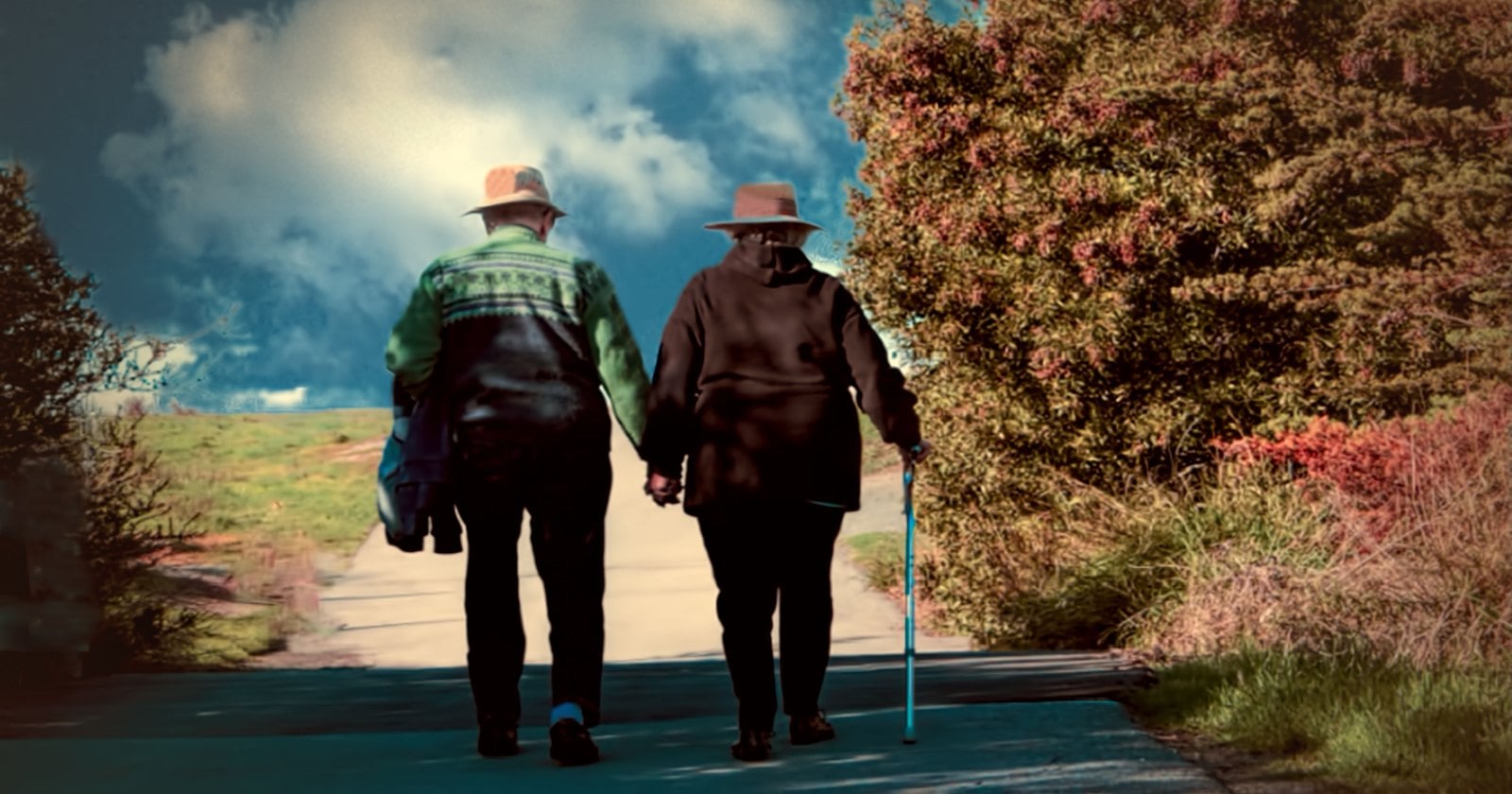
Somewhere in their late sixties or seventies, a lot of people look up and notice that the room has gotten smaller. The work friends fell away when the work did. The couples they used to see for dinner moved, or drifted, or simply stopped calling. The phone, which once buzzed with a wide cast of acquaintances, now lights up with the same four or five names. It is easy to read that as a loss — proof that the world has narrowed around them, that they have been quietly left behind.
A long-running study of social relationships suggests the picture is less bleak than that, and more patterned than it feels. Across adulthood, our networks do shrink. But the shrinking happens mostly at the outer edges, among the acquaintances and peripheral contacts, while the small core of close relationships tends to stay put. And the people who remain in an older person’s circle are, on average, rated as bringing more warmth and less friction than the wider crowd of earlier years.
What a study that followed the same lives actually found
The work comes from Tammy English and Laura Carstensen, published in 2014 in the International Journal of Behavioral Development. They drew on a sample of one hundred and eighty-four people, ranging in age from eighteen to ninety-four, recruited in the San Francisco Bay Area and followed over time rather than surveyed once. Participants reported on their social networks and their everyday emotions in week-long bursts, repeated at five-year intervals, so the researchers could watch change unfold within the same individuals instead of comparing strangers of different ages.
Using growth-curve analysis, they found that social networks expand through young adulthood, level off somewhere around middle age, and then decline gradually through later life. The decline was not spread evenly. It fell almost entirely on what the researchers call peripheral partners — the acquaintances, colleagues, and friendly-but-distant contacts that fill out a busy life. The number of close partners, the people at the center, stayed relatively stable across the years.
In other words, the circle narrows from the outside in. What thins is the wide ring of people we know a little. What holds is the handful we know well.
The part that tends to surprise people
There was a second finding, and it is the one that cuts against the gloomy story. When the researchers asked about the emotional tone of those relationships, older adults described their network members more positively and less negatively than younger adults did. The people in an older person’s life were, on the whole, rated as eliciting more good feeling and less bad.
That tone mattered, and the study was built to test whether it did. Alongside the network measures, participants reported their feelings repeatedly over the course of ordinary days, the kind of in-the-moment sampling that catches life as it is lived rather than as it is summarized afterward. Here the finding was lopsided in a telling way. It was the negativity in a network that tracked with daily emotion — the more of it the people around someone carried, the more negative their days tended to run. How much positive feeling the network gave off did not move their daily mood much at all, and neither did the sheer size of the circle.
That is a quietly important reversal of a common assumption. We tend to treat a long contact list as a kind of social wealth, and a short one as evidence of poverty. The data suggest the count is close to beside the point. What weighed on people’s daily emotional weather was not how many names they could claim but how much friction the people still in their lives brought with them.
The framework behind this is socioemotional selectivity theory, a body of work Carstensen has built over decades. The plain version is this: as people sense that their time is growing shorter, the goals that feel urgent shift away from gathering new contacts and information and toward emotional meaning. Under that lens, letting peripheral ties fade is not collapse but editing — a quiet reallocation of limited energy toward the relationships that pay it back.
Why this is one reading, not the last word
It is worth being careful here, because the comforting interpretation can run ahead of the evidence. We write about research for a living; we are not clinicians, and this is an account of what some studies found, not a verdict on any particular person’s life.
A few things temper the story. The finding that older people’s networks feel warmer came from a single point of measurement, compared across ages — so it cannot, on its own, separate the effects of growing older from the effects of belonging to a particular generation. The study is observational, which means it can show that the makeup and tone of a network travel alongside daily emotion, but it cannot prove that one produces the other.
And the theory’s language of “choosing” can paper over the fact that some narrowing is plainly not chosen. Retirement removes a daily cast of people. Friends and partners die. Illness and immobility close doors that no one wanted shut. A circle can shrink because someone is pruning it toward what matters, or because the world has done the pruning against their will, and the two can look identical from the outside. The researchers themselves note that age kept predicting better emotional experience even after network size and tone were accounted for — meaning the changing social world is only part of the explanation, and older adults’ own skill at steering toward the positive likely carries some of the weight.
What this can and cannot tell you
So this is not a reassurance that every quiet phone is a sign of contentment. There is a real difference between a small circle that feels chosen and a small circle that feels like a locked door, and the research does not erase it. Loneliness that aches is not the same thing as solitude that suits, and the findings here speak to the second, not the first. If someone’s shrinking world feels less like editing and more like isolation — if it carries a steady low grief — that is worth taking seriously, and worth raising with a doctor or a counselor rather than waiting out.
What the study can offer is a gentler default reading of a common pattern. The friend who stops returning calls, the dropped invitations, the address book with more names crossed out than added — these are, for many people, the ordinary arithmetic of a life moving toward its center rather than evidence that the center has failed to hold. The people still standing in the room are often there because, somewhere along the way, they were chosen.
A circle that has grown small is not always a circle that has grown poor. Sometimes it is just down to the people who were going to stay all along.
