
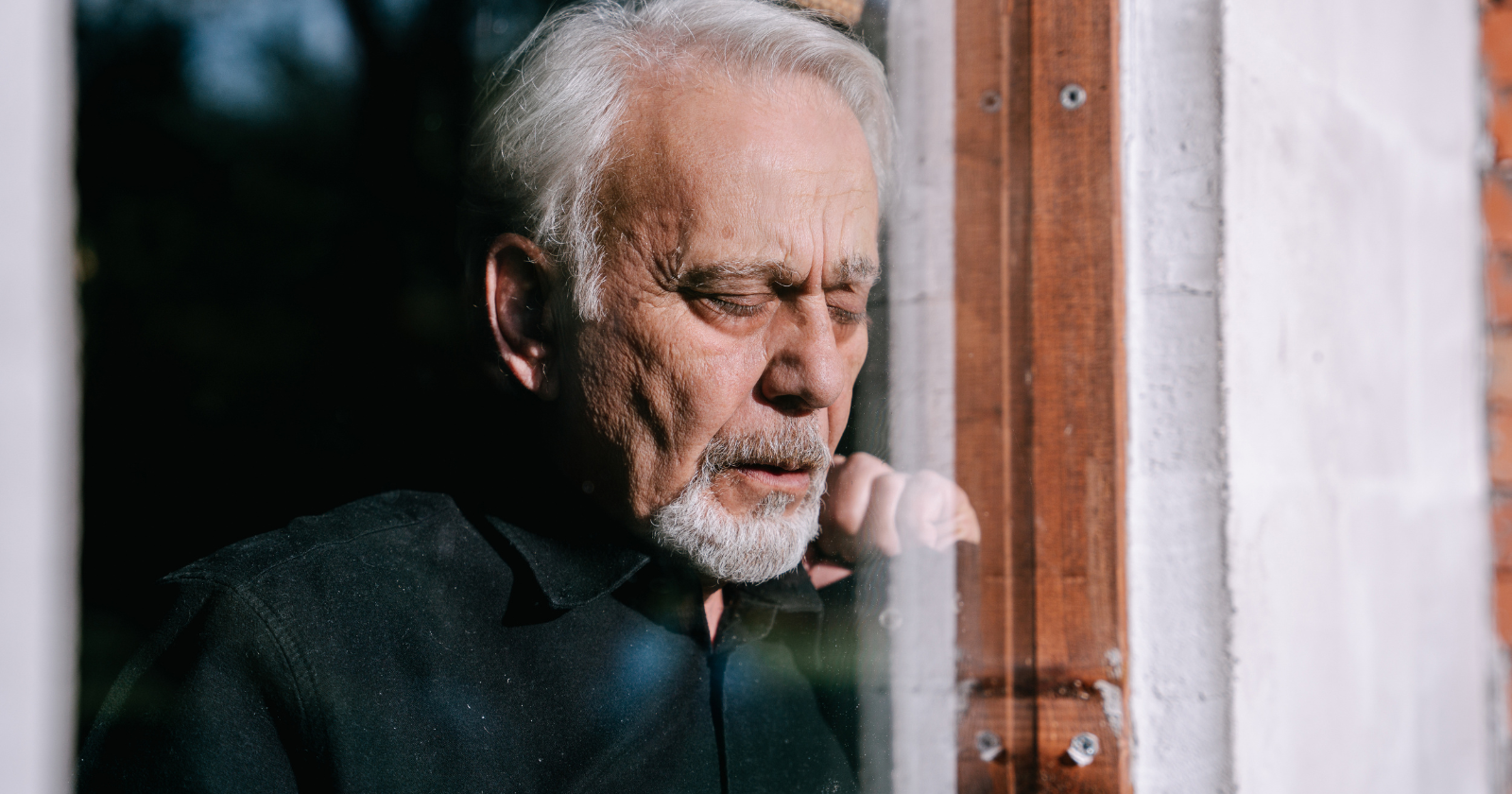
The person is not dead. The friendship did not end with a fight. The marriage dissolves by degrees, or the career disappears in a restructuring that nobody calls a loss, or the version of the life you expected to be living by now has moved steadily further away without anyone naming what happened. These losses arrive without ceremony. They persist without acknowledgment. The world does not send casseroles. There is no designated period after which it is acceptable to be better, because there was never a designated period during which it was acceptable to be worse.
What makes them difficult to carry is not only their weight. It is the absence of any shared recognition that there is weight.
We are writers, not clinicians. What follows is a reading of the research and an attempt to describe a pattern that the research itself has found difficult to fully address.
The frameworks that exist, and where they stop
Two bodies of work have come closest to naming what this category of loss actually is. The first is Pauline Boss’s work on ambiguous loss, developed over several decades and brought together in her 1999 book Ambiguous Loss: Learning to Live with Unresolved Grief, published by Harvard University Press. Boss described two distinct types: the person who is physically absent but whose status remains uncertain, such as someone who has gone missing, and the person who is physically present but psychologically no longer fully there, as in the later stages of dementia. What both share is the quality that defines the whole category: no clear event, no recognized ending, no agreed point at which grief becomes sanctioned.
The second framework is Kenneth Doka’s concept of disenfranchised grief, developed in his 1989 edited volume Disenfranchised Grief: Recognizing Hidden Sorrow (Lexington Books). Doka’s central observation was that some grief is not acknowledged by the social world: the grief of someone who loses a partner whose existence was private, the grief of a pregnancy lost before it was public, the grief of an estrangement that the family officially denies. The loss is real; the social world simply declines to recognize it, and in declining withholds the infrastructure that ordinarily supports grief.
Between these two frameworks lies a vast and largely unmapped territory: the ordinary, quiet, unspectacular losses that belong to neither category exactly and yet share their essential feature. The friendship that drained away. The identity given up in a life-stage transition and never recovered. The family configuration you understood as permanent that shifted quietly until it wasn’t there. The version of yourself you expected to become, which stopped being possible and was never mourned because the loss had no event.
Why the absence of a ritual matters more than it seems
Rituals do not create grief. They give it a shape. They establish a perimeter: something real happened here, it is appropriate to mark it, here is the form the marking takes, and here is roughly when it ends. Without that shape, grief has no edges. It does not have a beginning you can point to or an ending you can approach. It persists in the periphery, coloring things without being named.
Boss has argued that the specific difficulty of ambiguous loss is not the loss itself but the ambiguity: the inability to complete the internal accounting of what happened, to place it correctly, to understand when the mourning is proportionate and when it has exceeded what the loss warranted. Where there is no clear event, the grieving person has no external reference point against which to measure their own experience. They cannot know whether what they are feeling is appropriate, because nobody has agreed that anything has happened.
This creates a particular kind of isolation. The person carrying an unrecognized loss is frequently surrounded by people who have no idea they are carrying anything. The loss is invisible to everyone except the person inside it, and that invisibility is often experienced as a kind of additional loneliness on top of the loss itself: not only has something gone, but there is no shared acknowledgment that it went.
What tends to happen over time
Without a ritual, without a named period, without any external structure that acknowledges the loss and gives the mourning somewhere to go, the grief tends to settle rather than resolve. People describe a kind of baseline flatness they cannot account for, a tiredness that does not lift with rest, a distance from experiences that should matter more than they seem to. They often cannot connect what they are feeling to anything that happened, because what happened did not look like a loss. It looked like an adjustment, a change, a decision, a phase of life.
The connections, when they come, often come late. Many people arrive at an understanding of what they are carrying only after years of living with it without a name for it. What the name provides is not relief exactly, but location: the recognition that the weight belongs to something real, that the grief is proportionate to something that actually happened, that the failure to resolve is not a personal failing but the structural outcome of a loss that was never given what it needed to move.
The gap between weight and visibility
The research has the least to say about this category of loss partly because it is the hardest to study. Bereavement is measurable and trackable; it has a clear event, a before and after, and outcomes that can be followed over time. The loss of a version of one’s life, or of a friendship that faded, or of the trajectory one spent a decade building, resists the tools the research normally uses. The loss has no agreed start date. The population experiencing it is diffuse and largely invisible even to themselves.
What can be said is that the absence of a word for something does not make it less real to carry. The grief literature is built substantially around death, and many of the losses that most trouble people across a lifetime do not involve death at all. They involve an ending that was never declared, a grief that had no ceremony, a mourning that had no permission to begin and therefore no permission to end.
If what is being described here resonates with something you are carrying that has felt difficult to place or to speak about, that difficulty is part of the pattern, not evidence of an unusual response. A counselor or therapist who works with grief, including the kinds that do not arrive with a clear event, can be worth seeking out. The weight is not easier to carry for being unnamed.
The gap between the weight and the visibility is where a lot of people spend considerable portions of their lives. The research will, eventually, catch up to the territory. The people living in it have been waiting a while.
