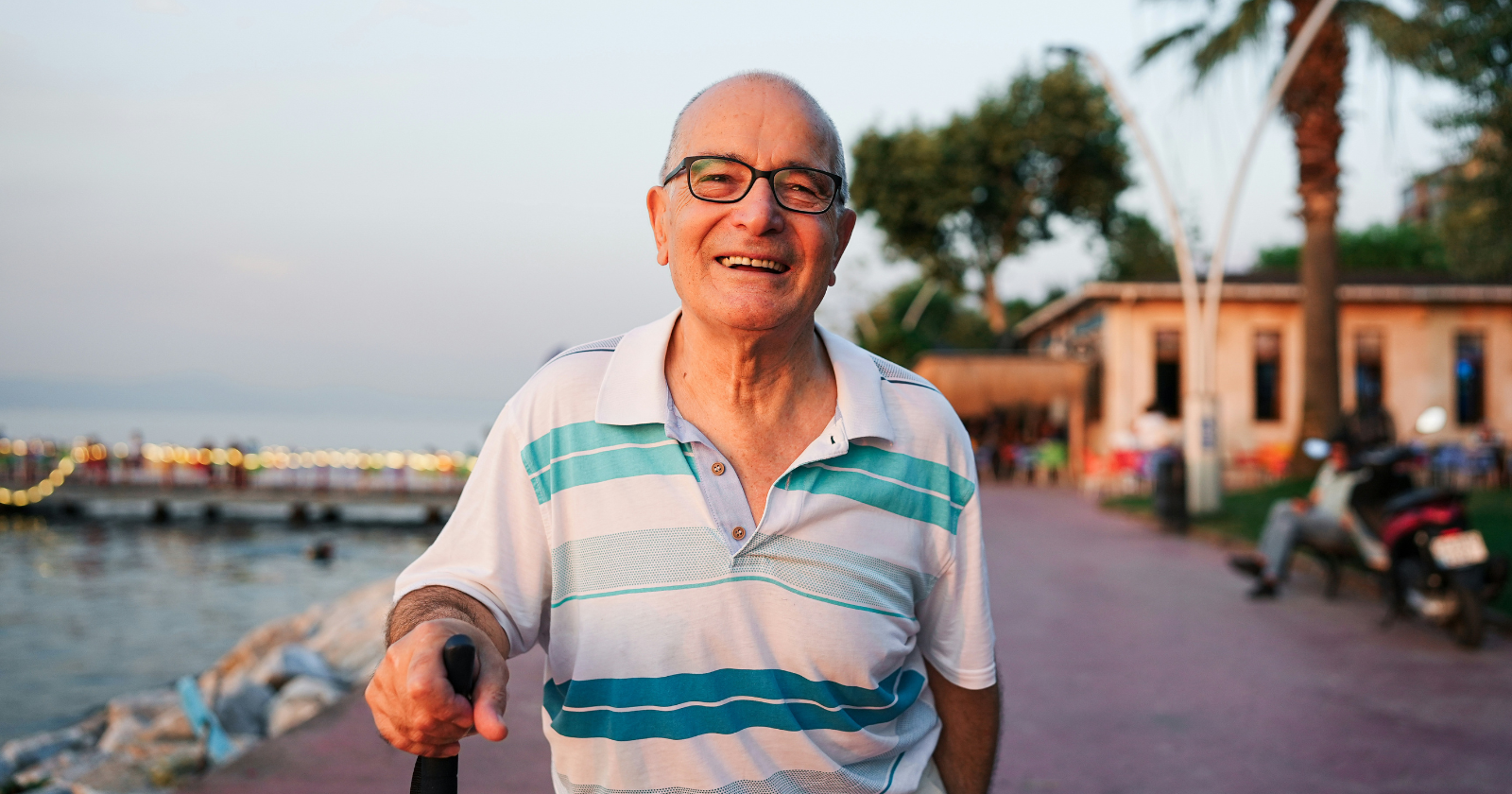
My dad retired at sixty-two with no plan to speak of. No spreadsheet of hobbies, no bucket list, no grand reinvention of the self. He just kept walking to the same coffee shop he’d been going to for twenty years, the one where the owner knew his order and half the regulars knew his name.
For a long time I thought this was a failure of preparation. He should have a project. A class. Something.
Then I watched a family friend do everything “right.” Retired early, sold up, moved to a lovely house an hour outside the city, and filled a calendar with golf and Spanish lessons and a woodworking course. Within two years he was one of the loneliest people I knew.
That contrast has stuck with me, because it points at something most retirement advice gets backwards. The people who don’t go lonely in retirement aren’t usually the ones who planned the most. They’re the ones who stayed somewhere they could show up without a reason.
Retirement quietly deletes a place you never noticed
Here’s the thing nobody warns you about work. Yes, it’s where you earn money and slowly lose your hairline. But it’s also, for most people, the main place they see other humans entirely by accident.
You don’t schedule the bloke two desks over. You don’t book a meeting to moan about the coffee. It just happens, five days a week, for thirty or forty years. Low effort, high frequency, no planning required from you at all.
Then you retire, and that whole layer of your social life switches off overnight. Not because anyone died or fell out with you. It just stops. And if the only place left in your day is home, you’ve gone from two social worlds to one, very fast.
Most of us prepare hard for the money side of that cliff. Almost nobody prepares for the accidental-humans side.
The magic of somewhere you can show up without a reason
There’s a lovely bit of sociology for this. In 1989 a sociologist called Ray Oldenburg wrote a book arguing that a decent life needs three kinds of place. Home is your first place. Work is your second. And then there’s what he called the third place: the café, the pub, the library, the park bench, the barbershop. Somewhere that isn’t home and isn’t work, where you turn up regularly, informally, and mostly for no particular reason.
The whole point of a third place is that you don’t need an appointment or an excuse to be there. You just go. You might talk to someone, you might not. Either way you’re a face among faces, and over time those faces start to know yours.
One aside from Oldenburg that I love: he reckoned the big chains make weaker third places than the scruffy local independents, because the money and the loyalty drain off to head office instead of staying in the room. In other words, the grumpy corner café is quietly doing more for your soul than the shiny franchise ever will.
My dad’s coffee shop was a textbook third place. The family friend’s beautiful house in the countryside had exactly none within walking distance. He had activities. What he didn’t have was anywhere to simply be.
Why a full calendar is more fragile than it looks
This is the part I want to push on, because “just stay busy” is the standard retirement advice and I think it’s half wrong.
Scheduled activities are brittle. Every single one needs a decision, a reason, a bit of energy, and usually a car. The golf needs a booking and three other people. The class runs for eight weeks and then it’s over. Miss a couple of sessions, feel a bit awkward about walking back in, and the whole thing quietly lapses. I’ve watched it happen more than once.
A third place asks almost nothing of you. No decision, no reason, no organising committee, no one waiting on you. On a grey Tuesday when you can’t be bothered with anything at all, you can still shuffle down to your usual café and sit there with a paper. The bar for showing up is on the floor, and that is precisely why it survives the bad days.
That’s the bit people miss. You’re not trying to build the most impressive social life. You’re trying to build the most durable one. Durability comes from low effort and high frequency, not from a packed and heroic schedule that collapses the first month you don’t feel like it.
I learned a version of this from the other side of the counter. I used to run a small chain of restaurants, and I sold it during the pandemic. What surprised me wasn’t losing the business. It was realising how many regulars had used our places as a home away from home: the same corner table, the same order, the same nod on the way in. When the shutters came down, some of them lost a lot more than a lunch spot. They lost a room where they belonged without having to earn it.
And no, this isn’t soft feel-good stuff
I know “have a café” sounds twee. But the stakes underneath it really aren’t.
Loneliness is now treated as a serious public health problem. A large review of the research found loneliness linked to a 26% higher risk of early death, social isolation to 29%, and living alone to 32%. The same body of work suggests chronic disconnection can dent your health roughly as much as smoking does. In 2023 the US Surgeon General went as far as calling loneliness an epidemic, reckoned about half of adults were affected, and put the health risk on a par with smoking up to fifteen cigarettes a day.
You would never let a parent take up smoking at sixty-five and just shrug. Isolation deserves at least the same seriousness. The trouble is that it creeps in politely, disguised as a quiet, tidy, well-earned rest.
What I’d actually tell you to do
So if you’re near retirement yourself, or you’re watching a parent walk towards it, here’s where I’d point the attention.
Stop asking “what will you do all day.” Start asking “where can you show up without a reason.” One of those questions produces a calendar. The other produces a life.
Then guard your proximity like it matters, because it does. The instinct to retire somewhere bigger, quieter and further out is completely understandable and often a mistake. A smaller place you can walk from, near a café or a market or a park, beats a grand house marooned in silence every time. Walkability isn’t a lifestyle nicety at seventy. It’s social oxygen.
And plant the roots early. The best third place is one you’ve worn a groove into, where you’re already a regular by the time work disappears. Don’t wait until retirement to go hunting for your people. Be a familiar face somewhere long before you need it to catch you.
My dad is still walking to that coffee shop, by the way. He’s outlived two of the owners and complains bitterly about the new one. He also hasn’t had a lonely week in twenty years. No spreadsheet required.