

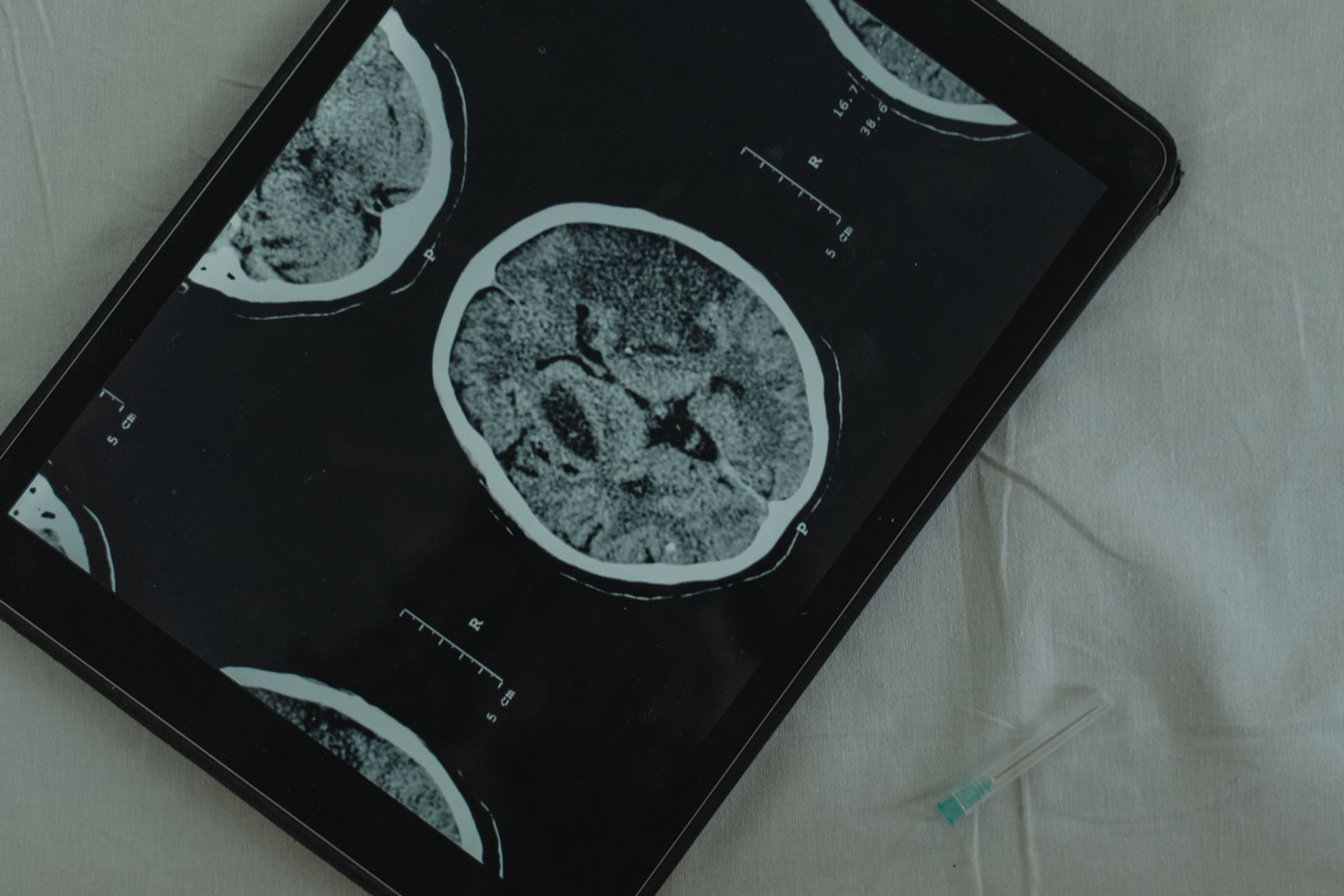
When Helen Fisher and colleagues conducted a functional MRI study with recently rejected individuals, showing them photographs of the partner who had left them, the scans revealed activation in neural regions associated with reward and motivation. The ventral tegmental area — a cluster of dopamine neurons in the midbrain — showed significant activity. So did the nucleus accumbens, the orbitofrontal cortex, and the insular cortex. These are the same structures that activate in people experiencing substance cravings. The heartbroken participants were, in a very literal biochemical sense, going through something that looked like withdrawal.
Fisher, a biological anthropologist at Rutgers, had spent years mapping what happy love looks like in the brain. The rejection study was the mirror image, and the mirror turned out to be uncomfortably clear. The neural signature of a fresh breakup is not sadness alone. It is craving.
The scanner that turned heartbreak into a map
The setup was almost cruelly simple. Each participant brought two photographs to the lab: one of the partner who had rejected them, and one of a familiar but emotionally neutral acquaintance. Inside the scanner they alternated between staring at the ex, doing a distracting count-backwards math task, and looking at the neutral face. The math was there to reset the emotional baseline between hits.
When the ex’s face appeared, blood flow surged into reward-and-motivation regions that neuroscientists had already catalogued in studies of gambling, nicotine, and cocaine. The activation reached into the same circuitry implicated in addiction — the nucleus accumbens and orbitofrontal/prefrontal cortex tied to craving. The subjects were not calm. They were reaching.
The participants reported spending a large share of their waking hours thinking about their former partner.
Why the brain treats a person like a drug
The mechanism is older than romance. The ventral tegmental area evolved to push mammals toward things that keep them alive and reproducing — food, water, warmth, mates. It does this by pumping dopamine into downstream targets when a reward is anticipated, and by pumping harder when the reward is delayed or uncertain. Slot machines exploit this. So does a partner who has just stopped answering texts.
A stable, mutual relationship dampens the craving circuitry over time. The dopamine spike smooths out into something more like the steady hum of the oxytocin-and-vasopressin attachment system, which is why long-married couples describe love as calmer than the early lightning of a new romance. Rejection yanks the dampener off. The reward is suddenly withheld, and the circuit responds the way it always has when a reliable reward disappears: by demanding more of it.
This is the same machinery that binds babies to caregivers and later binds adults to each other. When the bond breaks, the machinery does not switch off. It runs harder.
The habit loop underneath
The three-part habit loop — cue, routine, reward — has been mapped onto basal ganglia circuitry that carves grooves into the striatum every time a behaviour is repeated. Check phone, see message from partner, feel warmth. Repeat a few thousand times over eighteen months and the loop is physically etched.
Breakups do not delete the groove. The cue still fires — the phone still buzzes, the coffee shop still smells the same, the song still comes on in the grocery store — and the routine still launches. The hand reaches for the phone. The mind reaches for the person. Only the reward has vanished.
This is exactly the profile of a broken habit loop, and it is why the neuroscience of habit change maps so cleanly onto grief recovery. Extinction of a conditioned response, in a rat or a human, does not erase the original learning. It writes a competing new memory on top of it. The old track is still there, waiting for the right cue on a bad night.
Why you keep checking their Instagram at 2 a.m.
Fisher’s team also saw activity in regions tied to weighing gains and losses — the same kind of forebrain machinery that lights up in gamblers calculating whether to double down. The heartbroken brain, weeks in, was still running cost-benefit math on a person who had already left.
This is the neural substrate of the 2 a.m. Instagram scroll. It is not weakness or lack of dignity. It is the reward system doing what it evolved to do — searching for a signal that the withheld reward might return. Every ambiguous story post is a variable-ratio reinforcement schedule, the exact schedule that makes pigeons peck at a lever until they collapse. Relationship researchers have noted that this pull is strongest for the anxiously attached, for whom reward and pain circuitry can fire at once around the same person.
The insular cortex was firing too. That structure processes physical pain and visceral disgust. When people say a breakup physically hurts, they are not being metaphorical. Social rejection appears to route through some of the same tissue that processes a stubbed toe.
The withdrawal timeline
The study offered a quiet piece of good news about time. Comparing participants at different points after their breakups, the researchers found that the more days had passed since the rejection, the less activity showed up in the attachment-linked region — the right ventral putamen/pallidum — when people looked at the ex’s photo. At the same time, areas tied to reappraising hard emotional situations and assessing gains and losses were engaged, which the team read as a sign that rejected people are trying to understand and learn from what happened.
The early weeks were the worst. The disruption showed up as insomnia, appetite loss, obsessive thinking, and the specific misery of waking up already sad. Over time, the attachment-related pull measured in the scanner tended to be weaker in those further from the breakup, even as the underlying bond took longer to loosen.
Which is to say: the craving eases before the love does. A person can stop wanting to text their ex months before they stop caring about them. That gap is where recovery actually lives.

Why willpower alone rarely works
The prefrontal cortex, the part of the brain that handles executive control and long-term planning, does get involved during rejection. It tries to inhibit the craving signal. But the prefrontal cortex is metabolically expensive and tires quickly, while the ventral tegmental area is ancient, cheap to run, and effectively never sleeps.
This is the same asymmetry that makes quitting cigarettes so hard. Cognitive resolution — the 9 a.m. decision to not text — sits in one system. The 11 p.m. urge sits in another, older one that outlasts the resolution by hours. Computational models of decision-making circuits now let researchers simulate how these systems weigh competing signals, and on a tired night the older system tends to win.
The interventions that actually work borrow from addiction medicine: remove cues (unfollow, put photos in a box), replace routines (call a friend at the hour you used to call them), and let the extinction curve do its slow work. Time is the only real solvent, and time works because neurons need repetition to lay down the competing memory that overrides the old groove.
The evolutionary logic of pain that refuses to quit
One question the research keeps circling: why would evolution build a system this cruel? A brain that treats a departed partner like a missing dose of a drug seems maladaptive on its face.
The likely answer is that pair bonding, in humans, is expensive. Raising a child through the years of dependency our species requires is a heavy investment, and any neural machinery that made partners cheap to leave would have been ruthlessly selected against. The craving is the cost of the glue. A brain that could shrug off a breakup would also, on average, be a brain that could shrug off the mother of its children after a bad harvest.
Even in non-human mammals, related circuitry shows up. Researchers at the Champalimaud Foundation traced a specific neural circuit for sexual rejection in female mice, a reminder that the brain machinery for processing a “no” is deeply conserved.
What the scans keep showing
More than fifteen years after the 2010 study, the broad pattern has held up as research groups have continued to examine romantic love and rejection in the scanner. The reward-and-motivation regions recur: the ventral tegmental area, the nucleus accumbens, the orbitofrontal cortex, the insular cortex.
On an MRI printout, a freshly heartbroken brain looks strikingly like the brain of someone in the early days of quitting nicotine. For many people, learning this — that the neurochemistry is doing its job, not that they are broken — turns out to be steadying.
The photograph in the scanner is still there in the archive somewhere, still triggering the same circuits it triggered back in 2010, in a person who has almost certainly moved on. That is the whole story, really. The groove stays. The reward changes. The brain, given enough repetitions of the cue without the payoff, quietly starts building somewhere new.
