
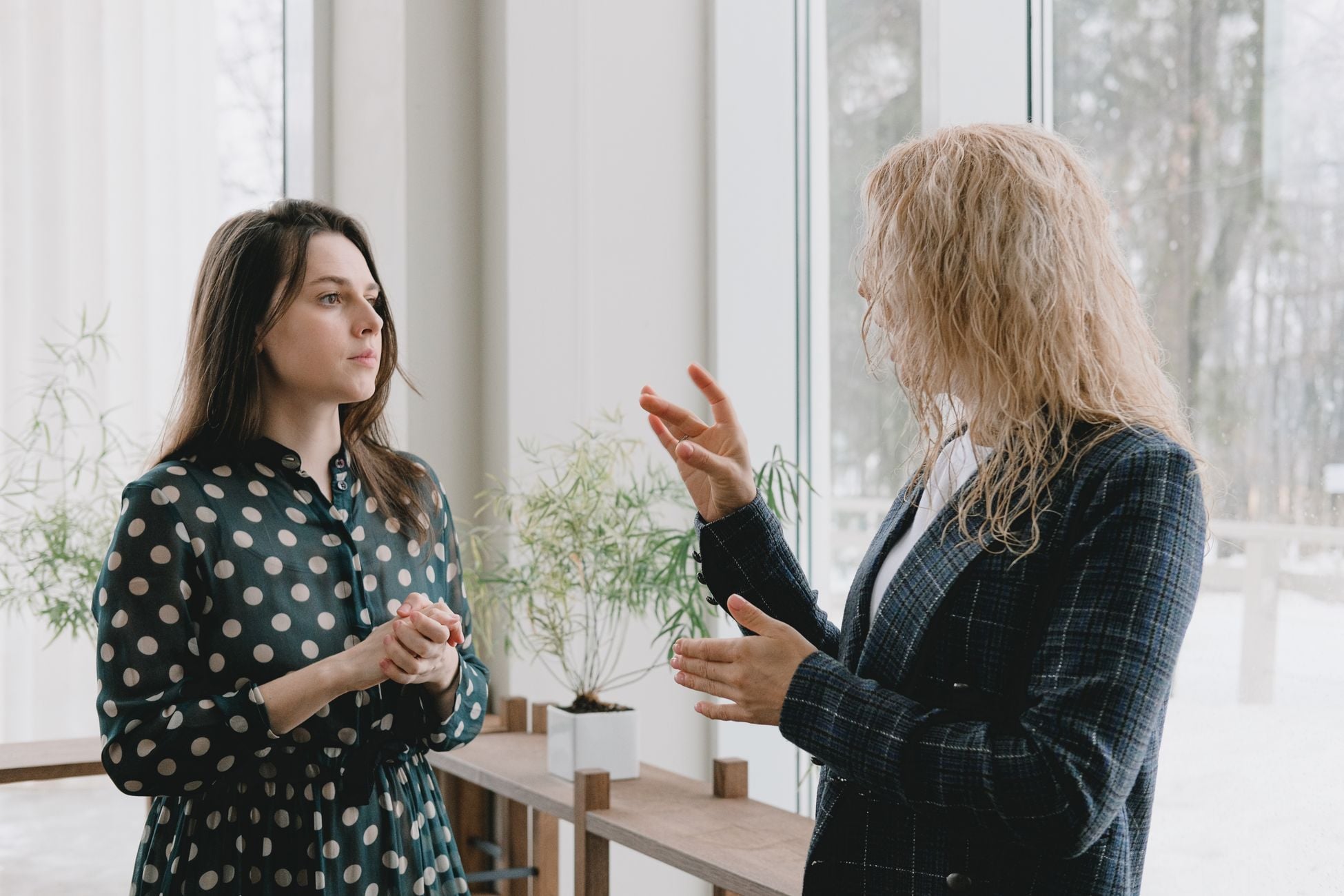
In 1999, Tanya Chartrand and John Bargh sat pairs of strangers down in a room and told them they were testing a photo-description task. What the participants did not know was that one person in each pair was a confederate, trained to either rub their face or shake their foot at set intervals during the conversation. Within minutes, the real subjects began doing the same thing. The face-rubbers got face-rubbed at. The foot-shakers got foot-shaken at. Nobody noticed they were doing it. Chartrand and Bargh published the results and gave the phenomenon a name that stuck: the chameleon effect.
It has become one of the well-known findings in social psychology. And it is happening to you, right now, every time you talk to another human being.
What the original experiment actually showed
Chartrand and Bargh ran three studies in sequence. The first established the baseline effect: subjects in the face-rubbing condition rubbed their own faces significantly more often than subjects in the foot-shaking condition, and vice versa. They did it without prompting, without reward, and, when questioned afterwards, without any awareness that the confederate had been doing anything unusual at all.
The second study asked whether mimicry produced liking. Confederates were instructed either to mirror the subject’s posture and mannerisms for ten minutes, or to sit neutrally. Subjects who had been mirrored rated the interaction as smoother and reported liking the confederate more. The effect was small but consistent. Being copied felt good, even when nobody could say why.
The third study looked at who mimics the most. People who scored high on a trait called perspective-taking — the disposition to imagine another person’s point of view — mimicked significantly more than people who scored low. The chameleons, in other words, were the empathisers.
The behaviours that get copied
The list is longer than most people realise. Posture is the most obvious: if the person across from you leans forward, you often lean forward shortly afterward. Cross your legs and watch what happens across the table. Foot-tapping, hair-touching, the way someone holds a coffee cup — all of these get transmitted between conversation partners without conscious intent.
Speech mirrors too. Within minutes of meeting, two people begin to adjust their speech rate, pitch range, pause length, and even vocabulary toward each other. Regional accents soften or strengthen depending on who is listening. A person from Manchester talking to a person from Atlanta will, over the course of an hour, meet somewhere in the middle without either deciding to.
Facial expressions are the fastest of all. When you see someone smile, the muscles around your own mouth activate within milliseconds — faster than you can consciously register the smile itself. The same holds for frowns, winces, and expressions of disgust. Your face is halfway to matching theirs before your brain has finished processing what you saw.
Why the brain does this
The leading explanation involves what neuroscientists call the perception-behaviour link. Simply perceiving an action activates the same motor regions in the observer’s brain that would fire if the observer were performing that action. The link between seeing and doing is not a separate cognitive step; it is baked into the wiring. Mirror neurons appear to be one mechanism among several that make this possible in humans.
From an evolutionary standpoint, the utility is straightforward. Humans are a species that survives through cooperation, and cooperation requires rapid, low-cost signalling of alignment. Copying someone’s posture is a way of saying I am with you, I am safe, I am on your side without having to say anything at all. Infants begin doing it early in life — newborns stick out their tongues at adults who stick out their tongues at them.
The liking loop
The strangest part of the effect is the feedback it creates. As researchers studying mirroring and rapport have documented, people who mimic more are liked more, and people who are liked more get mimicked more in return. A conversation between two comfortable, engaged people looks, on video played back at double speed, like a slow dance. Heads tilt together. Hands lift together. Laughter arrives on the same beat.
The reverse also holds. Two people who dislike each other, or who are locked in a power struggle, actively resist mirroring. Their postures diverge. One leans in, the other leans back. One speeds up, the other slows down. Body-language analysts who study interrogation footage and diplomatic negotiations look for exactly this pattern — the moment mirroring breaks down is often the moment the relationship does.
The waiter, the salesperson, the therapist
Mimicry has measurable downstream effects on behaviour, not just feeling. Waiters who repeat customer orders back verbatim receive larger tips than waiters who acknowledge the order with a paraphrase or a nod. Salespeople trained to subtly mirror customer posture close more deals. Negotiators who mirror opposing counsel reach agreement more often and extract better terms.
Therapists have leaned on a version of this for decades, though not under the neuroscience label. Carl Rogers, the founder of client-centred therapy, built his method on reflecting a client’s own words and feelings back to them — a kind of verbal mirror meant to deepen the therapeutic alliance. He did not have brain imaging to explain why that kind of attunement helped. He just knew it did.

Who mimics more, and who mimics less
Not everyone chameleons at the same rate. The Chartrand and Bargh perspective-taking finding has been replicated many times, and additional traits have been added to the profile. People with high scores on interpersonal sensitivity, agreeableness, and self-monitoring tend to mimic more. People with autism-spectrum traits, on average, mimic less spontaneously, though they can learn to do it consciously. People in positions of high power mimic less than people in positions of low power — a pattern that shows up in both laboratory studies and workplace observation.
Culture matters too. Broadly similar rates of automatic mimicry appear across cultures, though the rules about when it is appropriate to display vary. And mood plays a role: people in a positive mood mimic more than people who are anxious or low, which may be one reason that a stretch of depression can be accompanied by a subtle sense that social interactions have gone flat.
The dark side of the mirror
The effect is not always benign. The same mechanism that builds rapport between friends can be turned to less honest ends. Con artists, pickup artists, and manipulative negotiators have long exploited deliberate mirroring to fabricate a sense of connection that isn’t earned. The target feels understood. The target is, in fact, being reflected back at themselves.
There is also a cost to the chameleons themselves. People who mimic constantly, across many different social contexts, can lose track of which mannerisms are theirs and which they picked up from someone else. The social chameleon, in the popular sense, is not always admired — the word carries a whiff of inauthenticity, of a person who has no fixed self because they are always becoming whoever they are next to.
What it looks like in slow motion
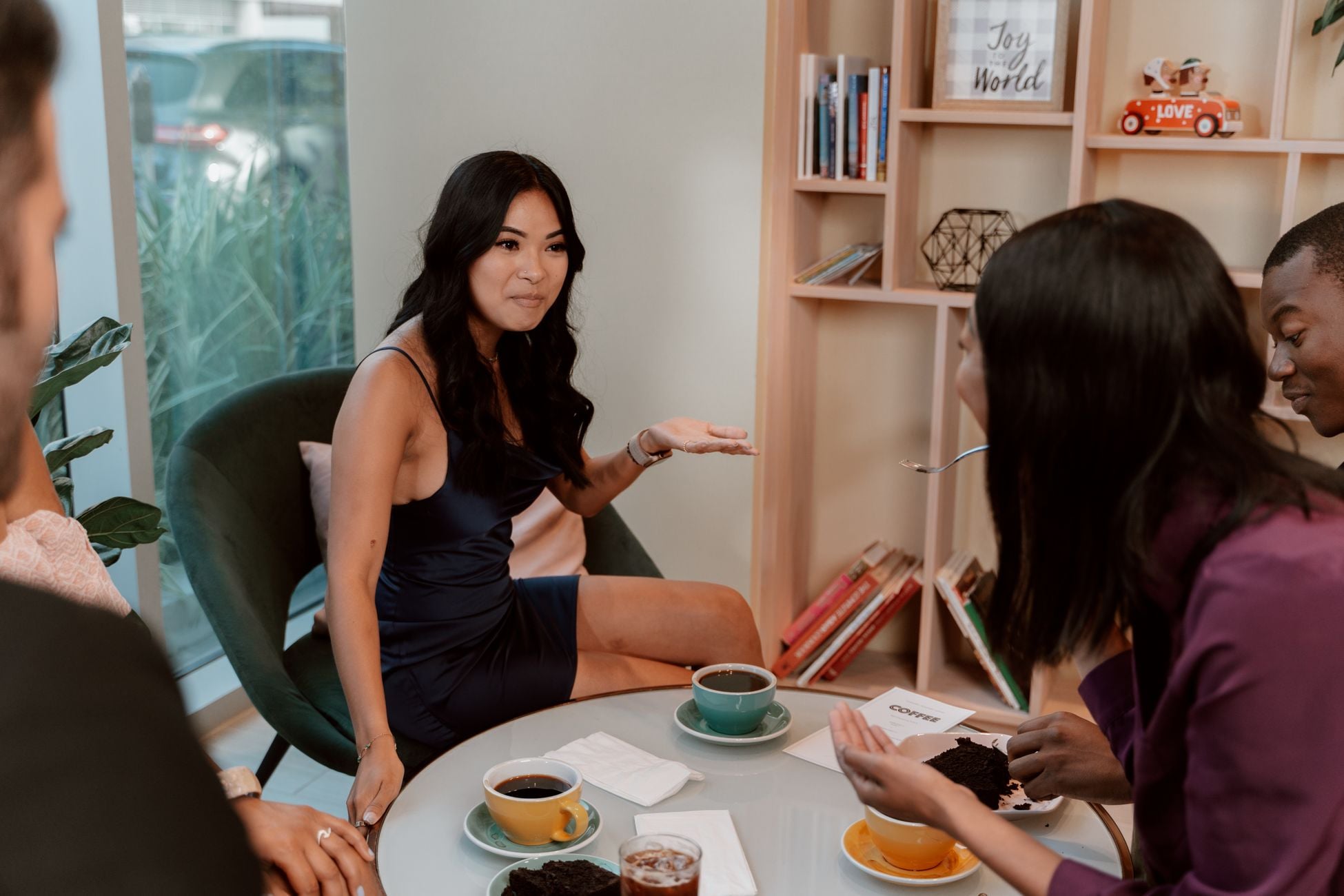
If you want to see the effect for yourself, the easiest way is to sit in a café and watch two people at a nearby table for ten minutes. Do not listen to what they say. Watch only their bodies. Count how many times one of them adjusts their posture within five seconds of the other doing so. Count how many times they lift their cups at the same moment, or laugh in the same rhythm, or lean back together when the conversation pauses.
Then try it on yourself. The next time you are talking to someone, notice your own hands. Notice your own feet. Notice the tempo of your voice. Somewhere in the last two minutes, without deciding to, you have begun to sound a little more like the person across from you. They have begun to sound a little more like you. Neither of you will remember it happening. And when the conversation ends and one of you says that was nice, part of what you mean, without knowing you mean it, is that for a little while, two nervous systems moved together.
