

Neuroscientists have been watching what happens inside the brain when a well-practiced behavior meets a suddenly missing reward, and the pattern that emerges looks almost exactly like what happens to a person after a breakup. Research published in July 2026 showed that the brain physically reorganizes itself as a skill becomes automatic, moving well-practiced routines into circuits that run without conscious effort. A prediction built that way does not switch off the moment its reward disappears — which is why, three weeks after the last message, the hand still moves toward the phone before the mind has caught up.
The reach is not weakness. It is a forecast, made in tissue, that has not yet been told to stop.
The prediction lives in the striatum
Every time a phone lit up with a particular name over the course of a relationship, a small circuit in the brain got a little more efficient at anticipating it. The striatum, a set of structures deep in the center of the brain, is the part that turns repeated pairings into automatic expectations. It does not care whether the pairing is a slot machine payout or a good-morning text. It only cares that the pattern repeated.
Ring, name, warmth. Ring, name, warmth. Hundreds of times. Sometimes thousands.
By the time a relationship ends, that circuit is not a soft association. It is a groove. Research using functional imaging of people practicing sequences until they became automatic suggests that the neural signature of a fully learned prediction is measurably different from the signature of effortful attention. The brain has moved the behavior into a different filing cabinet, one that does not require conscious permission to open.
Why the hand moves before the thought
The predictive circuit fires before awareness. This is what makes it feel involuntary. A buzz in the pocket, a flicker at the edge of vision, a lull in a meeting — any of these can trigger the anticipation the brain built during the relationship, and the reach happens in the half-second before the frontal cortex remembers that no one is going to be there.
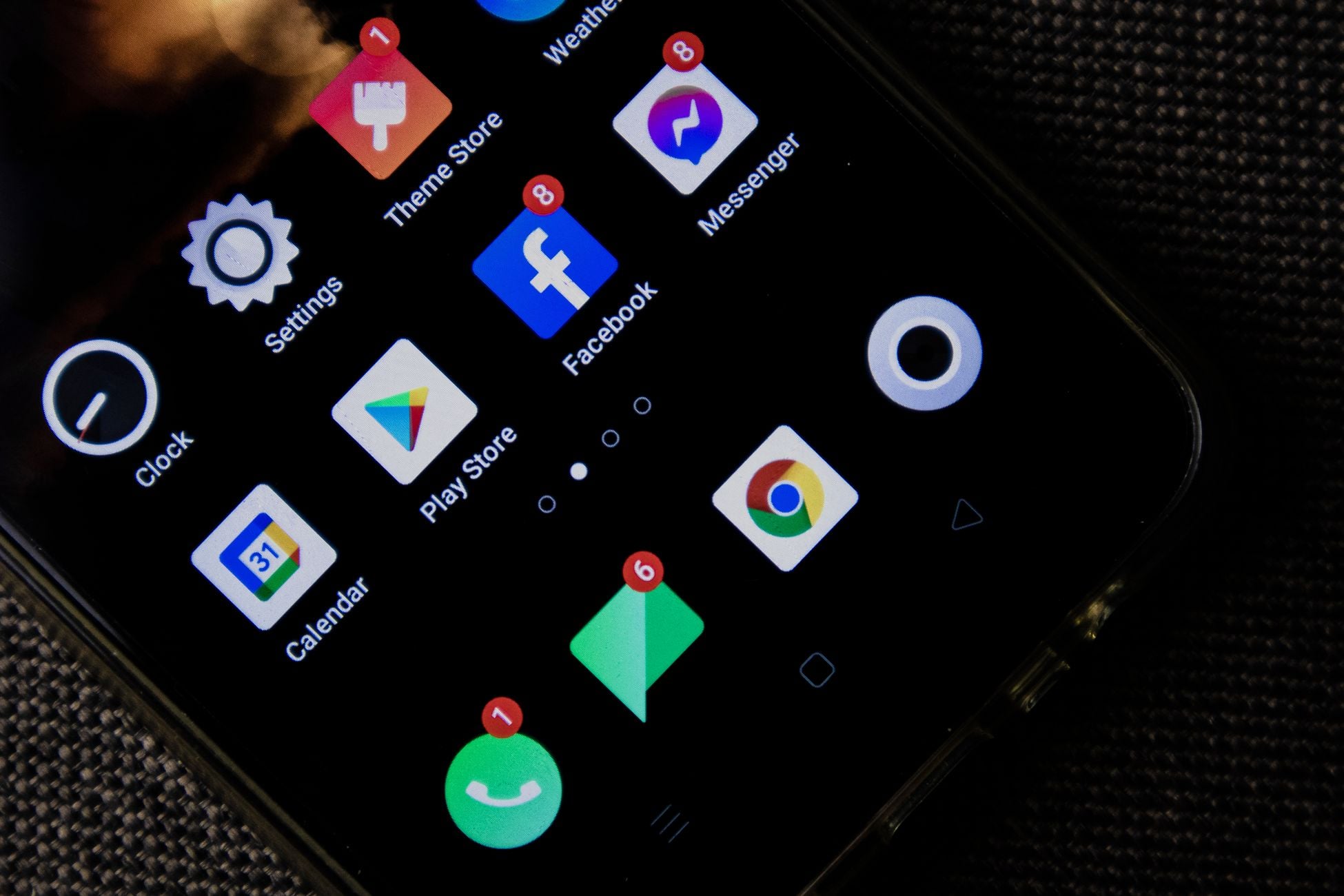
Romantic bonds build dense sensory scaffolding — a specific perfume, a specific ringtone, a specific route home — and each of those cues becomes a small trigger for the same expectation. The phone is only the most concentrated version, because the phone was the delivery mechanism for so many of the small daily contacts a relationship is actually made of.
Which means the reach has a name. It is a conditioned prediction error, and it fires every time the world fails to produce what the brain was betting on.
The buzz that was not there
The phantom vibration — the certainty that the phone just buzzed when it did not — is the same circuit misfiring from the other direction. The prediction is so tuned that any small sensory noise in the general shape of a notification gets read as one. Constant phone-checking behavior has been studied as a conditioned response for years, but breakup checking is a specific and unusually intense version of it, because the reward that trained the circuit was not a passing hit from a stranger’s like. It was a specific person, whose absence the brain has not yet accepted as a permanent feature of the world.
Ten times a day. Thirty. Sometimes more, in the first week.
Each check is the circuit running its forecast and getting a null result. The null result is not neutral. It is the small sting of expectation meeting emptiness, over and over, in the same shape.
How long the circuit keeps firing
Extinction learning — the process by which the brain updates a prediction to match a new reality — is slower than most people expect. Work published in eLife on fear extinction in humans traced the interaction between the cerebellum and the ventral tegmental area during the moments when an expected outcome fails to arrive, and found that the update signal fires each time the omission is registered. The brain has to log the absence, repeatedly, before the prediction weakens.
This is why the checking does not stop on day three, or day ten. The circuit is being rewritten, absence by absence, and the rewriting takes as many repetitions as the original conditioning did. For a two-year relationship with daily contact, the null results have to accumulate for weeks before the reach starts to soften.
The neural version is more mechanical than the emotional timeline. Every unchecked check is a small deposit into the extinction bank. Every check that yields nothing is data the brain files under the realization that this pattern no longer holds.
What the brain built, and how it built it
Laboratories are now growing miniature versions of brain circuits to watch them form. A Japanese team in early 2026 built human neural assembloids — small multi-region models grown from stem cells — that reproduce the long-range wiring between the cortex and the deeper regions it connects to, including the thalamus. The point of these models is to see, in real tissue, how the connections between brain regions get built in the first place.

Separately, work mapping how neurons are built points to genes giving cells something like a GPS for finding their way into the circuits they belong to. The relevance to a breakup is not sentimental. It is that the wiring the brain builds around a specific person uses the same architecture as every other learned prediction — the same molecular signals, the same reinforcement rules, the same slow update curve.
The brain does not know the person is gone. It only knows that the input has stopped.
The strange comfort of understanding the mechanism
People who have just been through a breakup often describe the phone-checking as embarrassing, or as evidence of not having their life together. The neuroscience says the opposite. The reach is a signature of how well the relationship was learned. A brain that had barely registered the other person would not build such a strong forecast, and would not misfire so persistently when the forecast failed.
The reach is a receipt.
Understanding this does not turn the circuit off, but it changes what the reach means. The hand moving toward the phone at 10:47 at night is not a failure of will. It is a prediction, made in tissue over months or years, running one more time to see if the world has gone back to the shape it used to be.
What helps the circuit update
Novel contexts help — new rooms, new routes, new rituals — because the brain files predictions partly by setting, and a changed setting weakens the trigger. Removing the specific sensory cue helps most of all. Muting the thread, archiving the name, moving the app off the home screen. Each of these is a way of reducing the number of times a day the circuit gets prompted to fire and then get disappointed.
There is a related insight in the research on how people with strong trait self-control actually manage temptation — they do not out-muscle it, they structure the environment so fewer triggers reach them in the first place. The same logic applies to the post-breakup phone. The point is not to become a person who does not want to check. The point is to reduce the number of small sensory prompts that fire the circuit before the conscious mind can weigh in.
Weeks, not days
The circuit softens on a timeline measured in weeks, not days, and sometimes longer for relationships that lasted years. This is not a moral fact about how much someone was loved. It is a physical fact about how many repetitions of absence the tissue needs before it stops making the old bet.
Some people report noticing the reach happening less often after a few weeks, with phantom buzzes beginning to fade over time. Somewhere later, harder to pinpoint, a notification arrives from someone else and the brain does not, for a fraction of a second, think it is going to be them.
That is the moment the prediction has finally been updated. Not chosen away. Rewritten, by accumulated evidence, into a new shape of the world.
The reach still happens sometimes after that, months later, in a doorway or during a song. It is a fainter version of the same circuit, firing on a cue it never fully forgot. The brain keeps its old maps in the drawer. It just stops using them to navigate by.
