
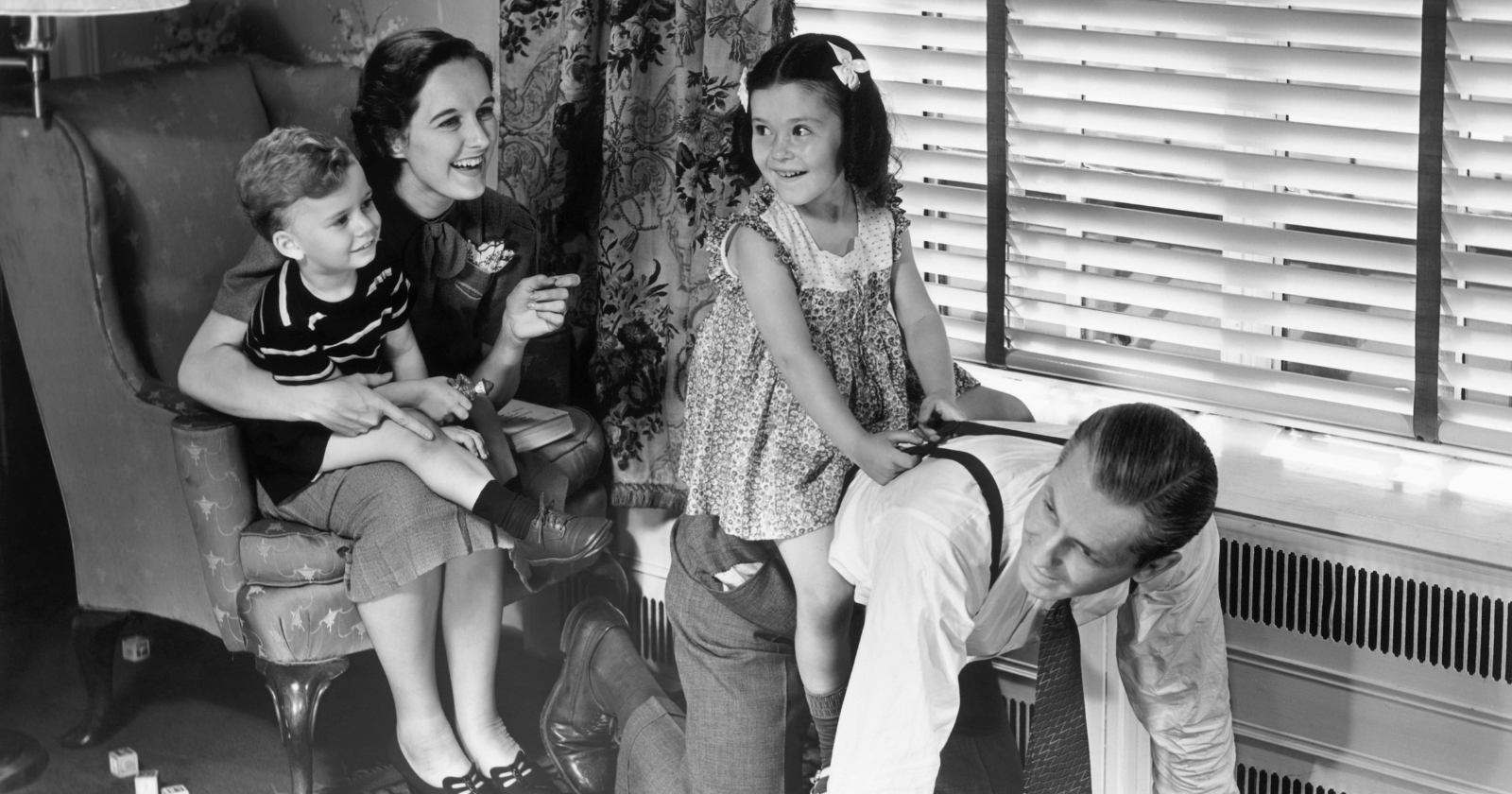
Growing up in a small Midwest town in the 80s, I remember summer afternoons that stretched forever. My siblings and I would disappear after breakfast, armed with nothing but a sandwich wrapped in wax paper and strict instructions to be home when the streetlights came on. My mom didn’t track our every move or schedule our days with activities. We just… played. Built forts. Got dirty. Figured things out.
Last week, as I watched my 5-year-old daughter organize her leaf collection on our back porch while her little brother attempted to scale the garden fence (again), I couldn’t help but think about how much parenting has changed. And honestly? Not all of it for the better.
We’ve been told that our parents’ generation got so much wrong. That kids back then were neglected, unsafe, understimulated. But here’s what I’ve come to realize after years of navigating this whole gentle, attachment-focused parenting thing: maybe our parents weren’t as clueless as we think. Maybe some of those “mistakes” were actually getting kids ready for real life in ways we’re missing today.
1. Letting kids roam the neighborhood unsupervised
Remember when “be home by dinner” was the only rule? My parents had no idea where I was most of the day, and you know what? I learned to navigate social dynamics, solve problems, and yes, occasionally deal with the neighborhood bully without an adult referee.
Today, I catch myself hovering at the playground, ready to intervene at the first sign of conflict. But when I force myself to step back (and trust me, it’s hard), my kids surprise me. They negotiate, they compromise, they learn that not every game goes their way. That freedom to figure things out? That’s not neglect. That’s trust.
2. Not being their entertainment director
“I’m bored” in my house growing up meant you’d better find something to do before Mom found something for you to do. And that something usually involved cleaning.
My parents didn’t feel responsible for orchestrating my every waking moment. There were no Pinterest-worthy sensory bins or elaborate craft setups. We had a backyard, some sticks, and our imagination. When I give my kids that same space for boredom now, magic happens. Suddenly the couch cushions become a pirate ship, or they’re creating elaborate worlds with nothing but dirt and leaves.
3. Making kids eat what was served
There was no short-order cooking in our house. You ate what was on your plate or you went hungry until the next meal. Sounds harsh by today’s standards, right?
But here’s the thing: we learned that hunger wasn’t an emergency, that trying new foods wouldn’t kill us, and that Mom wasn’t a restaurant. I’m definitely more flexible with my kids than my parents were, but I’ve stopped making three different dinners. And guess what? When they get hungry enough, they eat the vegetables.
4. Not praising every little thing
My parents loved me, but they didn’t applaud when I successfully tied my shoes or finished my homework. Achievement was expected, not celebrated with fanfare.
Was this too harsh? Maybe sometimes. But it also meant that when praise came, it meant something. We learned to find satisfaction in doing things well for their own sake, not for the gold star. I try to find a middle ground with my own kids, but I’ve definitely pulled back on the constant “good job!” chorus.
Related Stories from The Artful Parent
- Psychology says people others describe as ‘easy to talk to’ aren’t being casual — they’re performing one of the hardest social skills that exists
- There’s a kind of love nobody teaches you about — the one where your 70-year-old mother still calls to tell you to bring a jacket even though you’re 45, and the jacket was never about the weather, it was her way of saying I still need to
- Psychology says the parents whose adult children gradually stop visiting aren’t usually the ones who were cruel or absent — they’re often the ones so focused on providing and protecting that they never learned to simply be company, and children grow up moving towards the people they feel easy with rather than the people they owe the most to
5. Letting kids fail and face natural consequences
Forgot your homework? Too bad. Didn’t practice for the recital? You’ll be embarrassed. Lost your favorite toy at the park? Should’ve kept track of it.
My parents didn’t swoop in to save me from every consequence. At the time, it felt unfair. Now? I realize they were teaching me that actions have results, and Mom won’t always be there to fix everything. When my daughter recently left her beloved stuffed animal at the library and we couldn’t go back until the next day, every fiber of my being wanted to drive back immediately. But I didn’t. She survived the night, and she’s never forgotten a toy since.
6. Having adult time and adult conversations
Kids weren’t the center of the universe in the 70s and 80s. When adults were talking, you didn’t interrupt. Family gatherings meant kids played in the basement while grown-ups had coffee upstairs.
Were we sometimes excluded? Sure. But we also learned that the world didn’t revolve around us, that adults had lives beyond parenting, and that we could entertain ourselves. I love including my kids in conversations, but they also need to know that sometimes, adults need space to connect without constant interruption.
7. Using TV as an occasional babysitter
Saturday morning cartoons were a sacred ritual in our house. My parents got to sleep in, we got to zone out to animated nonsense. No educational value required.
Today we stress about every minute of screen time, curating educational content and feeling guilty about needing a break. But you know what? Sometimes kids need to zone out too. Sometimes parents need 30 minutes to drink coffee while it’s still hot. The occasional TV babysitter didn’t ruin us.
8. Not making everything a teachable moment
A walk was just a walk. A trip to the grocery store was an errand, not a math lesson. My parents weren’t constantly narrating life or turning every experience into an educational opportunity.
This gave us space to just be. To observe without analysis. To experience without processing. When I catch myself launching into a lesson about photosynthesis while my kids are just trying to climb a tree, I remember that sometimes the best learning happens when we stop teaching.
Finding the balance
Look, I’m not saying we should go back to the 70s and 80s wholesale. Car seats save lives. Bike helmets prevent serious injuries. Some of the emotional availability we offer our kids today is healing generations of dysfunction.
But as I navigate this journey of trying to raise resilient, capable humans while honoring their emotional needs, I keep coming back to this: maybe our parents knew something we’ve forgotten in our quest to optimize childhood. Maybe kids need space to be bored, to fail, to figure things out without us.
Maybe the real mistake isn’t what our parents did, but our assumption that different automatically means wrong. As I watch my daughter create elaborate games with nothing but sticks and stones, or see my son problem-solve his way to the cookie jar (unsuccessfully, but points for creativity), I realize that some of the best parenting might just be knowing when to step back.
The truth is, there’s wisdom in both approaches. We can be emotionally available without hovering. We can keep our kids safe without bubble-wrapping their entire existence. We can honor their feelings while still maintaining boundaries.
And sometimes? Sometimes the best thing we can do is channel a little of that 1980s parenting energy and trust that our kids are more capable than we think.