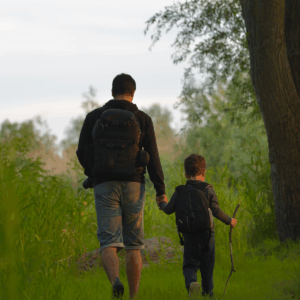
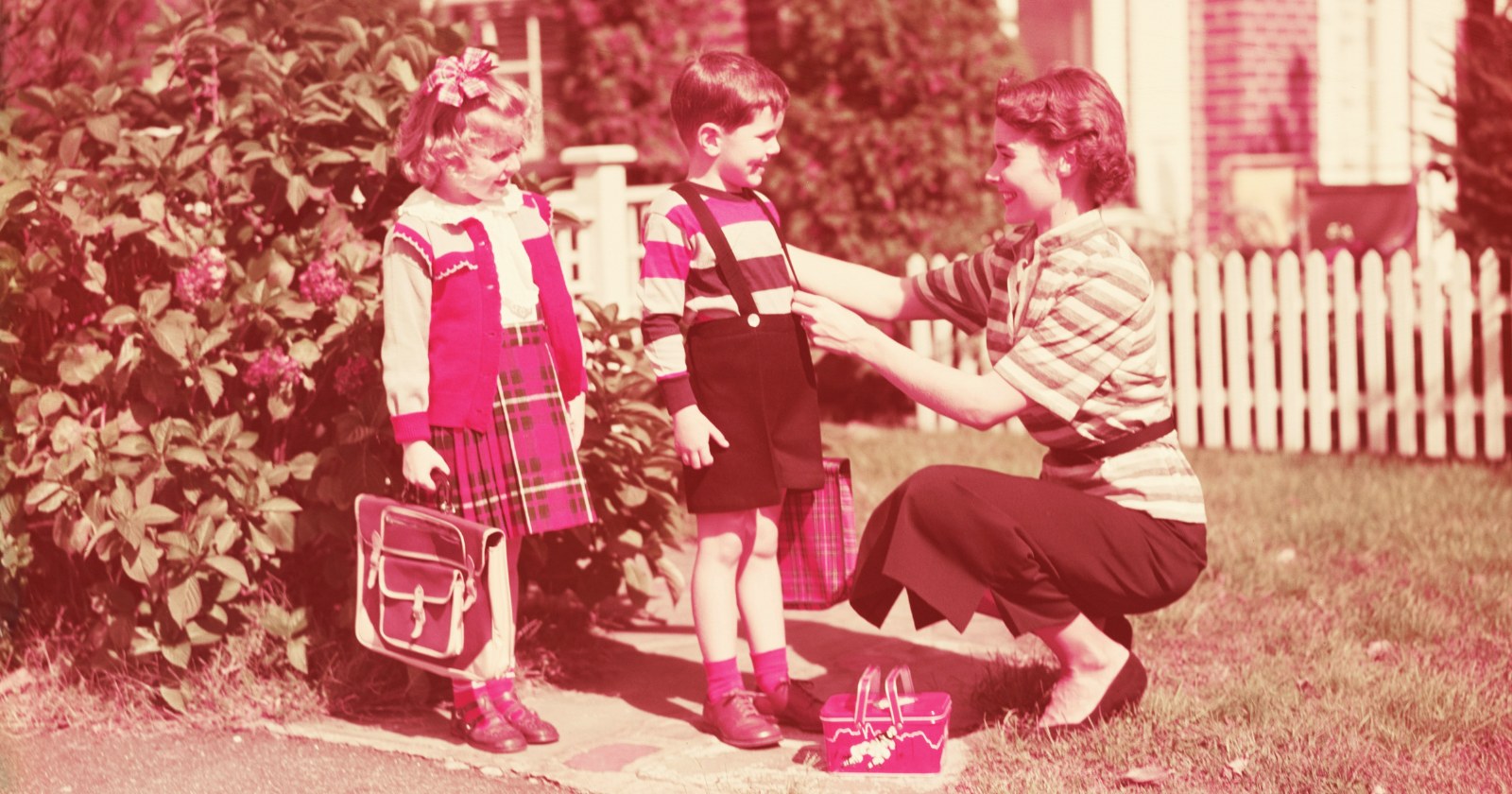
Remember those mornings when you’d grab your lunch box, wave goodbye to mom, and head out the door for the twenty-minute trek to school? Just you, maybe a friend or two if you were lucky, and the wide world between home and the classroom.
I did that walk every single day from age seven onward. Rain or shine, through the woods behind our neighborhood, past the corner store where Mr. Peterson would wave from behind the counter, and across that big intersection that seemed like the edge of the known universe back then.
If you’re under forty, this probably sounds like the opening scene of a horror movie. But for those of us who grew up before 1980, it was just Tuesday. And you know what? Those solo walks to school taught us things that no amount of structured activities or supervised playdates ever could.
I’ve been thinking about this a lot lately during my daily walks around the park. The world has changed dramatically since my childhood, and while many changes are for the better, I can’t help but notice that kids today miss out on developing certain quiet strengths that came naturally to us back then.
1. The ability to handle boredom creatively
Twenty minutes each way, twice a day, five days a week. That’s a lot of time alone with your thoughts when you’re eight years old. No smartphones, no podcasts, not even a Walkman for most of us.
What did we do? We made up stories. We counted things. We played mental games, noticed patterns in nature, and yes, sometimes we talked to ourselves. That daily dose of boredom was like strength training for our imaginations.
These days, I watch parents scramble to fill every moment of their kids’ time with activities and entertainment. But those of us who walked alone learned that boredom isn’t something to fear. It’s where creativity lives. When your mind has nothing to consume, it starts to create.
2. Street-smart situational awareness
Walking alone meant you had to pay attention. Which houses had dogs that might chase you? Where were the safest places to cross the street? Who were the regular people on your route, and who seemed out of place?
We developed what I now recognize as sophisticated threat assessment skills, though we didn’t call it that. We just knew to trust our gut when something felt off. If a situation didn’t feel right, we’d cross the street or duck into a store.
This wasn’t paranoia; it was practical wisdom. We learned to read environments and people without anyone explicitly teaching us how. That intuitive sense of what’s normal and what’s not has served me well throughout my entire life, from navigating office politics during my thirty years in human resources to knowing when to intervene when I see someone in trouble.
3. Natural problem-solving independence
Forgot your lunch money? Lost a mitten? Took a wrong turn and ended up on an unfamiliar street? There was no calling mom on a cell phone. You figured it out.
Related Stories from The Artful Parent
- I’m 65 and I stopped arguing politics with my daughter three years ago — not because I gave up on her, but because I finally understood that protecting our relationship mattered more than being right about things neither of us can control
- Psychology says the hardest part of watching your parents age isn’t the physical decline – it’s the moment you realize they’ve started performing competence the same way you performed adulthood when you first moved out, and you’re both pretending not to notice the act
- Psychology says people others describe as ‘easy to talk to’ aren’t being casual — they’re performing one of the hardest social skills that exists
I remember once getting to school and realizing I’d left my homework on the kitchen table. No parent to blame, no one to bail me out. I had to face my teacher and deal with the consequences. It taught me accountability in a way that no lecture ever could.
When my own sons were growing up, I tried to give them similar opportunities to solve their own problems, though I’ll admit it was harder in a world that expected constant supervision. But those early experiences of having to think on our feet, without a safety net, built a confidence that runs deep.
4. The patience to move at a walking pace
In our instant-everything world, the ability to move slowly and steadily toward a destination has become almost revolutionary. But we learned it naturally, putting one foot in front of the other, knowing we’d get there when we got there.
That daily practice of patient progress taught us that not everything needs to happen immediately. Sometimes the journey itself has value. I see this missing in many younger colleagues I worked with over the years. They want immediate results, immediate feedback, immediate success. Those of us who walked to school understand that some things just take time.
5. Genuine connection with your neighborhood
When you walk the same route every day, you become part of the fabric of your community. You knew which houses had the best Halloween decorations, where the good climbing trees were, which yards to avoid.
More importantly, people knew you. Shop owners, crossing guards, stay-at-home moms watching from windows. There was an invisible network of adults loosely keeping an eye on things, but from a respectful distance.
- Gary Vaynerchuk says bloggers who obsess over monetization before audience-building are making a fatal mistake - The Blog Herald
- The people’s opera: what a 2009 Twitter experiment reveals about audience-led content - The Blog Herald
- How to protect your personal brand on social media as a blogger - The Blog Herald
This created a sense of belonging that went beyond your own family. You were a recognized part of something larger, with both the freedom and responsibility that came with it. It’s a feeling that’s hard to replicate when kids are shuttled everywhere in cars.
6. Physical confidence and capability
Walking in all weather conditions made us tough in a quiet way. We learned our physical limits and capabilities through direct experience. Could you jump that puddle? How fast did you need to walk to stay warm on a cold day? What was the best way to carry your books when it was windy?
These might seem like small things, but they add up to a fundamental trust in your own body and its ability to get you where you need to go. It’s a form of self-reliance that goes beyond the physical and seeps into every area of life.
7. The skill of entertaining yourself
Those solo walks were our first lessons in being comfortable with ourselves. No one to talk to, no one to impress, no one to perform for. Just you and your thoughts.
Some mornings I’d practice speeches for class presentations. Other times I’d see how many different routes I could take while still arriving on time. Sometimes I’d just observe everything around me like a detective gathering clues.
Learning to be alone without being lonely is a superpower in today’s hyper-connected world. Those quiet morning walks taught us that our own company could be enough.
8. Early morning responsibility
Getting yourself up, dressed, fed, and out the door in time to walk to school meant taking responsibility for your own schedule from a young age. No one was going to drive you if you missed your departure time.
This taught us natural consequences in the most practical way possible. Run late? You’d have to run to school. Forget to check the weather? You’d be cold all day. These weren’t catastrophes, just uncomfortable reminders to plan better tomorrow.
Closing thoughts
I’m not suggesting we go back to the 1970s or that parents today are doing it wrong. Times have changed, and many of those changes reflect genuine safety improvements and societal progress.
But as I watch my grandkids navigate their highly scheduled, constantly supervised childhoods, I can’t help but wonder: what quiet strengths are they developing that we didn’t? And how can we give them at least some opportunities to discover what they’re capable of when no one’s watching?
Maybe it’s not about walking to school alone. Maybe it’s about finding new ways to give kids those same gifts: unstructured time, gentle challenges, and the chance to surprise themselves with their own capability.
What quiet strengths from your childhood do you still carry with you today?