
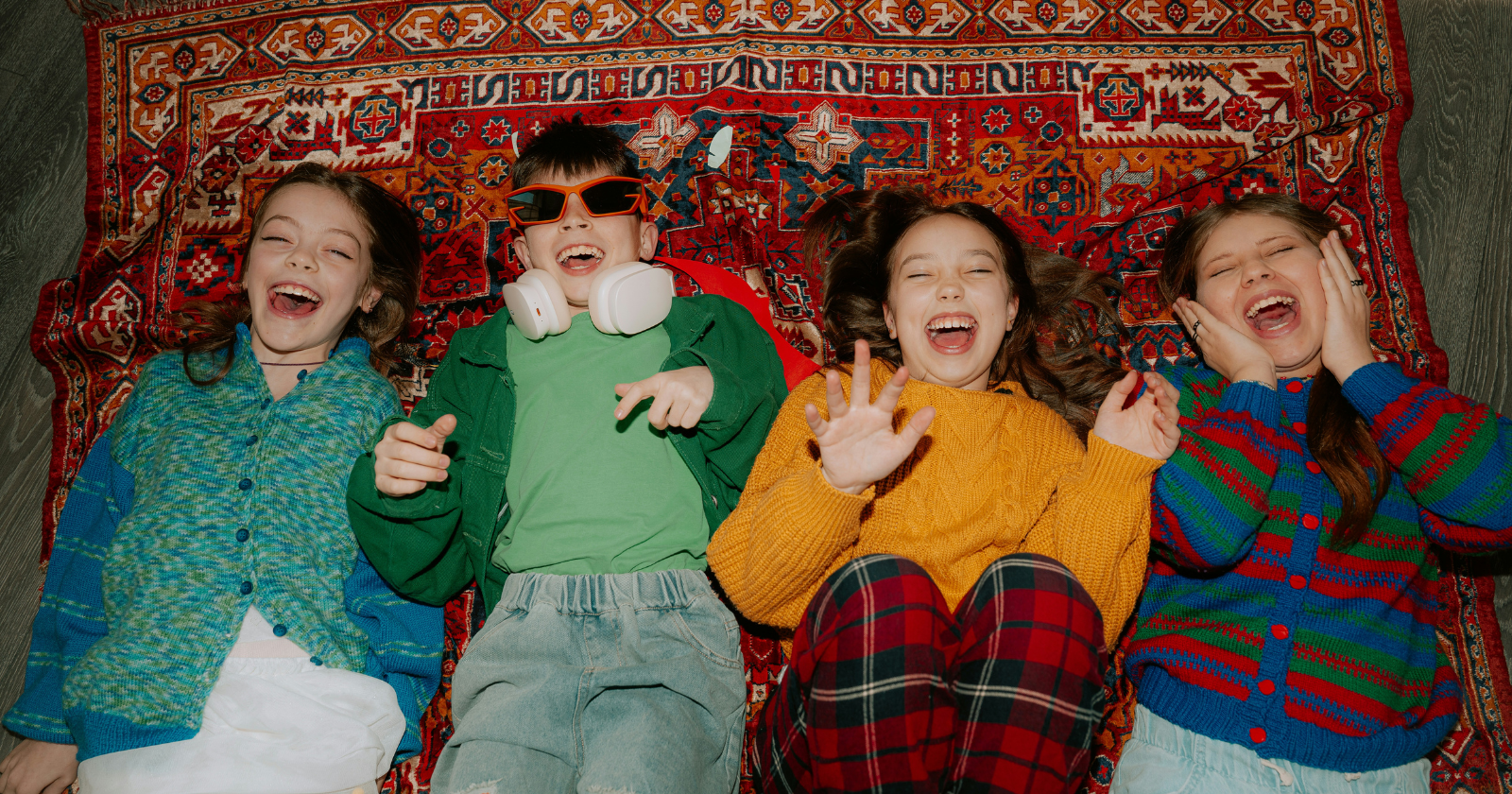

There is a generation that learned, early and without anyone explaining it, that hunger is an excellent clock. Not hunger as deprivation, just the natural fact that a body which has been running around for several hours will eventually need dinner. And when it did, you went home. That was the whole system. It worked remarkably well, in the way that simple systems built on actual human needs tend to work.
The generation raised in the seventies and eighties largely grew up without constant supervision. Not because their parents didn’t care, but because that’s what parenting looked like then. You left the house after breakfast and came back when you were hungry. What happened in between was yours. What happened in between turns out to matter considerably more than anyone realized at the time.
The boredom was the first thing. Real boredom, not the managed restlessness of a child between scheduled activities. Real boredom is the state where there is genuinely nothing on offer, no default to reach for, no screen to open. It is uncomfortable for approximately ten minutes. And then, for most children given enough of it, something happens.
The Artful Parent
Family-life ideas and sharp reads, in your inbox.
The something varies. A game that didn’t exist before that afternoon. A plan to build something out of whatever is in the garage. A decision to walk somewhere unfamiliar and see what’s there. The specific invention changes each time. The process stays consistent: boredom, then resistance to boredom, then creation. A generation that moved through that cycle hundreds of times across childhood developed a particular kind of inner resource. The ability to start from nothing and produce something. The ability to entertain themselves without a prompt.
That ability doesn’t atrophy. Ask anyone from that generation to sit in a waiting room without their phone and most of them will find something to do with the time, even if it’s just thinking. Ask someone who has never had to sit with unstructured time without a device and the discomfort is visibly different. Not a character flaw. A skill that simply wasn’t built, because the conditions for building it were never present.
The arguments were a different kind of education. Children who spend long days together without adults argue. Frequently and loudly. And then, usually, they resolve it, because the alternative is spending the rest of the afternoon alone, which is worse. The resolution is rarely fair, rarely neat, often fragile. But it’s theirs.
No adult comes to mediate. Nobody assigns a turn or calls a truce or explains the rules back to them. The children figure out what they can live with. They discover, through trial and error, which of their demands are negotiable and which aren’t. They learn the difference between winning an argument and keeping a friend. These are not small things. They are the foundation of almost every functional adult relationship, professional and personal. For this generation, they were learned on a weekday afternoon at age nine, in a dispute over whose turn it was.
They also learned something specific about anger: that it passes. That a disagreement can get very loud and very personal and then, an hour later, everyone can be playing together again without anyone needing to process it further. That skill, of getting genuinely angry and then genuinely moving on, is rarer in adults than most people realize. Adults who were never allowed to work through childhood conflict often struggle with it. They carry grudges longer. They avoid conflict more. The resolution muscle, which needs to be built in childhood through actual conflict, didn’t get used enough.
Research has since confirmed what that generation learned by experience. As Peter Gray, Ph.D., a research professor at Boston College and author of Free to Learn, has written: “Because it is freely chosen and directed by the players, play is a major force for children’s learning how to take initiative, direct their own behavior, negotiate with and get along with playmates, and solve their own problems.” The emphasis is on freely chosen. The learning that happens when children direct their own time is qualitatively different from anything an adult can design for them, however well-intended that design might be.
And then there was hunger. Coming home only when hungry is a statement about the relationship between a child’s body and its own needs. A relationship not mediated by a timer, a scheduled snack, or a phone notification. Just hunger. The body knows when it needs something. The child learns to trust that signal and to act on it independently.
That experience of trusting the body over a schedule produces something that sounds unremarkable but isn’t: the capacity to know when you’ve had enough. Not just of food. Of anything. The generation that used hunger as a clock is, on average, somewhat better at leaving a party when they’re tired, stopping work when they’ve worked enough for the day, and stepping back from a conversation that isn’t going anywhere. These things were never taught. They were practiced, daily, over a decade of unscheduled afternoons.
What all three of these experiences share is that they were unmanaged. Nobody taught this generation to be bored productively, or to settle arguments, or to trust their body’s signals. They learned through doing, in the absence of instruction. That’s a particular kind of learning. It produces knowledge that is more portable, more durable, and more genuinely owned than knowledge that was handed over.
There’s a nostalgia trap worth avoiding here. The unsupervised childhood of the seventies and eighties was not uniformly safe or good. Children got hurt. Some got badly hurt. Supervision exists for real reasons. The argument isn’t that the old way was better in every dimension. The argument is narrower: that something specific was learned through those unmanaged days that is genuinely difficult to learn any other way. Knowing what that something is makes it worth trying to restore, in whatever form fits the current world.
The last generation raised without constant supervision grew up knowing a few things that have since become somewhat rare. How to wait until they were hungry. How to work something out without a referee. How to find something to do from nothing. None of these sound like life skills until you spend time with someone who doesn’t have them. Then they sound like exactly that.