
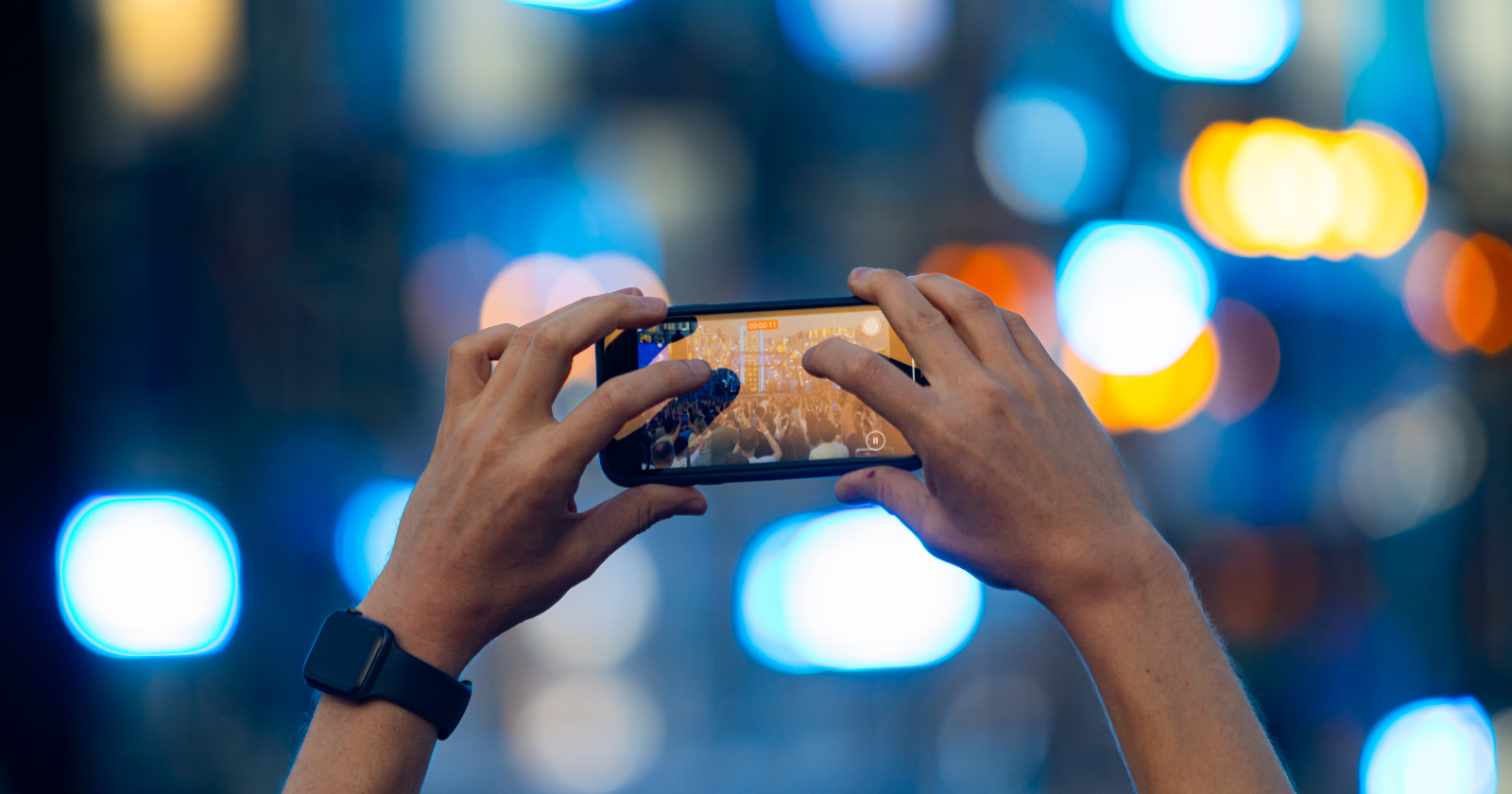
Most adults over a certain age have memories that no one else can corroborate. A swim in a lake somewhere in 1987. A walk home from school the spring of fourth grade. A small competence achieved alone in a kitchen. None of it was photographed. None of it was posted. The person who had the moment has the moment, and nothing else from that moment exists.
This was not, at the time, a feature anyone noticed. It was simply how experience worked. Cameras were used sparingly. Film cost money. Processing took weeks. Most of life happened without a record being made of it, and the absence of a record was unremarkable.
The thing this piece is about is what that absence produced, almost as a byproduct, and what tends to happen to the same kind of moment now that a record is almost always made. It is worth saying at the outset that the research on this question is more complicated than the popular framing suggests, and that the strongest version of the “capture diminishes presence” argument is not well supported. The narrower version is what survives a careful reading.
The Artful Parent
Family-life ideas and sharp reads, in your inbox.
What the private moment had built into it
A good moment that nobody saw and nobody filmed had a particular shape. It belonged to the person who had it. There was no other version, because no other version was being produced. The moment did not have to be communicable, photogenic, or even particularly memorable. It happened, the person was in it, and then it ended.
Whatever else this kind of experience did or did not produce, one thing seems true on inspection. The person having the moment was not, at the same time, also constructing an account of the moment. They were not framing the shot. They were not picking which seconds to keep. They were not anticipating how the moment would look to a viewer who had not been there. The moment was, in that specific sense, undivided.
What the research actually shows, and where it complicates the argument
The most cited study on this question, Linda Henkel’s 2014 paper “Point-and-Shoot Memories” in Psychological Science, is often summarized as evidence that taking photographs impairs memory. The first experiment did find a photo-taking impairment effect in a museum: visitors who photographed objects whole remembered them less well than visitors who simply looked. The second experiment qualifies the picture substantially. When visitors zoomed in on a specific feature, the impairment disappeared, and memory for the non-zoomed parts of the object was as good as for the zoomed parts. Henkel’s own conclusion is not that capture impairs memory but that the attentional effort the photographer brings to the act matters more than whether the act happens. Photographing with focus preserves memory. Photographing absently does not.
The other study often invoked on this topic cuts in the opposite direction from the popular framing. Kristin Diehl, Gal Zauberman, and Alixandra Barasch’s 2016 paper “How Taking Photos Increases Enjoyment of Experiences,” in the Journal of Personality and Social Psychology, ran nine experiments on what taking photographs does to people’s enjoyment of an experience. Their consistent finding was that, in most situations, photographing increased enjoyment, and that the mechanism was engagement: the act of looking for a good shot drew people more deeply into the experience rather than pulling them out of it. The exceptions in their data were narrow. Photography reduced enjoyment when the experience was already highly absorbing, or when the act of capturing materially interrupted what the person was doing.
This is a real problem for the strong version of the argument this piece started out wanting to make. The headline empirical finding is that taking photographs often increases presence rather than diminishing it. The honest version of the piece has to begin by conceding that, and then ask what is actually left of the original intuition once the research has been read properly.
What survives the careful reading
What survives is narrower and, in its narrower form, still interesting.
The Diehl, Zauberman, and Barasch finding is about a single experience while it is happening. Photographing a museum visit, on their evidence, deepens the visit. What the research does not directly address, because it was not designed to, is what the existence of the photograph does to the experience afterward, in memory, when the person tries to retrieve it. The photographed memory has a record attached. The unphotographed memory does not. These are not the same kind of memory, and the difference is the thing this essay is actually pointing at.
An unphotographed memory has to do its own work of survival. It is held only by the person who had it, in whatever form they manage to hold it, and that form is what the person ends up with decades later. A photographed memory is held partly by the photograph, which carries some of the work the memory would otherwise have done alone. The retrieved version, when the person looks back, is often a composite of what they remember and what the photograph shows them. The photograph fixes some details and lets others fade. The unphotographed version, by contrast, can only be made of what the person actually kept.
This is not a claim about which kind of memory is better. It is a claim that they are different kinds, and that the older generation has a large stock of the second kind, which the younger generations are accumulating less of by default.
What the older generation has, without having earned it
People who grew up before everything was filmed did not develop the capacity for unrecorded experience through wisdom or restraint. They did not have the option. Their childhoods and most of their adult lives happened in conditions where capture was difficult, expensive, or out of the question, and the absence of capture was the default.
What they ended up with, as a byproduct, is a stock of moments that exist only inside them. The good afternoon at thirteen. The first time something worked in the kitchen. The walk home after a particular conversation. None of these are lesser for being unrecorded. They are, in some cases, more vivid, because the remembering was the only way they were going to survive, and the remembering shaped them into something the person could keep.
The capacity to let a good moment be only one’s own is, for this generation, not a virtue. It is an artifact of when they were alive. It is worth naming as a capacity anyway, because younger generations sometimes look at the older ones and notice something they cannot quite locate, and the thing they are noticing is partly this.
What it would take to build this now, and what it is not an argument for
The capacity is not lost to the younger generations, but it has to be more deliberate than it used to be. The conditions that produced it as a default no longer exist. The practical version is modest. It involves, sometimes, choosing not to film a good moment that one could film, and seeing what the moment becomes when it has only one keeper.
This is not an argument against photography. The research, read honestly, does not support that argument. Photographing is often a real pleasure, often increases engagement, and often produces records that families and individuals rightly value. Henkel’s own work suggests that the way one photographs matters more than whether one photographs at all, and the Diehl, Zauberman, and Barasch work suggests that, for most experiences, capture does not pull people out of the moment.
What the older generation has, almost by accident, is not a model the younger ones should imitate wholesale. It is a stock of memories of a kind that the current default does not produce. A person now in their thirties cannot reconstruct decades of unphotographed life. They can choose, occasionally, to keep a particular moment for themselves and find out what the kept-for-themselves version is like. That is a smaller capacity, built more deliberately, and not the same as the older generation’s, but it points at something the research has not yet caught up with, which is what experience becomes in memory when no record of it exists outside the person who had it.