
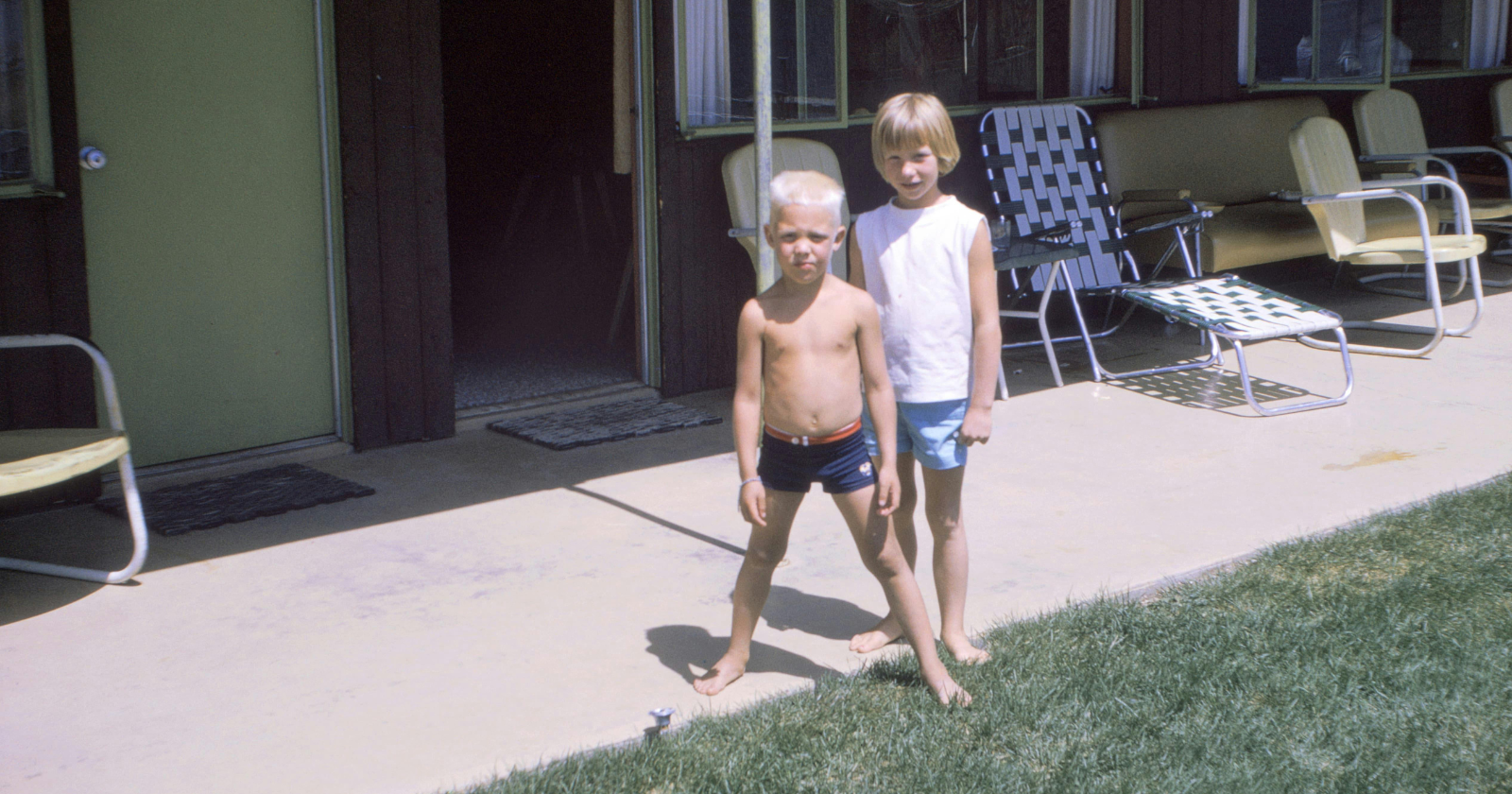
Ask anyone who was nine in 1978 what they did on a Saturday and the answer is usually some version of: nothing in particular, for hours.
That answer used to be ordinary. It is not anymore, and the shift can be measured. Sociologists Sandra Hofferth and John Sandberg, in their study “Changes in American Children’s Time, 1981–1997,” used two large time-diary datasets to track what American children aged three to twelve actually did across their weeks. Between those two snapshots, time in organized sports, day care, and structured art activities rose substantially. Time in unstructured play, household visiting, and passive leisure fell. The 1981 baseline is itself the back end of a longer pattern: a 2023 commentary in The Journal of Pediatrics by Peter Gray, David Lancy, and David Bjorklund, “Decline in Independent Activity as a Cause of Decline in Children’s Mental Well-being,” reviews evidence that children’s freedom to roam, play, and act without adult oversight has been narrowing in the United States since at least the 1950s, with a sharper drop after the 1970s.
A child in 1978 spent more of the week unsupervised and less of it in adult-designed activities than a child in the same family circumstances would today. Total parent-child time, on the other hand, has risen since 1981 in Hofferth and Sandberg’s own follow-up work. The change is in the mode of parental presence, not the quantity of it.
The Artful Parent
Family-life ideas and sharp reads, in your inbox.
What the 1970s version actually was
The texture of that earlier shape of childhood is harder to capture than the numbers. Hofferth and Sandberg’s diaries show categories. They do not show what a child did with three hours on a Saturday morning, alone, in a backyard or on a bike. A child filling those hours was conducting a kind of small daily negotiation with the world. They decided what to do. They handled the boredom. They worked out how to ask other children to join them. If something went wrong, they sorted it out, often badly, sometimes with consequences they had to explain at home later.
None of this was unusually good for the children’s character in the way the nostalgic version of the story tends to claim. Plenty of bad things happened in those unsupervised hours, and many of them were the reason the structure came in. What was distinctive about the period was not the absence of supervision in itself. It was the assumption, widely shared among adults, that a competent child of eight or ten could fill an afternoon without a parent designing what was in it.
The Gray, Lancy, and Bjorklund paper traces the contraction of that assumption. The authors connect it to several decades of cultural change: the spread of organized youth sports, the lengthening of the school day, an increase in homework, fears about traffic and abduction that intensified in the 1980s, and a gradual reframing of unsupervised time as a parenting failure rather than as ordinary practice.
The case for organized activities
There is, at this point, a substantial body of research pushing back against the idea that this change was a loss. Joseph Mahoney, Angel Harris, and Jacquelynne Eccles, writing in Social Policy Report in 2006, examined what they called the over-scheduling hypothesis: the popular idea that contemporary children are stressed and worse off because of the volume of structured activity in their weeks. Their conclusion, reading across the available studies, was that this picture did not hold up well. Most children participating in organized activities showed better, not worse, outcomes on the measures they examined. The children of greater concern, they argued, were the ones who participated in nothing at all.
This is not a small finding. It cuts directly against the romantic reading of 1970s childhood and is worth holding in view. Organized activities offer something the unstructured afternoon does not: adult mentorship, exposure to particular skills, predictable contact with peers, and supervision for families who need it. Many of the children whose weeks are now packed with structured activity are better off than they would be if those activities vanished and were not replaced by anything in particular.
The narrower claim that survives
Set against the Mahoney finding, the interesting form of the original argument narrows. The claim is not that organized activities are harmful, or that the average child in 2026 is worse off than the average child in 1976 on every dimension. It is that one particular ingredient of childhood, namely the recurring experience of being trusted to fill several hours without adult design, has become rare in a way it was not before, and that this ingredient was doing something the activities replacing it do not do.
What that ingredient does is unusually hard to study, because it is the absence of intervention rather than the presence of one. The Gray paper, drawing on a wide reading of developmental literature, argues that children develop a sense of personal competence partly through the experience of handling small problems without an adult on hand to solve them. The argument has limits. It rests heavily on observational and historical data rather than on controlled comparisons. It is contested by researchers who, like Mahoney, find more value in structured time than its critics tend to grant.
The defensible point is narrower than the cultural sweep of the original claim. A childhood without much unstructured time is missing a specific kind of practice in self-direction, and structured activity, however valuable on other measures, does not provide that practice. Whether the missing ingredient matters enough to outweigh what has been added is a separate question, and not one a time-use study can settle.
What made the 1970s version possible
It would be a mistake to read the shift as something the culture decided, somewhere along the way, to impose on children. Several structural changes did most of the work, and they were not parenting choices in any direct sense. The proportion of households with two earners rose. Standard suburban geography moved children further from one another and made walking to a friend’s house harder. Smaller families left fewer siblings to fill an afternoon by default. The pediatric concerns raised in the 1980s about traffic, in particular, were not invented out of nothing.
The legal framework also changed. In December 2014, Danielle and Alexander Meitiv, a couple in Silver Spring, Maryland, allowed their ten-year-old son and six-year-old daughter to walk a mile home from a local park on their own. The children were picked up by Montgomery County police, and the family spent the next several months under investigation by Maryland Child Protective Services. The case, eventually covered in The Washington Post and many other outlets, ended with the Meitivs cleared in both of two investigations and the state of Maryland issuing a clarifying statement that letting children walk or play alone, in itself, did not constitute neglect. The episode is useful as a marker. The same arrangement that would have been ordinary in the same suburb in 1978 attracted police involvement and a CPS file in 2014. The cultural and legal framing of unsupervised childhood time had shifted underneath the families now trying to extend it.
This is why the question of how to give a contemporary child something resembling the older experience of unstructured time is not mainly a parenting question. It is a question about housing patterns, work hours, neighborhood design, and the legal framework around what is now called reasonable childhood independence. A parent acting alone can recover a fraction of the experience for their own child. The full version was supported by conditions that no individual family controls.
What the claim survives as
The strong cultural form of the original argument, that the 1970s held the last version of childhood and the rest of the culture has been removing it ever since, overstates a real pattern. Plenty of childhood survives, and some of what survives is better than what came before. Where the claim holds is narrower: in the specific experience of being trusted with several unsupervised hours, several times a week, with the small competences and small failures that follow.
A parent who is genuinely worried about their own child’s wellbeing will find a pediatrician, a teacher, or a counselor more useful than an article about a generational pattern. The pattern names something. It cannot explain or fix any one family’s situation.
What the article can say is this. The 1970s version of unsupervised time has become rare. It is not impossible to reconstruct, in fragments, with effort. The conditions that made it ordinary, rather than effortful, are mostly outside any one family’s reach. And the ingredient itself, narrowly defined, is not the central thing distinguishing a happy childhood from an unhappy one. It is one ingredient among several, the loss of which is real and not easily replaced by adding something else to the schedule.