
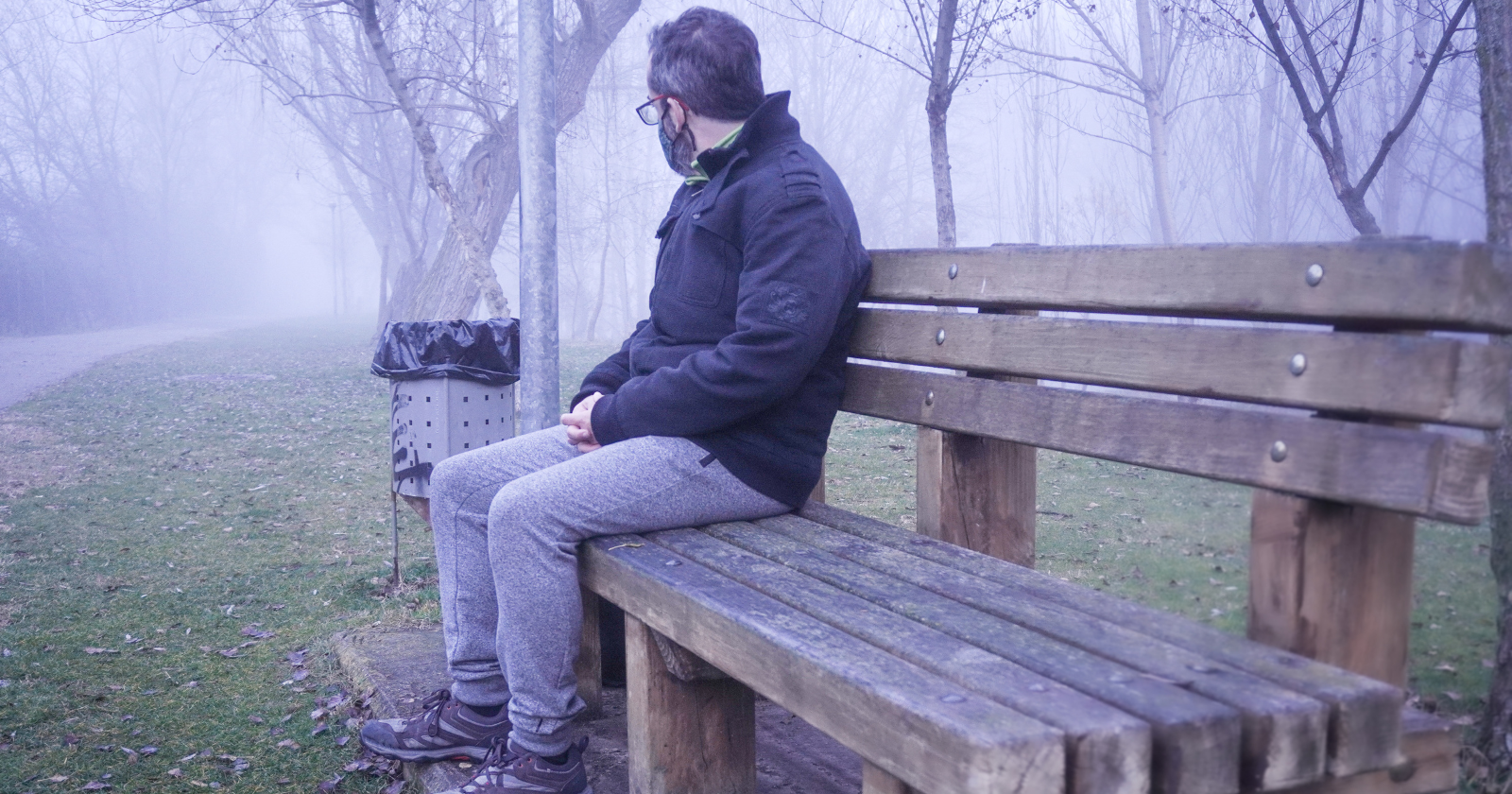
A man retires at 62. For four decades he has been surrounded by people he genuinely liked. Colleagues he ate lunch with. Other parents at the children’s school. Men he played football with on Sunday mornings until his knees gave out. Couples he and his wife saw regularly through the years their kids were small. By his own estimate, on any given week in his fifties, he had real, warm contact with twenty or thirty adults he considered friends.
By his second year of retirement, he sees almost none of them. His wife notices. He notices. Neither is sure when it happened. Colleagues moved on after a few attempted lunches. School parents drifted once the children grew up. The Sunday football men were never going to convert into something that existed off the pitch. Couples his wife had organised dinners with have, mostly, kept up with her and not him.
He is not antisocial. He liked those people. He thinks they liked him. The straightforward fact is that he does not have any of them now, and that the absence is heavier than he expected.
The Artful Parent
Family-life ideas and sharp reads, in your inbox.
What the research draws out
The pattern has a name in the social-science literature. Rebecca Adams and Rosemary Blieszner’s 1994 paper “An Integrative Conceptual Framework for Friendship Research,” in the Journal of Social and Personal Relationships, established what is still the working theoretical model for the field. Friendships, in their framework, sit inside structural and cultural contexts that shape both how they form and whether they last. Two people who share a workplace, a neighbourhood, a church, or a parenting cohort have what the research calls structural opportunity: regular contact, common reference points, low-cost reasons to be in the same room. When the opportunity is removed, what was quietly maintaining the bond goes with it, and many such bonds do not survive that removal.
The newer consolidation of this work, Rosemary Blieszner, Aaron Ogletree, and Rebecca Adams’s 2019 paper “Friendship in Later Life: A Research Agenda,” in Innovation in Aging, draws out the implications. Adult friendships tend to form around shared activities, roles, and environments. Children change schools and their parents fall out of touch. Workplaces restructure and the lunch group dissolves. Neighbourhoods turn over. Churches and clubs change in character. Each of these transitions thins the network in ways the person experiencing them often does not register at the time, because the loss happens one acquaintance at a time, slowly, with no single decisive moment.
Where the popular framing overstates
The version of this observation that travels online tends to claim these bonds were never real friendships, just routines that involved the same people. That overstates what the research actually suggests. Many were genuine. Colleagues did like each other. The football men enjoyed each other’s company for years. School parents were, in some cases, the most reliable presence in the parents’ lives during the years the children were small. Affection was real and was, often, mutual.
What was missing was something narrower: the willingness or capacity to do the maintenance a relationship needs when its setting disappears. A friendship that existed through forty weeks a year of natural contact could sustain itself with very little active effort on either side. The same relationship, without that natural contact, requires someone to decide to organise the lunch, to make the phone call, to send the message. The decision-cost is not high, but it is not zero either, and in adult life it competes with a great many other demands on attention. Connections that were warm but not intrinsic enough to clear that bar gradually fall away, often without either party realising it is happening until well after it has happened.
Why later life sharpens it
A second line of research complicates the picture in a useful way. Laura Carstensen’s 1992 paper in Psychology and Aging on socioemotional selectivity theory argues that as people age, they tend to narrow their networks deliberately, focusing on the relationships that matter most and letting peripheral ones go. The narrowing is not a sign of social withdrawal. It is a function of how time horizons shift with age. When a person feels they have less time ahead of them, they invest what they have in the connections that produce the most emotional return.
Carstensen’s theory predicts that older adults’ networks will shrink even without the transitions described above. The two mechanisms work together. Retirement, the children leaving home, friends moving away, and the gradual loss of opportunities for new connections combine with a deliberate, often unconscious, pruning in which the person trims the network down to a smaller number of more meaningful ties. A 62-year-old who finds himself without close friends may have been caught in both processes at once. The everyday infrastructure thinned, and at the same time he became less willing to invest effort in the ties that the thinning had revealed to be peripheral.
The careful version of the title’s claim
What the title gets right is that arriving at 60 with few close friends is rarely the result of a misanthropic personality. Most people in this position were embedded in extensive networks for most of their adult lives. What the title overstates is that the bonds they had were fake. Many were real. They were also, in many cases, dependent on circumstances that no one designed and that did the quiet work of keeping the connections alive.
The harder version of the observation is that close friendship in adult life, particularly the kind that survives the loss of shared context, requires a competence that not all adults develop. That competence is the willingness to be the one who calls, who suggests the meeting, who keeps the connection alive across the friction of distance, busy schedules, and competing claims on time. Some people develop it early and carry it through life. Others rely on proximity to do the work for them, and find themselves, when the proximity is gone, with the skills of someone who has never had to actively maintain a relationship before.
What can change, and where the help is
For a person in their sixties who recognises themselves in this pattern, the practical situation is not hopeless. New connections in later life are possible and do form, though they form more slowly and require more deliberate effort than the kind that grew up around shared context. Old ties that ended in drift can sometimes be partly recovered with a single phone call that names the gap honestly. Many people on the other end of that call have been wondering the same thing and would welcome the contact. Some have not. The asymmetry of who reaches out first is one of the costs of having relied on proximity for so long.
If the absence of close friends is paired with persistent low mood, sustained loneliness that is affecting sleep or daily functioning, or a sense that the loss is heavier than the person can manage on their own, a primary care doctor is a reasonable first step. The medical literature now treats sustained loneliness as a condition worth addressing, both because it is genuinely distressing in its own right and because the longer-term health consequences of social isolation in older adults are well documented. Building or rebuilding close ties in later life is real work, and it is also work that someone can be supported through rather than required to do alone.