
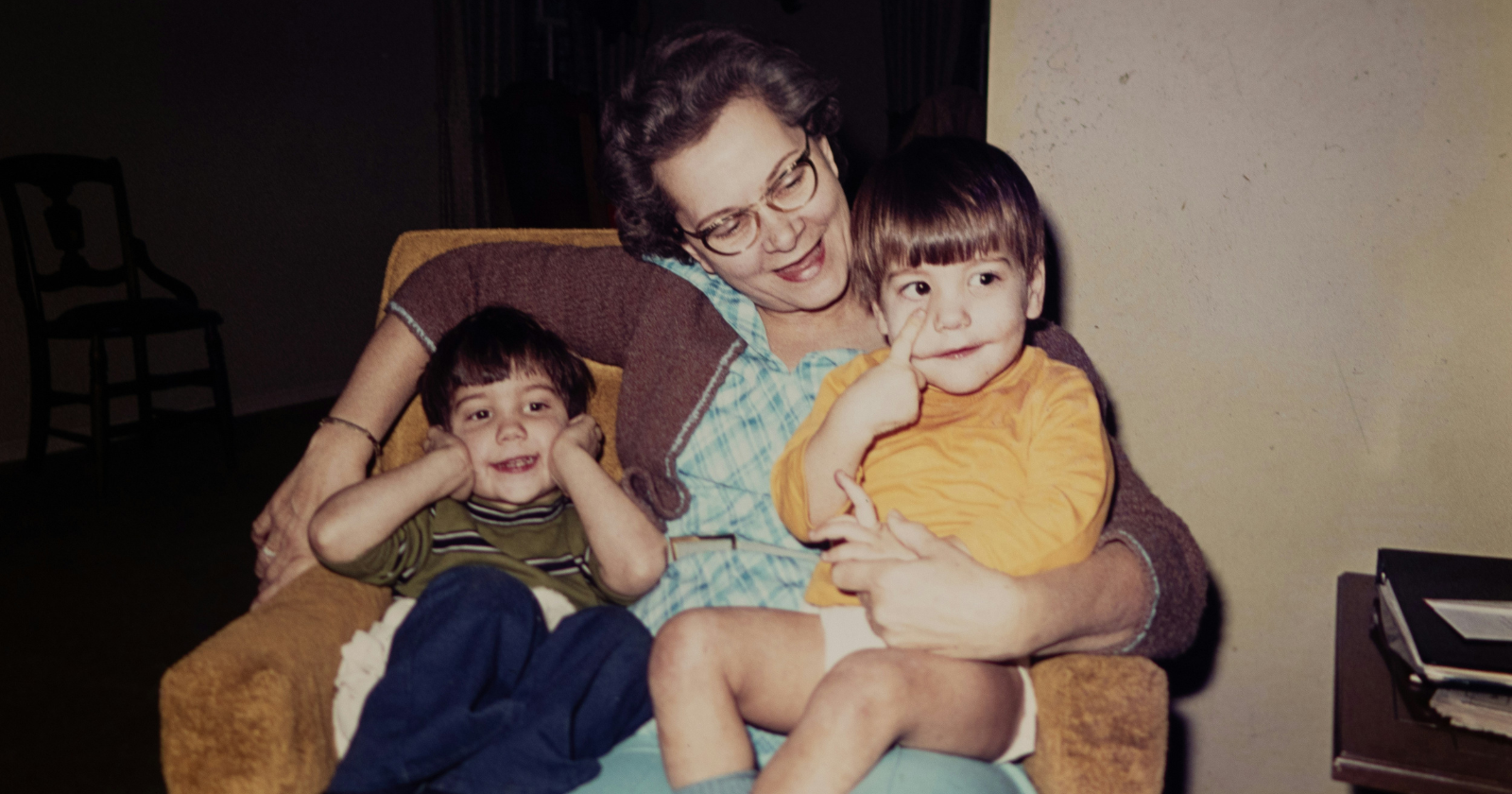
There is a particular kind of internal capacity that one finds, on close observation, in almost every adult who grew up in the 1960s or 1970s, and almost no adult who has grown up since. The capacity is distinct from what the wider self-help register tends to call resilience or grit. The capacity is not, on close examination, primarily about toughness, mental strength, or any other quality the contemporary cultural register has been calibrated to admire and try to cultivate. The capacity is, more accurately, the residue of a particular kind of childhood that the contemporary environment no longer reliably produces, and the residue continues to shape the daily operation of the adults who have it, several decades after the conditions that produced it have stopped existing.
The conditions involved a particular fact about how adults related to children in the postwar period. The fact was that adult intervention was not, in any meaningful sense, the default response to childhood difficulty. The child encountered the difficulty. The child was expected to handle it. The adults were, in most cases, available somewhere in the background if things became genuinely serious, but the threshold for considering things “genuinely serious” was considerably higher than it now is. Most of what would currently trigger an adult intervention was, in the 1960s and 1970s, left to the child to work out for themselves.
The working-out was the work. The work, repeated thousands of times across a childhood, produced a particular internal capacity that adults who have the capacity carry with them for the rest of their lives. The capacity does not, in most cases, get articulated by its possessors. The capacity is, more accurately, just how their internal voice operates. The voice has been quietly running their lives ever since.
The Artful Parent
Family-life ideas and sharp reads, in your inbox.
What the small daily experience actually consisted of
It is worth being precise about what the small daily experience of being expected to handle difficulty actually consisted of, because the contemporary register has not, on the available evidence, retained the texture.
The child fell off the bike. The child got up and continued. There was no parent watching from a window with their phone ready to call emergency services. There was, in most cases, no parent watching at all. The child was, by necessity, the first responder to their own injury. The injury was assessed, by the child, against a rough internal standard of what counted as serious. Most injuries did not meet the standard. Most injuries were, accordingly, handled by the child, in the absence of any adult intervention, by the application of whatever combination of dirt, spit, and continued playing the child had developed across previous similar events.
The child was excluded from the group at school. The child went home, processed the experience without adult mediation, and returned the following day to figure out how to navigate the social situation. There was no parent calling the other parent. There was no teacher conducting an emotional intervention. There was, in most cases, no recognition by the wider environment that anything had happened at all. The child was, by necessity, the first responder to their own social difficulty. The first responding was, in most cases, ineffective in the short term and educational in the long term. The child learned, by the slow accumulation of failed attempts, how the social environment they were operating in actually worked, and developed the small repertoire of responses that would, across the years, allow them to navigate similar situations more effectively.
The child was asked to do a piece of household work that exceeded their current capacity. The work was difficult. The work was, in some real way, not the child’s responsibility in the way the contemporary register would understand the term. The child was expected to do it anyway. The doing-it-anyway was the work. The child figured out, by trial and error, how to perform the task. The figuring-out produced, in the child, the capacity to figure out tasks. The capacity, accumulated across thousands of such episodes, became part of how the child related to unfamiliar work for the rest of their life.
What the cumulative effect actually was
The cumulative effect of thousands of these small episodes, distributed across a childhood, was the installation of a particular internal voice that the adult continues to operate with for the rest of their life. The voice is not, in most cases, the voice the wider self-help register would recognize. The voice does not, in any explicit sense, tell the adult to be tough or to push through or to develop grit. The voice is, more accurately, calibrated to a different assumption that has been quietly operating beneath the visible features of the adult’s daily life.
The assumption is that difficulty is, in most cases, the condition that the person is going to have to handle on their own. The assumption is not, in itself, pessimistic. The assumption is, more accurately, the result of the empirical evidence the person accumulated across childhood about how the world actually responds to difficulty. The world, in their experience, did not respond by sending adults to intervene. The world, more accurately, presented the difficulty and waited to see what the child would do about it. The child did something. The doing-something became, by long practice, the default response to the arrival of any new difficulty in the adult’s life.
The adult, accordingly, does not, in most cases, automatically reach for external support when difficulty arrives. The adult assesses the difficulty against the internal standard their childhood installed, and the standard is calibrated, in most cases, to a much higher threshold than the contemporary register’s standard. Most of what would currently prompt a younger adult to seek external support is, for the adult who grew up in the 1960s or 1970s, simply the kind of thing that the internal voice expects them to handle. The handling is performed, in most cases, without any conscious recognition that handling is what is occurring. The handling is, more accurately, just what the person does when difficulty arrives.
What this is not, on close examination
It is worth being honest about what this capacity is not, because the wider register has tended to romanticize it in ways that misrepresent what the capacity actually involves.
The capacity is not heroism. The adults who have it are not, in most cases, displaying any particular courage in their continued operation under difficulty. They are, more accurately, just doing what their internal voice has been telling them to do for the previous several decades. The doing involves no particular drama. The doing is, in some real way, almost automatic.
The capacity is not, on close examination, always healthy. The same internal voice that allows the adult to handle difficulty without external support also, in many cases, prevents them from accessing external support that would, on the contemporary register’s evaluation, be beneficial. The capacity has produced, in some real way, a generation of adults who have not, in any sustained way, learned to ask for help even when help would be appropriate. The not-asking is the cost of the capacity. The cost is real. The cost is, in many cases, not registered as a cost by the people paying it.
The capacity is also not the result of any virtue on the part of the adults who have it. The capacity is, more accurately, the product of a particular set of childhood conditions that were not, in themselves, deliberately calibrated to produce the capacity. The conditions were, in most cases, the byproduct of adult preoccupation, limited resources, the wider cultural assumptions of the period, and the features of how childhood was organized in the postwar economy. The capacity is, in some real way, a side effect of those conditions rather than an achievement of the people who developed it.
Why the capacity is, on the available evidence, becoming rare
The conditions that produced the capacity have, on the available evidence, mostly disappeared in the wider contemporary environment. The disappearance has been gradual rather than dramatic. The wider environment has, across the last several decades, calibrated itself to a different set of assumptions about how adults should relate to children. The assumptions involve, among other things, the assumption that adult intervention is, in most cases, the appropriate response to childhood difficulty. The assumption is, in many respects, well-motivated. The assumption has produced, on close examination, real improvements in various features of child welfare that the postwar environment had been less attentive to.
The assumption has also, however, produced a change in what most contemporary children get to practice. The contemporary child is, in most cases, not practicing the small daily work of handling difficulty without adult mediation. The contemporary child is, more accurately, practicing the work of accessing adult mediation when difficulty arrives. The two are different forms of work. The two produce different internal voices in the adults the children grow into. The contemporary internal voice is, in most cases, better calibrated to recognizing when external support is appropriate and seeking it out. The contemporary internal voice is also, in most cases, less calibrated to handling difficulty without external support when external support is unavailable.
The acknowledgment this article wants to leave
The resilience this article has been trying to describe is not, on close examination, a virtue. The resilience is, more accurately, the residue of a particular kind of childhood that the contemporary environment no longer reliably produces. The childhood involved the small daily experience of being expected to handle difficulty without adult intervention. The experience, repeated thousands of times, produced an internal voice that has been quietly running the lives of the adults who developed it for the several decades since their childhood ended.
The voice has both costs and benefits. The benefits include the capacity to operate under difficulty without immediately reaching for external support, which makes the adults who have it considerably more functional in situations where external support is unavailable. The costs include the tendency, in many of these adults, to not access external support even when it would be appropriate, because the internal voice does not register external support as the default response to difficulty.
The voice is, in some real way, a fact about the adults who have it rather than a feature they can easily modify. The wider register would benefit, on the available evidence, from recognizing both that the voice exists, that it produces both functional capacities and costs, and that the contemporary environment is, by every available measure, producing adults whose internal voices are calibrated differently. Neither calibration is, in itself, better or worse. Both are, more accurately, products of the conditions that produced them. The recognizing of the fact is what is available. The using of the recognition, to engage more honestly with both the strengths and the limitations of the adults the previous environment produced, is, in some real way, the most useful thing the wider register can do with the analysis this article has been offering.