
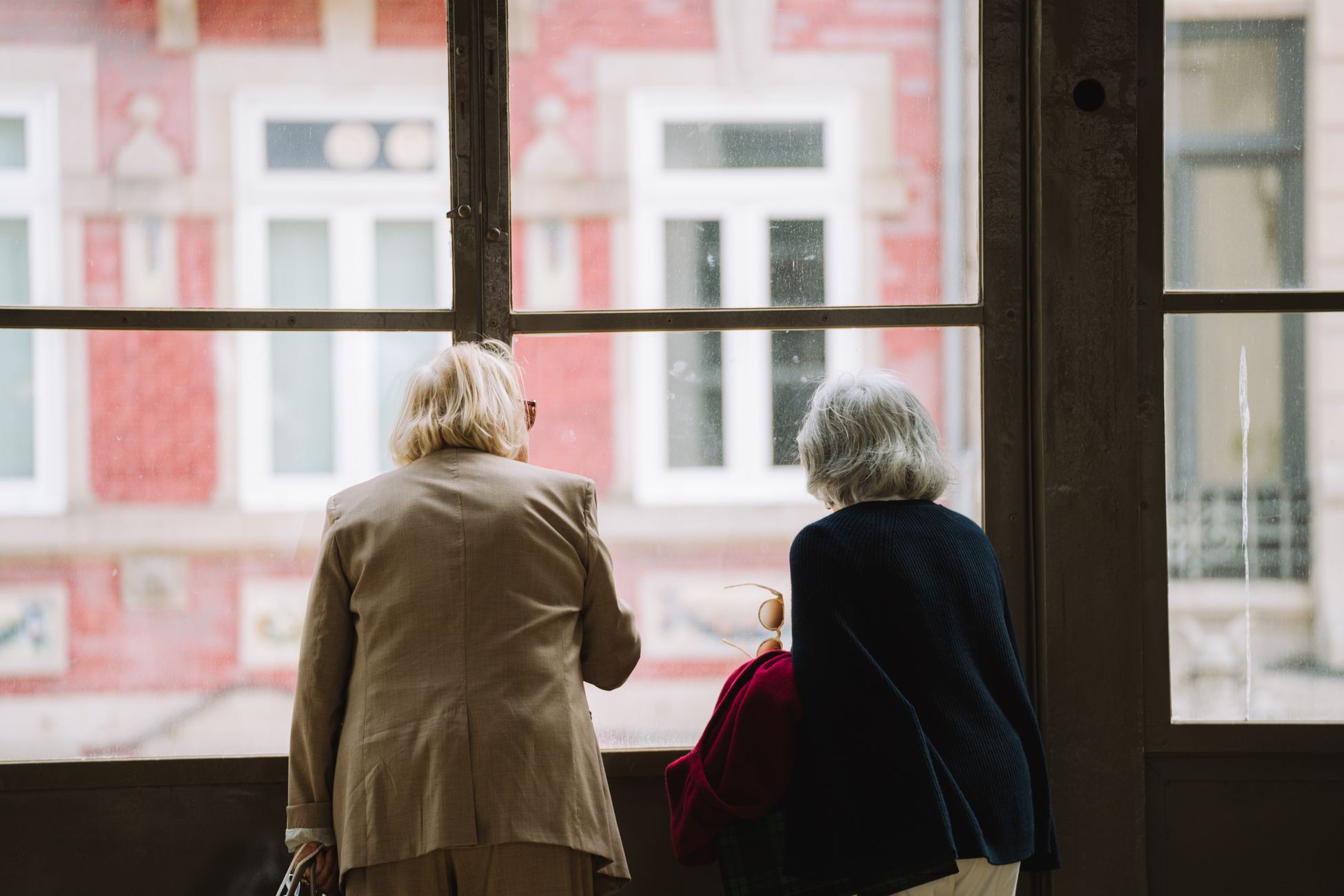
There is a generation now entering its sixties that is, on close examination, considerably lonelier than it expected to be. These are people who grew up with full address books, packed dinner tables, and friendships that seemed permanent by every measure available to them at the time. They are not friendless. They are not, in most cases, socially incompetent. They have simply outlived the infrastructure that made their friendships possible, and the wider cultural register has not adequately named what that loss actually consists of.
The common explanation in advice columns and op-eds is that older adults need to be more proactive, become more tech-savvy, or reach out more actively. The framing assumes that the friendships of earlier decades were sustained by the same kind of effortful, intentional contact that younger generations now manage through group chats and shared calendars. The framing is, on the available evidence, incorrect.
The Artful Parent
Family-life ideas and sharp reads, in your inbox.
What the friendships of that generation were actually built on
The friendships formed by people born roughly between 1955 and 1965 were not, in most cases, the product of careful relational maintenance. They were the product of structural proximity. The friend was the person who lived four houses down. The friend was the woman whose kids rode the same bus. The friend was the coworker whose desk faced yours for eleven years. The friend was the couple you saw at church every Sunday and at the grocery store every Thursday.
The relationship was sustained, in other words, by the fact that you could not avoid one another. Friendship was not something you scheduled. It was something that happened to you, repeatedly, because your lives were arranged in such a way that contact was the default condition rather than the exception.
This is a meaningful distinction. The friendships of that era were calibrated to environments where people didn’t need to consciously decide whether to reach out, because reaching out was not the mechanism. The mechanism was the standing kitchen invitation. The mechanism was the workplace cafeteria. The mechanism was the Saturday morning at the hardware store where the same six men happened to be buying the same brand of paint.
When those environments dissolved — through retirement, through suburban dispersal, through the slow death of the local church, through the closing of the office or the move to a smaller home — the friendships did not transition into a new format. They simply stopped having anywhere to live.

Why the technology-as-solution framing misses the point
A reasonable counterargument is that this generation could, in principle, adopt the tools younger people use to maintain long-distance friendships. Group chats, video calls, social platforms. The tools exist. The friends are, in many cases, still alive. The infrastructure for contact has, if anything, expanded considerably.
The framing misses what the friendships were actually doing. A group chat is not a substitute for proximity-based friendship because the two things are not the same kind of relationship. A group chat requires that someone, at some point, decided this collection of people should be in regular contact. The standing kitchen invitation required no such decision. It required only that two households had agreed, sometime in the mid-1980s, that Tuesdays were a thing they did. The decision was made once, and then the relationship simply happened, week after week, for fifteen years, until someone moved.
The friendships of that generation were, more accurately, the product of repeated, unplanned, low-effort contact. The quality of late-life friendship is tied less to communication frequency than to the presence of shared physical environments. The Harvard Study of Adult Development, which has tracked human relationships for over eight decades, found that the people who aged best were those whose social worlds were embedded in the geography of their daily lives — not those who worked hardest to stay in touch.
The workplace was a friendship factory, and almost no one noticed
For the generation now in its sixties, the workplace was not simply a place where money was earned. It was, by structural design, the primary site where adult friendships were formed and maintained. A 2024 Forbes analysis of workplace friendships noted that the considerable time spent in shared physical workspaces produced bonds that employees often did not consciously cultivate but heavily relied on for well-being.
For decades, the same colleagues sat in the same building for thirty or forty years. They watched each other’s children grow up through photographs on desks. They knew which marriages were strained and which were not. They had birthday cake in the conference room. They had the same lunch table. The friendships were not the result of effort. They were the result of being in the same room for the equivalent of a small lifetime.
When that generation retired, the friendships did not retire with them. They simply stopped having the room. And because the friendships had never required active maintenance — because the room had done the maintenance for them — most people did not have the skills, or the habits, or even the framework, to continue them once the room was gone.
This is part of why retirement loneliness often catches people by surprise. They expected to miss the work. They did not expect to lose the friendships they had assumed were independent of the work.
The standing kitchen invitation, and what it actually was
One of the small social institutions that has more or less disappeared from American life is what could reasonably be called the standing kitchen invitation. The neighbor who came by on Wednesdays. The sister-in-law who dropped in on her way home from work. The friend who knew where the coffee was and helped herself. The friendship that did not require a text message thirty minutes in advance asking if it was a good time.
The standing kitchen invitation worked because it assumed two things: that the friend would not be an imposition, and that the host would not need to prepare. Neither assumption survives in contemporary social life. Younger generations, by and large, do not drop in on each other unannounced. The expectation has shifted toward what might be called contracted contact — every meeting confirmed, every visit scheduled, every interaction calibrated against the other person’s stated availability.
For people who built their adult social lives on the older model, the new model often feels exhausting or vaguely hostile. They were trained, in childhood and early adulthood, to read the emotional weather of a room rather than to negotiate boundaries verbally. They knew when to come by and when not to without anyone telling them. The new model requires asking, and asking, for that generation, often feels like admitting you are not already wanted.

The accumulated effect across decades
What the wider register has missed is that this is not a problem of effort, or of attitude, or of unwillingness to adapt. It is a structural mismatch between the architecture of friendship as that generation learned it and the architecture of contemporary social life. The accumulated effect, across a population of tens of millions, is considerable. Social connection is one of the most powerful predictors of long-term physical and cognitive health, and its absence carries health costs comparable to well-known clinical risk factors.
Adding to the difficulty is a generational communication gap that is genuine and structurally produced. Younger relatives, who could in principle be a source of regular contact, often communicate in formats that older adults did not grow up using and find difficult to inhabit naturally. A 2024 Forbes piece on cross-generational communication noted that what reads as warmth in one register can read as distance in another, and vice versa. The result is that the very tools that might compensate for lost proximity often introduce a second layer of disconnection.
What this is not, and what it is
None of this is a moral failure on the part of the generation now in its sixties. They did not, in most cases, neglect their friendships. The friendships were never neglected, because they never required tending. They were sustained by the architecture of daily life, and the architecture changed, and most people did not notice the change until they looked up one day and realized that the names in their address book belonged to people they had not seen in seven years.
The framing also is not, on close examination, particularly fair to that generation. They were promised, by every cultural signal available to them, that the friendships of their thirties and forties would carry them through. They were not told that the friendships were carried by the workplaces and the neighborhoods and the standing invitations, and that when those structures dissolved the friendships would dissolve with them. They were not warned because the people doing the cultural commentary at the time also did not know.
There is, encouragingly, evidence that the trajectory is not fixed. Long-term studies suggest that aging itself need not be a story of decline, and that many older adults maintain or improve cognitive and physical function well into later life. What seems to matter most is not the recovery of the old infrastructure but the willingness to build a smaller, more deliberate version of it — one or two standing invitations, a regular walk with a neighbor, a coffee that happens every Thursday without anyone having to confirm.
The friendships of that generation were never about effort. They were about presence. And presence, on close examination, can still be arranged. It simply has to be arranged on purpose now, by people who were never taught that it would have to be.