
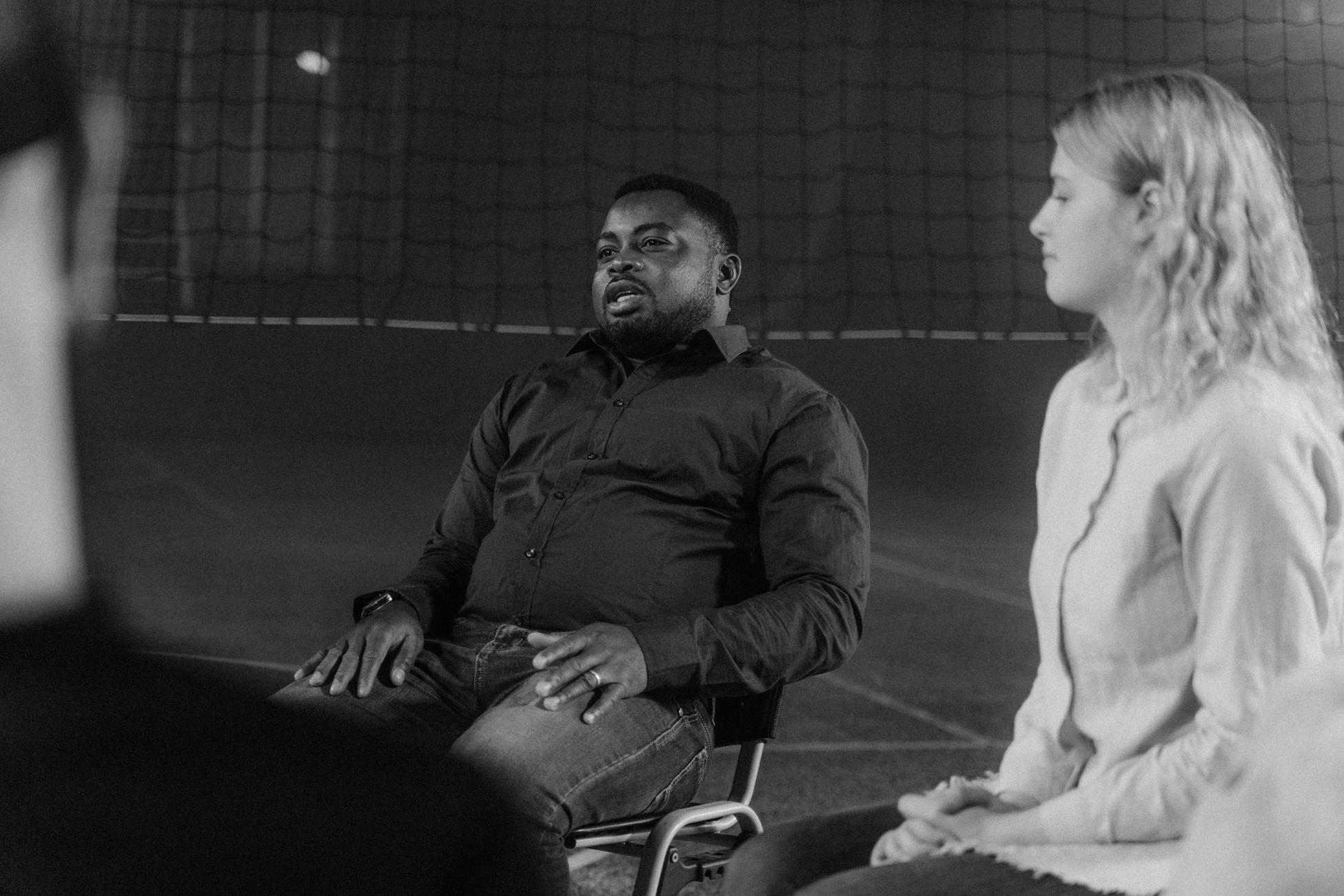
The loneliest person at the dinner party is usually the one who refilled your wine glass before you noticed it was empty. They asked your sister-in-law about her new job. They redirected the conversation when someone made the comment that was going to land badly. They watched the door to see who hadn’t arrived yet, and watched the kitchen to see who was hiding in it. By the time they got home, they couldn’t have told you what anyone said to them, only what they had done for everyone else.
Most of us assume the invisible people in a room are the shy ones. The ones standing slightly apart, holding a drink with both hands, waiting for someone to approach. That’s the cultural shorthand: introvert, wallflower, socially anxious, doesn’t like crowds.
But there’s another kind of invisible, and it’s louder, busier, and considerably more tiring. It belongs to the people doing the relational work nobody asked them to do, and nobody notices they’re doing.
The work that nobody sees because it looks like personality
The trouble with invisible work is that it looks, from the outside, like temperament. Like she’s just naturally warm. Like he’s just good with people. Like they happen to be the kind of person who remembers your kids’ names and asks the question that lets the quiet cousin finally say something at the table.
It doesn’t look like work because it doesn’t look like effort. It looks like grace. And anything that looks like grace tends to be taken for granted.
What used to get dismissed as being nice or being a good hostess is now described as emotional labor, the ongoing, unpaid mental effort of softening tone, mediating tension, noticing who’s excluded, and remembering the small details that hold a group together. It’s the work of managing the temperature of a room so that nobody else has to feel it shift.
We aren’t psychologists or sociologists, and we want to be careful here. But this is something we’ve watched, in our own homes and the homes around us, often enough that we trust the pattern. The people doing the most relational work in a room are frequently the ones who leave feeling the least seen.
Why doing more makes you feel less present
There’s a strange paradox at the centre of all this. The more attentive you are to other people, the less attentive anyone tends to be to you. Not out of cruelty. Out of math.
If you’re tracking five conversations, three energy levels, and one teenager who’s about to say something cutting to his grandmother, you’re not actually in any of those conversations. You’re hovering above them. You’re the air traffic controller, not the passenger.
And air traffic controllers don’t get welcomed home. They get thanked, sometimes, in a vague way. But the warmth in the room flows between the people sitting down, not the person standing up to refill the bowl of olives.
This is the part that surprises people when they finally name it: it isn’t that nobody likes them. It’s that nobody knows them, because they’ve been too busy attending to be attended to. We’ve written before about how being seen and being known can be two very different experiences, and this is one of the cleanest examples of it.

The childhood origin of the temperature-adjuster
People don’t generally arrive at adulthood with this skill set by accident. The adults who scan a room for who’s about to feel left out usually learned to scan, early, for who was about to get angry, withdraw, drink too much, or turn on someone else.
That kind of scanning becomes a posture. It becomes the default way of being in any group of more than three people. You walk into a birthday party and you have already mapped the exits, the moods, the alliances, and the one person who looks like they don’t know anyone. You don’t decide to do this. It does itself.
In adulthood, this can look like a gift. People feel comfortable around you. You make rooms run smoother. You’re the friend others bring to events because everything is easier when you’re there.
But underneath, the same machinery is running, and it’s exhausting. Carrying a disproportionate share of relational work can quietly leave a person feeling depleted and resentful, even when the relationships themselves seem warm from the outside.
What it actually looks like in real time
This work is small. That’s part of why it disappears. None of it is dramatic enough on its own to count.
It’s noticing that your father-in-law has gone quiet, and asking him about the project he mentioned three weeks ago. It’s interrupting your husband when he’s about to tell a story that makes his sister look bad. It’s catching the friend who arrived alone before she can drift toward the door. It’s keeping the conversation away from the topic that always becomes an argument. It’s laughing slightly too loud at the joke that didn’t land, so the person who told it doesn’t feel the silence.
None of these things, individually, would register on anyone’s mental list of what happened that evening. Added together, they’re the entire reason the evening worked.
When the temperature-adjuster goes home and someone comments on how well the evening went, they mean it. They just don’t know who made it great. That’s the design of the work. If it were visible, it wouldn’t function.
The cost that nobody calculates
There’s a real price for being the person who runs the room. It is a slow burnout that tends to find the most relationally skilled people in any group, at work, in families, in friend circles. Their competence becomes the reason they are never relieved of the work.
The cost shows up in odd places. A strange flatness after social gatherings that should have been fun. A reluctance, increasing with age, to host. A growing irritation when someone compliments them on their natural ability to manage social situations, because the compliment confirms that the work is being seen as a personality trait, not a contribution.
And there’s a deeper cost. People who spend their lives adjusting the temperature of conversations often lose track of their own. They genuinely don’t know what they think anymore, because they’ve been thinking about what everyone else is thinking for so long. Ask them how they’re doing and there’s a pause, sometimes a long one, before they answer, and the answer is usually about someone else.
Why the loneliness is specific
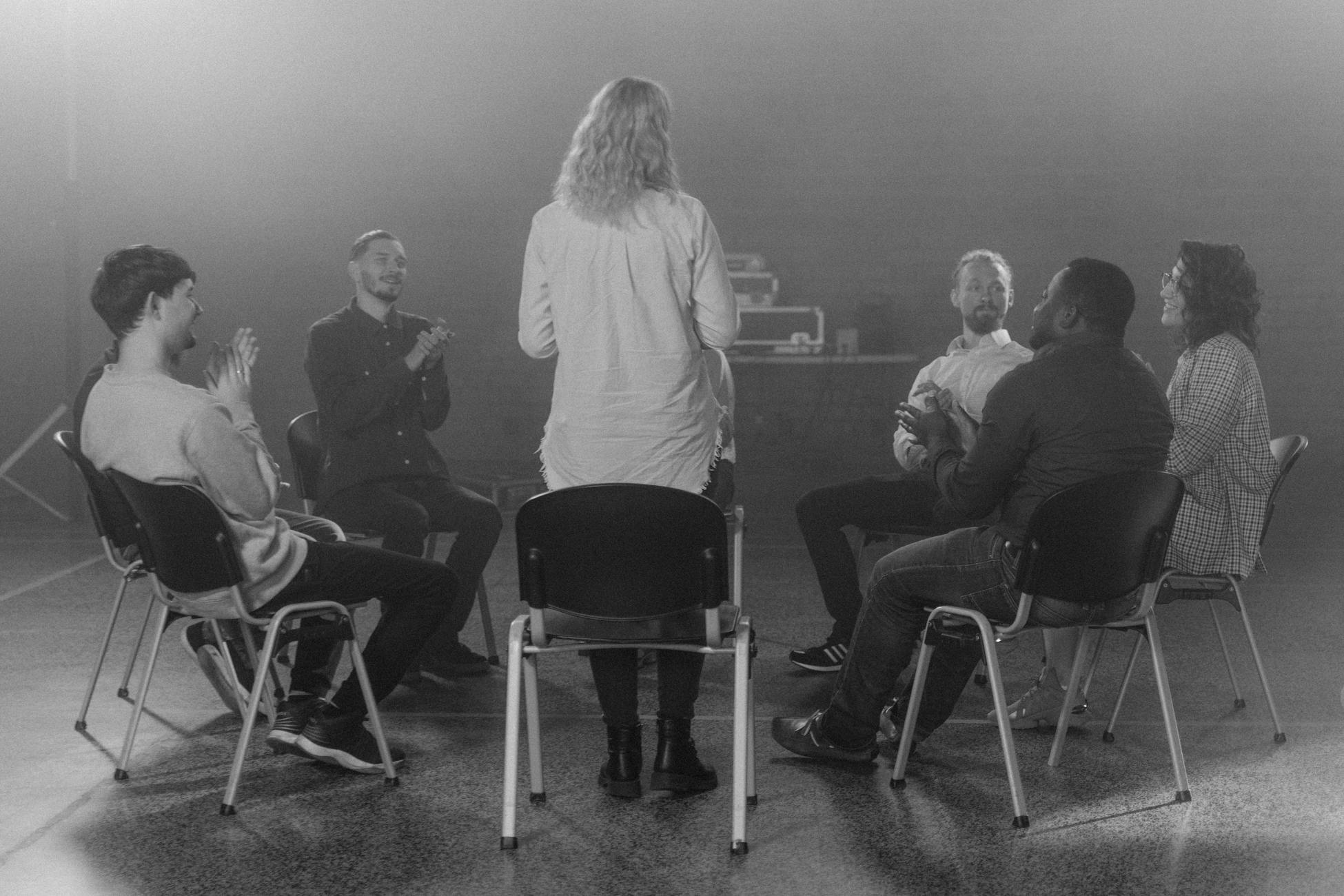
This isn’t the loneliness of having no one. These people often have many people. Their phones are full. Their weekends are booked. They’re the first call when someone is in crisis.
It’s the loneliness of being a function rather than a person. Of being needed for what you do rather than known for who you are. Of suspecting, sometimes, that if you stopped doing the work, stopped remembering the birthdays, stopped sending the check-in texts, stopped hosting, the relationships might quietly thin out, because they were being held together by you all along.
Psychology Today’s writers have explored why connection can feel absent even in full rooms, and this is one of the textures of it. You can be at the centre of every conversation and still feel like nobody is in the conversation with you. They’re in the conversation you’re managing.
What changes when the work becomes visible
Something shifts when this work starts to get named. Not solved. Just named.
The first thing that happens is a kind of grief. People realise how much of their life has been spent doing this, and how little of it was reciprocated. That grief is uncomfortable, but it’s clarifying. It tends to be followed by a slow, slightly clumsy attempt to stop. To not refill the glass. To not redirect the awkward comment. To sit in the discomfort of a room they aren’t managing and find out what happens.
What usually happens is that the room is fine. Not as smooth, not as warm, but fine. Other people step in, often badly at first. Conversations get a little messier. Someone might leave feeling slightly unseen, and it turns out the world doesn’t end.
And the temperature-adjuster, for the first time in a long time, gets to find out what they actually think about the evening. What they wanted to say. Who they wanted to talk to. What it feels like to be a guest in their own life.
The quieter recognition
If you’ve read this far and recognised yourself, the most useful thing is probably not a list of strategies. It’s a small acknowledgement: the work you’ve been doing is real. It has been work, even when it looked like grace. The exhaustion you feel after gatherings other people describe as easy is not a character flaw. It is the predictable result of carrying something heavy that nobody else could see.
People who do this work often grew up doing it, and we’ve written before about the small everyday moments that shape children into the adults they become. Some children learn to read a room the way other children learn to ride a bike, repeatedly, with falls, until it becomes the body’s default.
The hopeful part is that the same attentiveness that makes a person invisible in crowded rooms is also what makes them remarkable in smaller ones. The friend who notices. The parent who catches the shift in a teenager’s voice. The colleague who asks the question nobody else thought to ask. The work is not the problem. The problem is that it’s been one-way for so long.
The room doesn’t need you to stop adjusting its temperature. It needs to learn that the temperature has been getting adjusted, and by whom, and what that person might want to be asked about for once. That recognition, quiet, ordinary, slightly belated, is most of the repair.
