

In 1948, psychology professor Bertram Forer conducted an experiment with his undergraduate students. He handed out a personality test, and a week later returned what he told them were individualized sketches drawn from their answers. Each student rated the sketch for accuracy on a scale of 0 to 5. The average score came back high — meaning the class, almost unanimously, felt their personalities had been pinpointed. Forer had given every single student the exact same paragraph, cobbled together from a newsstand astrology book.
The paragraph is now famous. It opens with the line, “You have a great need for other people to like and admire you,” and goes on to describe someone with unused capacities, a tendency toward self-criticism, occasional doubts about decisions, and a mix of extroversion and introversion. Read it aloud and almost anyone nods. That nod is the entire phenomenon.
Forer called it the fallacy of personal validation. Later psychologists renamed it the Forer effect, or sometimes the Barnum effect, after the showman P.T. Barnum’s apocryphal line about a sucker born every minute. Whatever the name, it is the engine behind horoscopes, fortune cookies, palm readings, cold-reading mediums, and a large portion of the personality-test industry that sells itself as science.
The classroom that started it
Forer’s setup was small and tidy. He administered a personality test that asked students about their hobbies, ambitions, and reading preferences. The students believed their answers were being scored. They were not. A week later, each one received a sealed envelope with their name typed on it, containing the same thirteen sentences pulled from an astrology column at a newsstand near campus.
Before the reveal, Forer asked two questions. Rate the test itself for how well it had uncovered your personality. Rate each individual sentence for how true it felt. The class average for overall accuracy was high. When Forer asked how many students felt the sketch was a good or perfect fit, almost every hand in the room went up. Only then did he tell them they had all received identical paragraphs.
Forer published his findings in 1949. The experiment has been replicated many times since, in classrooms, in corporate training rooms, and more recently on dating apps and AI chatbots, with remarkably consistent results.

What the paragraph actually said
Reading the thirteen sentences today is the fastest way to understand why the effect works. A few examples, lightly condensed:
You have a great need for other people to like and admire you. You have a tendency to be critical of yourself. You have a great deal of unused capacity which you have not turned to your advantage. While you have some personality weaknesses, you are generally able to compensate for them. Disciplined and self-controlled outside, you tend to be worrisome and insecure inside. At times you have serious doubts as to whether you have made the right decision or done the right thing.
Notice what the statements share. They are double-headed, covering both sides of a trait so the reader can pick whichever applies. They flatter without being obvious about it — “unused capacity” implies hidden talent. They describe states almost every adult human experiences at some point, like self-doubt or occasional insecurity. And they are written in the second person, which forces the reader to test each line against their own memory in real time.
Why the brain falls for it
The Forer effect is not a failure of intelligence. Forer’s students were college undergraduates with above-average reading skills, and later replications with graduate students, executives, and PhD scientists have produced similar accuracy scores. The effect is a feature of how human cognition handles ambiguous information about the self.
Three mechanisms do most of the work. The first is selective confirmation. When a sentence says “at times you have serious doubts,” the reader instantly searches memory for a matching example, finds one, and counts the sentence as accurate. The reader does not search for counterexamples because the brain rarely volunteers them.
The second is the desire for self-knowledge. People who take a personality test want it to work. They have paid money, filled out a form, or sat through a session. The motivational pull toward a useful result lowers the threshold for what counts as accurate. Forer noted in his original paper that Forer framed the results as personalized analyses, which primed readers to look for fit rather than mismatch.
The third is what later researchers called the muddy-waters problem of ambiguous statements. A sentence like “you have a great deal of unused capacity” can mean unfinished projects, abandoned hobbies, a job below skill level, an instrument in a closet, or a stalled novel. The reader picks whichever interpretation fits, and the sentence wins. The same dynamic shows up in how people sift evidence in arguments, where vague claims get treated as true because they cannot be cleanly falsified.
The horoscope industry runs on it
Open any daily horoscope column and the language is almost interchangeable with Forer’s sketch. Daily horoscopes typically use universal, double-headed language that could apply to anyone — vague predictions about encounters, financial decisions, and relationships that readers interpret through their own experiences.
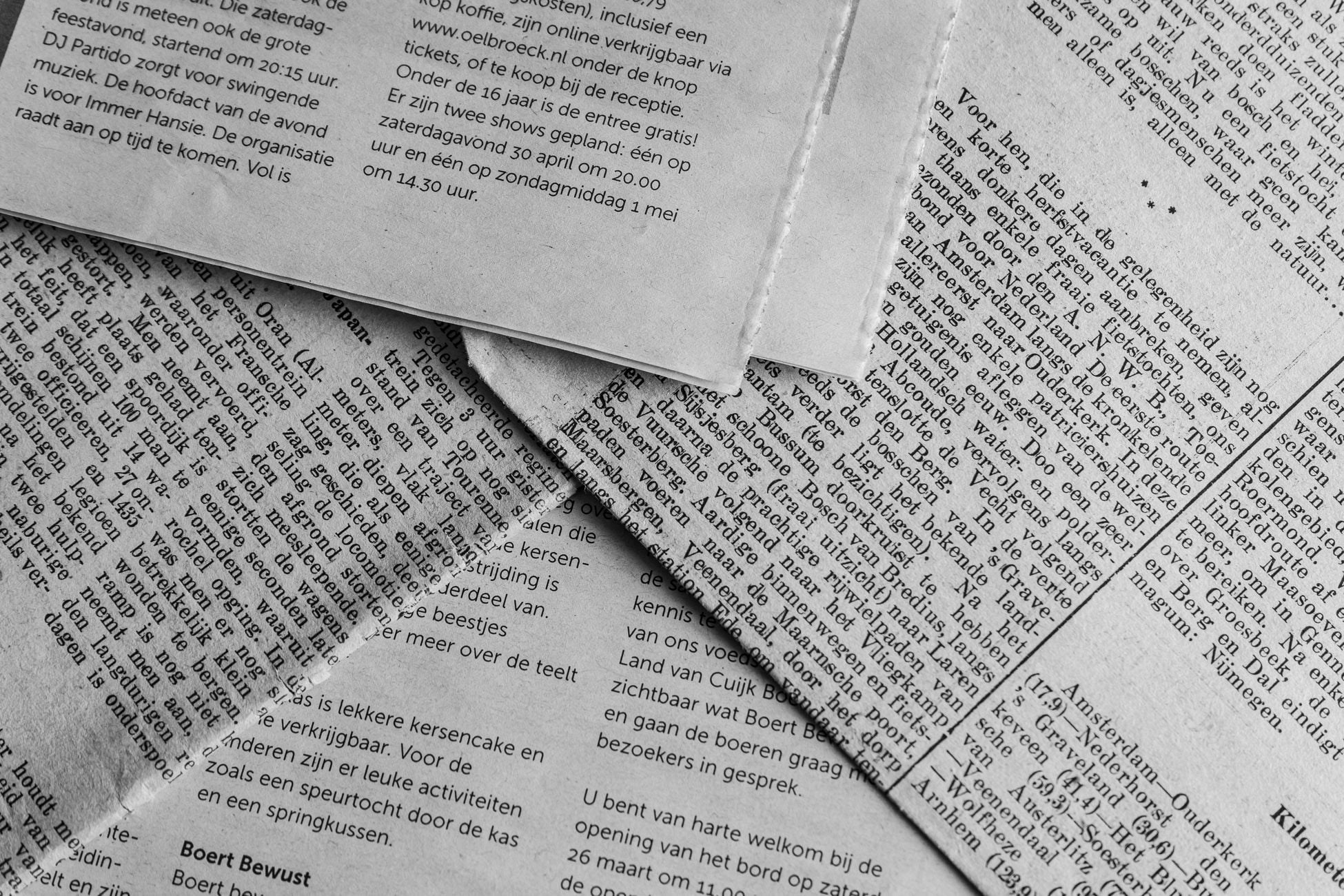
Newspaper astrology of the kind Forer pulled his paragraph from has been a stable feature of print since the 1930s. The format has barely changed. The twelve sun-sign forecasts are written each day or week to be vague enough that any reader, regardless of actual zodiac sign, could find resonance in any column. When participants are given the wrong sign’s reading and asked to rate its accuracy, they often produce high scores.
Personality tests, hiring, and the corporate Forer effect
The phenomenon matters outside entertainment. The Myers-Briggs Type Indicator, the Enneagram, DISC profiles, and dozens of corporate personality assessments produce result paragraphs that read remarkably like Forer’s sketch — flattering, ambiguous, double-headed. Test-takers reliably report that the descriptions feel highly accurate and personally relevant, a reaction that psychologists studying the field have repeatedly traced back to Forer’s 1948 demonstration.
The problem is not that all personality tests are useless. Some, like the Big Five inventory, have decades of peer-reviewed validation behind them and produce results that predict modest amounts of real-world behavior. The problem is that the subjective feeling of accuracy a test-taker reports has almost no relationship to whether the test actually measures anything stable. A bogus instrument and a validated one can both score 4 out of 5 on the user’s gut check, because the gut check is measuring the Forer effect, not the test.
The AI chatbot version
The newest stage for the effect is the conversation window of a large language model. When a chatbot writes a paragraph describing a user’s personality, values, or hidden strengths, the output is almost always Forer-shaped — second-person, double-headed, lightly flattering, ambiguous. Users routinely report feeling that the chatbot understands them personally, sometimes after a handful of exchanges.
The illusion of personalised insight from AI can be especially powerful for adolescents and young adults still forming a sense of identity. AI chatbots feel like they know you through the same cognitive shortcuts that made a single astrology paragraph feel personal in Los Angeles—machine-generated reflections feel like a mirror.
How to inoculate against it
The simplest test, and the one Forer himself recommended in his paper, is to ask whether the statement could plausibly apply to almost everyone. Universal statements like worrying about the future could apply to almost anyone. In contrast, specific statements that reference particular decisions or locations would be falsifiable and genuinely personal. Specificity, falsifiability, and the willingness of a description to be wrong about something are the markers of a real reading of a person.
A second test is to read a description meant for someone else — a different zodiac sign, a different personality type — and ask honestly whether it fits just as well. In replications of Forer’s study, when participants are given the matched description and a mismatched description side by side and asked which is theirs, accuracy drops near chance. The feeling of fit is not coming from the content. It is coming from the reader.
The students, the moth, the mirror
Forer never made much of the experiment after he published it. He went on to a long career in clinical psychology, treating patients and writing about projective tests, and died in 2000. The paragraph he assembled at a Los Angeles newsstand in the autumn of 1948 has outlived almost everything else he wrote. It is taught in introductory psychology courses around the world, often as a live demonstration in which the lecturer hands out identical envelopes and watches a roomful of skeptical undergraduates score themselves at 4 out of 5.
The students always laugh when the trick is revealed. They also, almost always, go back and read the paragraph again, looking for the lines that felt the truest, trying to work out how something so generic managed to feel so specifically about them. The reading is the whole point. The mirror is doing nothing. The face in it is the reader’s own.
