
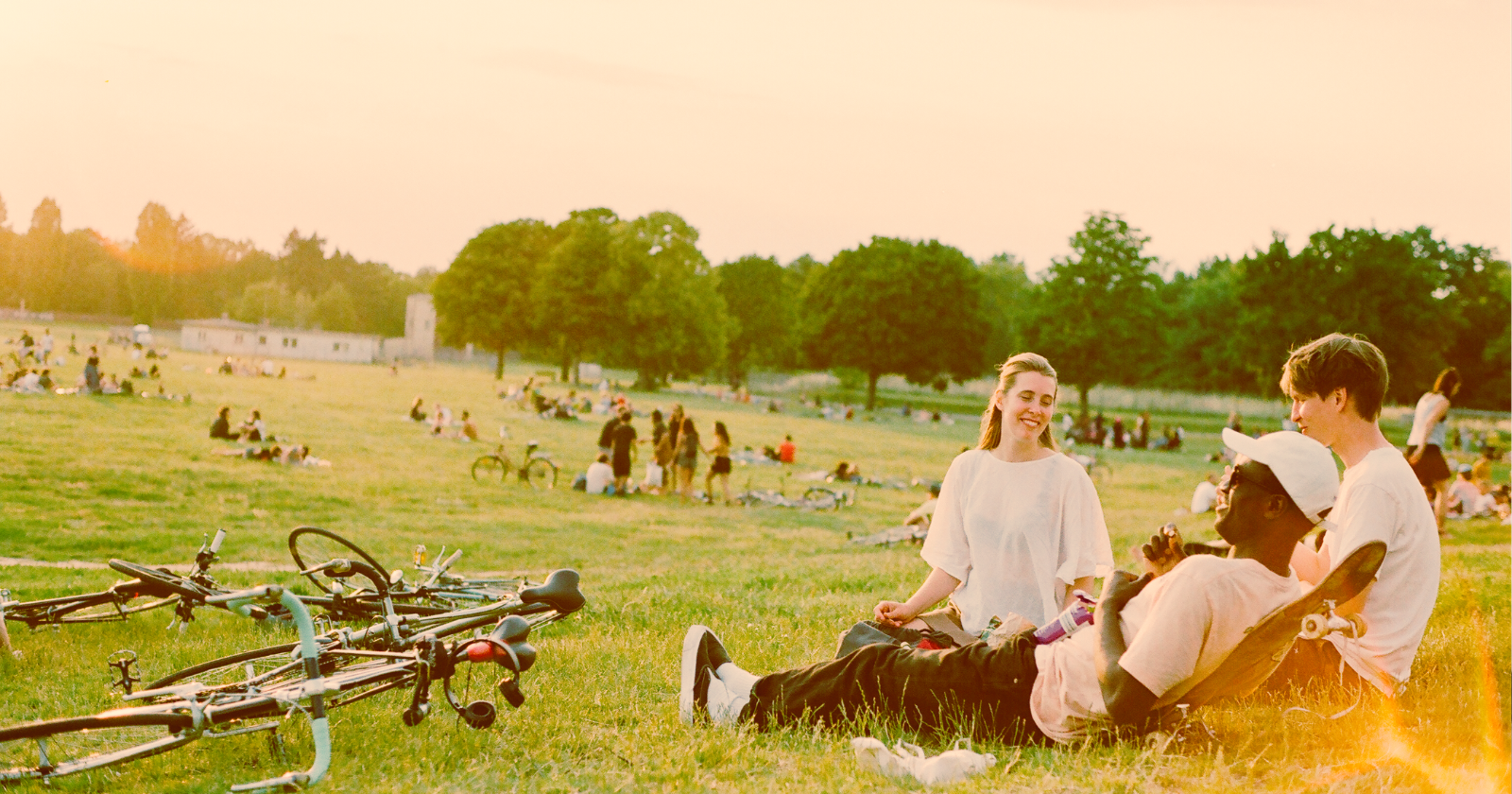
There is a particular kind of summer afternoon, in a particular range of years between roughly 1965 and 1985, that is almost gone from life now. The afternoon was not, at the time, considered exceptional. It was not photographed. It was rarely even remembered by the adults whose houses the children passed through. The children themselves did not, in most cases, register the afternoon as different from any other afternoon. It was just what was happening. The historical record of these afternoons sits mostly in the memories of the people who lived them and is, in the broader culture, still being assembled.
What made the afternoon possible was a particular convergence of structural conditions that the United States had not had before and has not had since. The adults were configured differently. The neighborhoods were configured differently. The relationship between children and time was configured differently. None of these conditions, in isolation, were the reason the afternoon could happen. The combination was.
We are writers and parents, not historians or developmental researchers. What follows is a reading of the structural conditions that made a particular kind of mid-twentieth-century childhood possible, drawing on the available research and the historical record, not a prescription for what contemporary childhood should look like.
What made the afternoon possible
Three structural conditions converged in the years the title points at.
The first was the configuration of adult presence. In 1970, the labor force participation rate of married mothers was 40 percent, according to U.S. Bureau of Labor Statistics data published in the Monthly Labor Review, which meant that the majority of households on a residential street had a mother home during the day. The mother was not, in most cases, supervising the children. She was doing housework, gardening, watching afternoon television, talking to other mothers, or, in many accounts, ignoring the children deliberately. What mattered for the afternoon’s structure was that an adult was within reach but not within attention. The children could be retrieved if necessary, by injury or hunger or weather. They were otherwise not on anyone’s mind.
The second was the configuration of neighborhood space. Postwar suburban development had produced, by 1974, a particular residential geography in which dozens of children of compatible ages lived within walking or biking distance of each other on streets where traffic was, by contemporary standards, light. The yards were continuous. The fences, where they existed, were low. The presence of children in motion across multiple properties was not, in most neighborhoods, a problem any adult had thought to solve. The infrastructure of the neighborhood was, in effect, a continuous play surface that did not require explicit permission to use.
The third was the configuration of childhood time itself. The summer was, in most American households of the period, a long unstructured stretch of weeks in which the children were not in school, not in formal programs, not in arranged activities, and not, in most cases, expected to be productive. The expectation was that they would, in some loose sense, occupy themselves. The occupying happened largely without adult coordination. The summer day did not have a planned shape. The children entered it without any specific obligation to fill it.
What the children actually did
What the six kids on the lawn were deciding, in most accounts of this era, was not a specific activity so much as a direction.
Should they go to the field where the older kids played. Should they go to the corner store. Should they go to the creek behind the development. Should they ride to the pool. Should they go to someone’s basement. Should they go nowhere and just stay on the lawn. The decision was made without consulting an adult, because the children had already absorbed, from years of these afternoons, the practical knowledge of which decisions were within their authority. Almost all of them were.
What followed was typically not the structured activity that contemporary children might recognize. It was a long, mostly aimless stretch of hours involving small projects, modest conflicts, accumulating boredom, the boredom giving way to invention, the invention giving way to more boredom, the cycle running across the entire afternoon. Snacks happened sporadically. Disputes happened sporadically. Injuries happened occasionally. Adults were not involved in any of these unless the situation reached a threshold that required them.
What the afternoon produced
What the afternoon produced, on the available research, was a particular set of capacities that the contemporary developmental literature has documented in detail. The Boston College psychologist Peter Gray, in a 2011 paper in the American Journal of Play, summarized the evidence that children’s free play of this kind produces specific developmental outcomes that are difficult to achieve through structured adult-led activities.
The capacities include the ability to generate one’s own entertainment, the ability to negotiate with peers without adult arbitration, the ability to assess and manage modest physical risk, the ability to tolerate boredom long enough for something to emerge from it, and the practical confidence that one can move through a partially unfamiliar environment and return home safely. These capacities did not have names at the time. The children did not know they were acquiring them. The adults did not know they were transmitting them. The capacities were the residue of the afternoon.
Gray and colleagues have argued, in a 2023 commentary in the Journal of Pediatrics, that the decline of these afternoons across the late twentieth century has been accompanied by measurable declines in children’s sense of being able to handle their own problems. The argument is not that the 1970s afternoon was inherently better than the contemporary alternative. It is that the developmental work the afternoon happened to do has not, in most cases, been adequately replaced by what came after.
Why the afternoon stopped being possible
The afternoon did not end on a single date. The conditions that made it possible eroded across the 1980s and 1990s, in ways the historical record has documented in detail.
The labor force participation rate of married mothers rose from 40 percent in 1970 to 59 percent in 1984 to roughly 70 percent by the mid-1990s. The adults within reach disappeared. The cultural anxiety about children’s safety in unstructured time rose across the same period, partly in response to several high-profile cases of harm that were not, on the available data, statistically representative of the actual risk. The structured-activity industry expanded substantially. The neighborhoods continued to exist, but the children inside them were increasingly inside, in supervised settings, or in transit between supervised settings.
By the late 1990s, the structural conditions that had produced the 1974 afternoon were, in most American suburbs, no longer simultaneously available. The afternoon could still happen in individual cases, in particular households, in particular kinds of communities. As a default daily texture for American childhood, it was over.
What sits in the memory of the generation that lived these afternoons, mostly in their fifties and sixties now, is not, in most accounts, a wish that contemporary children should have the same childhood. The afternoon had real costs. The unsupervised hours sometimes produced harm. The structural conditions that made the afternoon possible also made certain other things possible that the contemporary culture has rightly worked to prevent. What sits in the memory is something quieter. A particular kind of unstructured time, in a particular kind of neighborhood, did developmental work that the surrounding adults did not know was happening at the time. The work is now mostly being done by other means, or, in many cases, not being done at all.
