
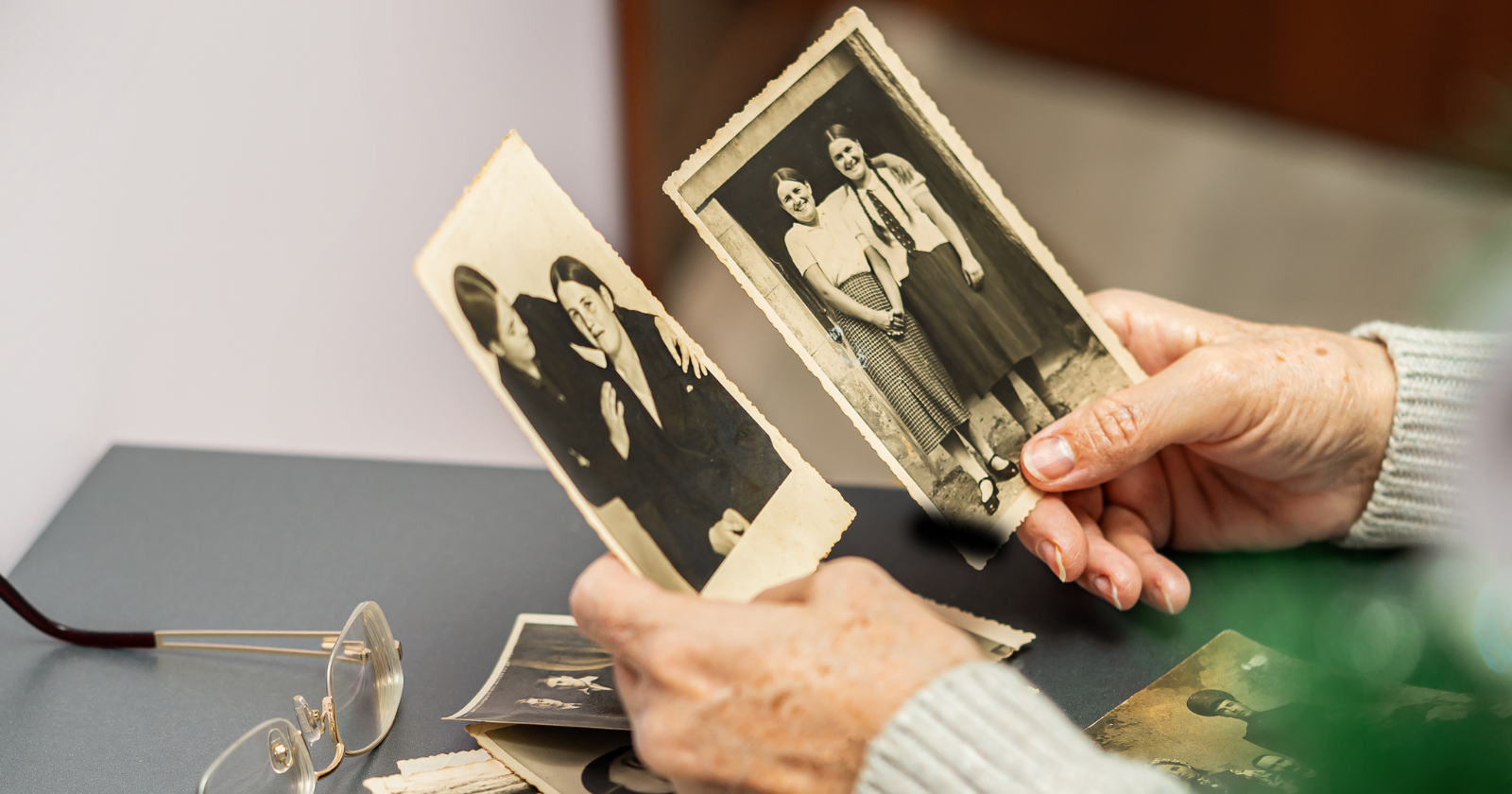
Sometime in their late sixties or early seventies, many older people start looking up things about their own parents that they did not, while their parents were alive, think to ask. The maiden name of a great-grandmother. The name of the village in Eastern Europe a family came from. The years and dates on the back of old photographs. The cousins twice removed who married into the family in the 1940s. Most of this information is now available online in ways that were not even a decade ago. The looking up does not, from outside, look like much. The older relative is just on the computer in the evenings, or going through a box of old letters at the kitchen table on Sunday afternoons. From inside the work, something else is happening.
The script the family usually reaches for, when they notice this kind of activity, is some version of “Dad has gotten interested in genealogy lately” or “Mom has been going through old photos.” The script is gentle, mildly indulgent, slightly distant. It treats the activity as a kind of late-life hobby, somewhere between gardening and crossword puzzles. The activity is, in many cases, none of those things. The older relative is working, often without naming it that way, on a specific task: of all the things they know about their parents, their grandparents, their family before the grandchildren were born, which parts should be remembered, and by whom, and how.
The framework that comes closest to naming what is going on is the work of the American psychiatrist Robert Butler. In a 1963 paper in Psychiatry, Butler proposed what he called the life review, which he described as “the universal occurrence of an inner experience or mental process of reviewing one’s life in older people.” He argued the process was a natural and necessary feature of aging, not a sign of decline. It was the older adult working through the meaning of their life, often in narrative form, often in conversations with family members, often through engagement with photographs and records that brought specific memories back. Six decades of subsequent research have confirmed and extended his framework. The genealogy-looking-up is one of the more documented external signs of the life review running.
The Artful Parent
Family-life ideas and sharp reads, in your inbox.
The transmission decision
What Butler’s framework does not fully capture, on its own, is the second thing that begins to happen in many late-life cases. The life review brings up specific material. Some of it the older relative wants to share. Some of it they do not. The question of what to do with the material is not a single decision. It is many small decisions made across years, often without much external help. Should the grandchildren know what their great-grandfather was actually like as a parent. Should they know about the relative who left the family in 1962 and was not, for the next forty years, mentioned. Should they know the story behind the wedding photograph on the mantelpiece. Should they know what their grandmother was actually doing during the year the family story has politely glossed.
The older person has, in many cases, lived with some of these stories for fifty or sixty years without ever fully resolving them. The grandchildren, in most cases, will not have the context to receive the stories in the way they were lived. The middle generation, the parents of the grandchildren, may or may not want their own children to know what their parents are now contemplating telling them. The older relative is, in effect, making editorial decisions on behalf of a family that does not know it is being edited for.
We write about research here, not from a clinical chair. The patterns described below come from the gerontology and life-review literature, not from any particular family’s actual conversations. What this work can do is name a category of late-life thinking that often runs quietly inside older relatives. It cannot tell us what is being decided in any one living room.
Why the question is harder than it looks
The transmission question turns out to be hard for several specific reasons. The first is that the older relative is, in many cases, working with information they cannot fully verify. The relatives who could have confirmed or corrected the family stories are mostly gone. What is left is memory, which is partial, and the small number of physical artifacts, photos, letters, dates on documents, that can be checked.
The second is that the older relative is making decisions about other people’s privacy. Their parents are, in most cases, dead. The dead cannot consent to having their younger selves disclosed to descendants they never met. The older relative is, in effect, deciding on behalf of someone who is no longer available to be consulted.
The third is that the older relative is often not sure what their grandchildren will be ready to receive. The grandchildren may, depending on age, be too young to hear certain things, or too old in a way that makes the family history feel quaint rather than substantive. The older relative is trying to time something they cannot fully see the receiving end of.
The fourth is that, in most accounts, the older relative is doing this work alone. The middle generation is often busy or uninterested. The grandchildren are often too young to ask. The older relative is, in many cases, the only person in the family currently doing the editorial work, and they know that when they die, the work, in whatever shape they have given it, will be the form in which the family history continues to exist.
What gets transmitted, and what does not
What the gerontology research and the qualitative interview work, including Karl Pillemer’s Legacy Project at Cornell, has documented is that what gets transmitted, in most families, is not always what the older relative most wanted to pass on. Some stories the older relative has spent years preparing to tell are never quite asked for. Some details get mentioned once, in passing, and absorbed only by whichever grandchild happened to be paying attention. Some of the most important material gets written down, in letters or memoirs, and read in some cases decades after the older relative is gone. The transmission is uneven. The older relative is leaving a partial inheritance that no one will quite know how to receive.
This is mostly qualitative work, drawn from interviews and case histories rather than experimental studies, so what it tells us is descriptive rather than predictive. It cannot say what will get transmitted in any given family. What it can say is that the transmission work is happening, that it is more deliberate than the family usually realizes, and that the older relative is rarely getting the help they would need to do it well.
The cultural conversation about older relatives “getting into genealogy” still tends to treat the activity as a quaint late-life pastime. The research suggests something different. The older relative is doing a specific kind of editorial work, on a specific deadline, often alone. The family that wanted to be useful to the older relative could do something more concrete than what they are currently doing. They could ask the older relative what they have been figuring out lately, who they have been thinking about, what they want the grandchildren to know. The question often produces, in older relatives who have been waiting for it, a substantial answer.