

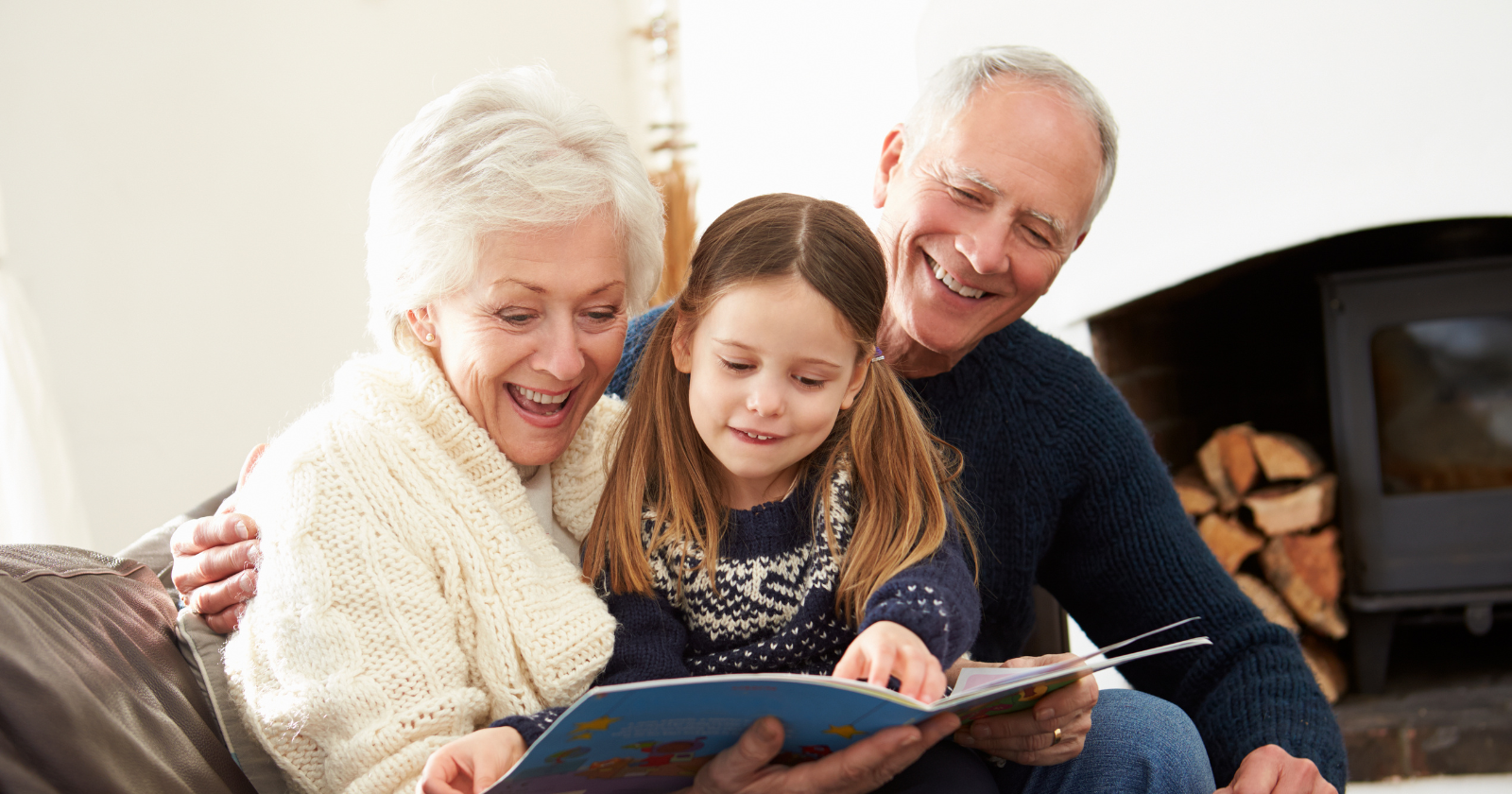
When my parents visited last week, I watched my mom spend twenty minutes listening to Ellie explain her elaborate “leaf family” system while my dad helped Milo build the world’s wobbliest block tower.
No iPads appeared. No new toys were produced from their bags. Just pure, undivided attention and genuine fascination with whatever my kids wanted to share.
Later that evening, after bedtime stories and kisses, my mom said something that stuck with me: “I wish I’d been this present when you were little. Back then, I thought love meant buying things and keeping you busy.”
That got me thinking about the grandparents I know who truly get it. The ones who spoil with presence rather than presents. They seem to share certain qualities that go way beyond just being “good with kids.”
According to psychology research, these grandparents often display some pretty remarkable emotional traits that many of us are still working on ourselves.
1) They’ve mastered the art of unhurried presence
You know that feeling when you’re trying to get out the door and your toddler wants to examine every single rock on the driveway? Most of us are mentally calculating how late we’ll be. But these special grandparents? They’re right there, marveling at the sparkly bits in that ordinary pebble.
This isn’t just patience. It’s what psychologists call “temporal generosity” – the ability to give time without counting the cost. These grandparents have learned that rushing through moments means missing them entirely.
My dad used to check his watch constantly when I was growing up. Now? He’ll sit on our porch for an hour watching Milo water the same plant seventeen times. Something shifted in him, and that shift seems universal among grandparents who truly connect.
2) They celebrate effort over outcome
Remember when your kid brought home that art project that looked like… well, let’s just say Picasso would’ve been confused?
These grandparents genuinely light up at the purple sun and the three-legged dog because they see what matters: The concentration, the creativity, the pure joy of making something.
They’ve moved beyond our achievement-obsessed culture. When Ellie shows my mom her wobbly handwriting practice, there’s no “let’s work on making it neater.” Instead, it’s “look how hard you’re working!” or “tell me about what you wrote.”
Related Stories from The Artful Parent
- There’s a kind of love nobody teaches you about — the one where your 70-year-old mother still calls to tell you to bring a jacket even though you’re 45, and the jacket was never about the weather, it was her way of saying I still need to
- Psychology says the parents whose adult children gradually stop visiting aren’t usually the ones who were cruel or absent — they’re often the ones so focused on providing and protecting that they never learned to simply be company, and children grow up moving towards the people they feel easy with rather than the people they owe the most to
- There are three stages to calling your aging parent. First you call because you want to. Then you call because you should. Then you call because you’re running out of calls and you’ve started counting without meaning to. Most people are in the second stage and pretending they’re still in the first.
This trait reflects what researchers call “process-focused validation.” These grandparents understand that kids need appreciation for their efforts, not evaluation of their results. It’s a rare quality in our grade-obsessed, milestone-tracking world.
3) They hold space for all emotions
Last month, Milo had an epic meltdown at the farmers market. The kind where people stare and you consider never leaving the house again. While I was frantically trying to calm him down, my mom simply sat on the ground next to him and waited.
She didn’t shush him or distract him with promises of treats. She just stayed close, occasionally saying “you’re really upset” or “it’s hard when things don’t go how we want.” Within minutes, he was in her lap, still sniffling but calm.
These grandparents have what psychologists call “emotional bandwidth.” They can witness big feelings without trying to fix, minimize, or redirect them. Maybe it comes from having survived their own parenting years, but they seem to understand that emotions need room to breathe.
4) They’ve released their need to be right
Can we talk about how liberating it must be to no longer care about winning every discussion? These grandparents have this superpower. When Ellie insists that butterflies sleep in the clouds, they don’t launch into a biology lesson. They ask what kind of blankets cloud-sleeping butterflies might use.
This isn’t about encouraging false beliefs. It’s about prioritizing connection over correction. They understand that there will be plenty of time for facts, but only a brief window for wonder.
As someone who transitioned from teaching elementary school to writing, I still catch myself in “educator mode” sometimes. But watching these grandparents, I’m learning that being right is way less important than being present.
5) They find joy in the mundane
Want to see magic? Watch a grandparent who gets genuinely excited about helping a child fold washcloths or sort socks. They turn the ordinary into adventures without trying. Making sandwiches becomes a cooking show. Walking to the mailbox becomes an expedition.
This capacity for finding delight in simple moments reflects what positive psychologists call “savoring.” These grandparents have learned to amplify and extend positive experiences, no matter how small.
My parents were skeptical of my “hippie parenting” approach at first, but now I watch them embrace the same simple, slow living with my kids. They’ve discovered that the best moments rarely involve expensive toys or elaborate plans.
6) They practice radical acceptance
These grandparents don’t compare their grandkids to others or wish they were different. When your shy child hides behind your legs at family gatherings, they don’t push for hugs or performative cuteness. They meet kids exactly where they are.
This acceptance runs deep. They’ve moved past the need for children to reflect well on them or validate their grandparenting. They can love the loud kid, the quiet kid, the quirky kid, the challenging kid, all with the same open heart.
It’s what Carl Rogers called “unconditional positive regard,” and it’s transformative. Kids feel it immediately. They know these are safe people who won’t judge or try to change them.
7) They model emotional regulation
Here’s something beautiful: These grandparents stay calm when kids can’t. When chaos erupts, they become the steady anchor. Not through suppression or denial, but through genuine emotional stability.
They’ve done their own emotional work. They can acknowledge frustration without being controlled by it. When Milo throws his lunch on the floor, they might say, “Oh dear, looks like lunch went flying! Sometimes we feel like throwing things.” No panic, no anger, just acknowledgment and redirection.
This emotional regulation is contagious. Kids learn more from what we model than what we say, and these grandparents are teaching master classes in staying centered.
The gift that keeps giving
What strikes me most about these traits is that they’re not really about grandparenting at all. They’re about being fully human, fully present, fully accepting. These grandparents have often spent decades learning these lessons, sometimes through their own parenting mistakes.
My own journey from classroom teaching to parenting has taught me that connection truly does matter more than perfection. Watching my parents and others embody these traits with my children reinforces this truth daily.
The beautiful thing? We don’t have to wait until we’re grandparents to develop these qualities. Every day with our kids is a chance to practice unhurried presence, celebrate effort, hold space for feelings, release our need to be right, find joy in simplicity, practice acceptance, and model emotional regulation.
Because ultimately, spoiling kids with love instead of stuff isn’t just about what we give them. It’s about who we become in the process of loving them well.
