
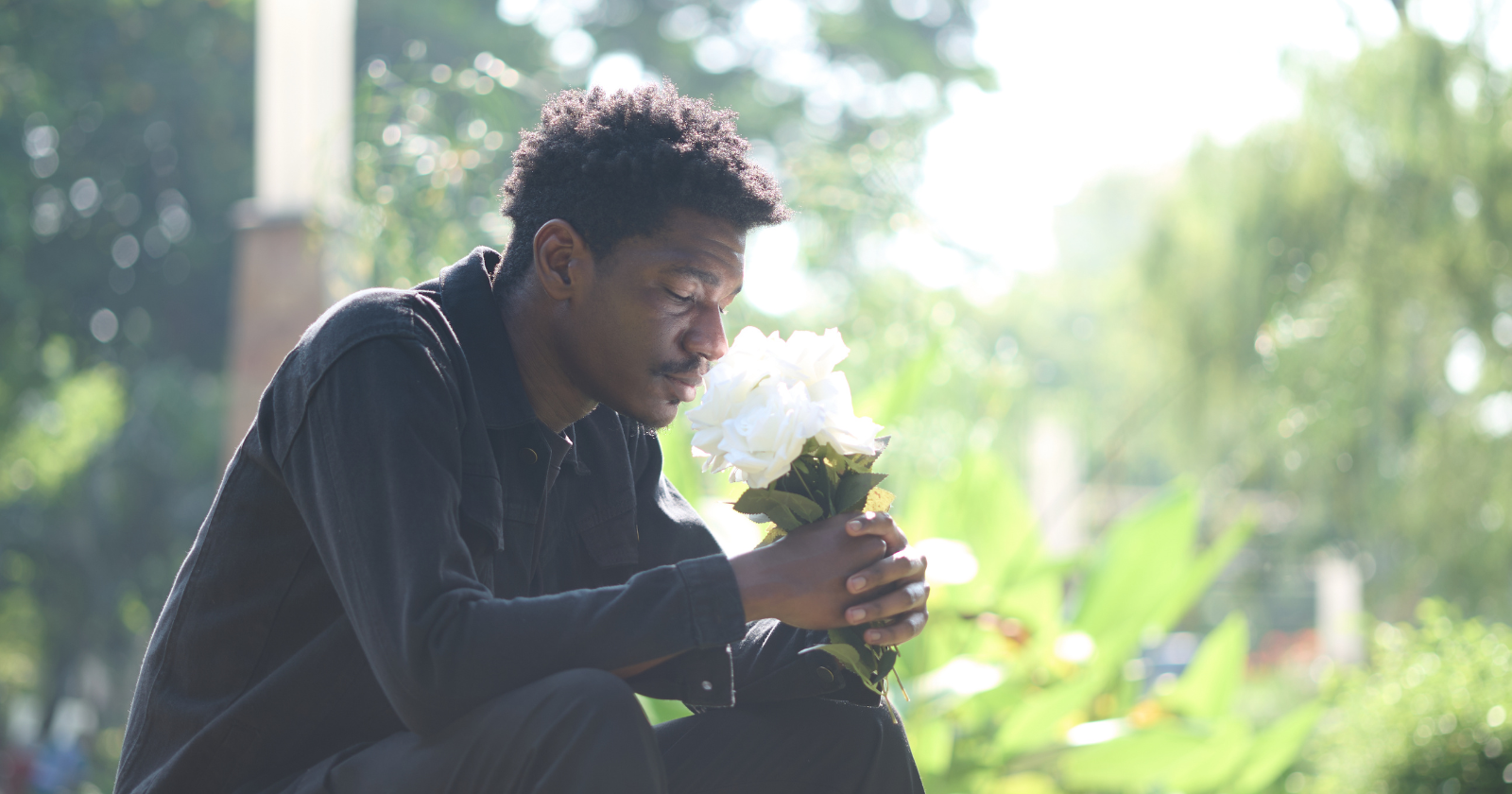
There is a category of loss the wider culture has very little language for, and that, for the people experiencing it, is among the hardest things a person can carry. It is the loss of someone who has not died. The parent with dementia who no longer recognizes the adult child sitting across from them. The spouse whose addiction has, by every measurable feature, made them a different person from the one the other married. The adult child who has cut off contact and is, by all available accounts, well, living a life, just not in any version that includes the parent. The sibling whose mental illness has made the relationship the family used to have no longer accessible.
In each case, the person is alive. The cultural template for loss has no clean fit. There is no funeral. There is no formal acknowledgment of what has happened. There is no week of bereavement leave, no flowers, no covered dishes brought to the door. The grief is real and substantial. The social infrastructure for handling it is mostly missing. This is not, in the research, a minor mismatch. It is one of the most reliably documented sources of unresolved psychological suffering in adult life.
We are writers and parents, not clinicians or grief researchers. What follows is a reading of the empirical and clinical literature on this kind of loss, not therapeutic advice. The article describes a pattern documented in the research; it does not diagnose any one person’s experience.
What the research calls this
The most influential framework for understanding this category of loss comes from Pauline Boss, a family therapist and emeritus professor at the University of Minnesota, who coined the term ambiguous loss in the 1970s while studying families of soldiers missing in action during the Vietnam War. Her 1999 book Ambiguous Loss: Learning to Live with Unresolved Grief, published by Harvard University Press, set out the framework that has since been applied to a wide range of contemporary losses.
Boss distinguishes between two types of ambiguous loss. The first is physical absence with psychological presence: the missing-in-action soldier, the disappeared person, the family member lost to immigration, sometimes the child given up for adoption. The second is psychological absence with physical presence: the family member with dementia, mental illness, addiction, brain injury, or any other condition that has changed the person in ways that mean the relationship the family used to have is no longer accessible. Both types share a structural feature. The loss does not, in most cases, resolve. There is no closure.
Boss has argued, across decades of research and clinical work, that ambiguous loss is among the most stressful forms of loss a person can experience, precisely because of the ambiguity. The person is gone and not gone. The relationship is over and not over. The mourner is bereaved and not bereaved. The contradictions do not, in most cases, resolve on their own.
Why there is no permission to mourn
There is a separate but related body of work on what the American thanatologist Kenneth Doka called disenfranchised grief.
Doka introduced the term in his 1989 book Disenfranchised Grief: Recognizing Hidden Sorrow, and expanded the framework in a 2002 follow-up. He defined it as the grief a person experiences when their loss is not openly acknowledged, publicly mourned, or socially supported. He identified three main mechanisms by which grief becomes disenfranchised. The relationship may not be recognized as significant by the surrounding community, as can happen with extended family, former partners, or chosen family. The loss may not be recognized as a loss, as can happen with miscarriage, estrangement, or the change a parent has undergone through dementia. Or the griever themselves may not be recognized as having standing to mourn, as can happen when the wider community thinks the relationship was too difficult for the loss to count.
The kind of loss the title describes sits at the intersection of these two frameworks. The loss is ambiguous in Boss’s sense, because the person is still alive. And the grief is disenfranchised in Doka’s sense, because there is no social ritual to mark it. The combination produces what some clinicians describe as frozen grief: grief that cannot move forward because the conditions for it to do so are not, in most cases, available.
What specifically is lost
The thing that has been lost is harder to name than ordinary bereavement allows for.
What the mourner has lost is the relationship as it was. The version of the person they had access to. The future they had been quietly assuming would unfold. The accumulated history of small interactions that made the relationship the relationship. The person is still alive, but the relationship the mourner is grieving is not. The mourner is in the strange position of mourning while still being in some version of a relationship with the person they are mourning.
The grief is often complicated by ongoing care. The person with dementia still needs to be visited. The adult child who has gone no-contact may still need decisions made about them in family conversations. The estranged sibling may still be present at certain family gatherings, or may simply be absent in a way the family does not know how to discuss. The mourner is doing the active work of the relationship while also grieving its loss. This is, in most accounts, exhausting in a way the cultural template for grief does not adequately register.
What the research suggests can and cannot help
Boss’s clinical work, developed across more than forty years of practice, has identified several things that seem to help people living with ambiguous loss. The first is naming the experience as a real and recognized form of loss, rather than as a personal failure to move on. The second is what she calls both-and thinking, the capacity to hold the contradictions of the situation without forcing them to resolve. The person is gone and not gone. The mourner is bereaved and not bereaved. The relationship is over and not over. Forcing the contradictions to collapse, in either direction, tends to produce more suffering rather than less.
What does not, in Boss’s clinical experience, tend to help is the cultural insistence on closure. The framework she has spent her career arguing against is the one that says the mourner needs to reach a clean endpoint, accept the loss, and move on. For ambiguous loss, this is not, in most cases, possible. The loss is ongoing. The expectation that it should resolve produces, in many of the people she has worked with, a secondary grief about not being able to grieve correctly.
Adults experiencing persistent or severe ambiguous loss may benefit from speaking with a therapist familiar with Boss’s framework or with grief counseling more broadly. The clinical literature on this is now substantial, and the resources offered through hospice organizations, family therapy associations, and online communities organized around specific kinds of ambiguous loss can also be useful starting points.
The cultural conversation about loss still defaults to the kind that involves a death. The research is increasingly clear that a large portion of the loss people actually experience does not. The losing happens slowly, sometimes across decades, often with the person still present, often without any social acknowledgment that anything has been lost at all. The absence of acknowledgment is, in many of the available accounts, the part that does the lasting damage.
