

I was feeling nostalgic so I typed a prompt into ChatGPT. The exact words were:
“I am feeling nostalgic. Remind me of my 1990s childhood in rural Ireland.”
I half expected a generic list. What came back was closer to a photograph.
The Artful Parent
Family-life ideas and sharp reads, in your inbox.
It put me in “the back seat of a car with no air conditioning, windows cracked open, driving down narrow roads with grass growing up the middle and hedges scraping the sides.” It knew about the smell of silage and turf smoke, about “rain on warm tarmac after a rare sunny day,” about a village with one or two shops “where everyone knows whose child you are.” None of it was about me, specifically. All of it was.
A few lines did something I wasn’t quite ready for. “Your world is small, but it feels huge.” That one stopped me. So did this, about the after-school hours: “there’s no endless internet to disappear into. You go outside because that’s just what you do.” And the line it chose to finish on: “the way a field, a lane, a bike, a football, a cousin, and a packet of Tayto could be enough for an entire day.”
Because that was the whole shape of it.
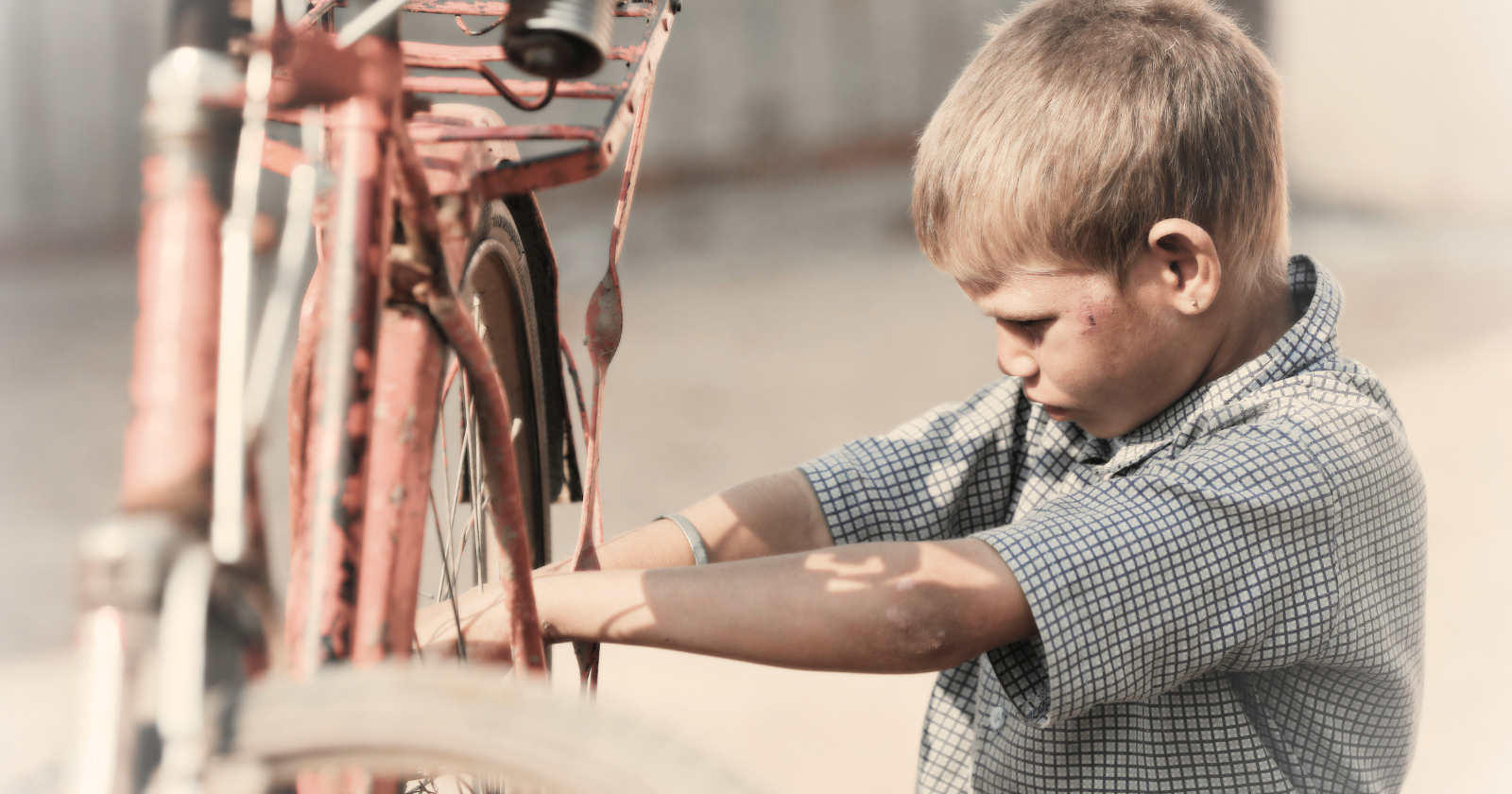
The details that stuck with me aren’t really the ones a list would capture — the sweets, the television, the names of the chocolate bars. What I remember is the shape of the days, or the lack of one. Summers were long and unplanned. The rule, such as it was, was to be home by dark. In between, the time was mine to fill, and I filled it outside. I played hurling and Gaelic football and I rode my bike, but plenty of it was just roaming — fields and lanes and whatever a few of us could invent. Nobody knew exactly where I was, and nobody seemed worried about it.
Boredom was the default setting, not an emergency. There was no screen to reach for, no adult whose job it was to entertain me. I had to work out what to do with myself, and I did, and I don’t remember it as deprivation. I remember it as ordinary. ChatGPT had a line for that part too — “the way boredom had room to turn into imagination”.
Here is where the nostalgia turned into something heavier. I started out missing my own childhood. I ended up realizing that the thing I miss isn’t only behind me — it’s largely gone, for everyone. The childhood ChatGPT described back to me isn’t a place I can’t return to because I grew up. It’s a place that mostly doesn’t exist anymore.
The social psychologist Jonathan Haidt has spent years on exactly this. By his account, the “decline of the play-based childhood […] began in the 1980s and accelerated in the ’90s” — which means I caught the tail end of the thing on its way out the door. What that kind of play gave children, he argues, was “the chance to explore, test and expand their limits, build close friendships through shared adventure, and learn how to judge risks for themselves.” Set that beside a bike and a field and a vague instruction to be home by dark, and it’s nearly the same sentence.
I’m not a parent, and I won’t pretend I know what I’d do differently if I were. I’m also not interested in turning this into a lecture about phones, or about kids today, because that isn’t what I actually felt. What I felt, reading a machine describe my own childhood back to me, was lucky. Not sad, exactly. Lucky. I got the slow version — the one with too much time and not enough to do, where a field and a few hours of light were the whole of it.
Worlds change, and the one coming up will have its own things that a fifty-year-old version of those kids will one day miss. I don’t begrudge them that. I just got mine early, before it went. And I’m glad I was small in it while it was still there.