

My dad bought a camcorder sometime in the 90s. I remember it as a real moment in the house. The the camera itself came with its own padded shoulder bag, the kind that made it look like a piece of broadcast equipment rather than something a family might pick up at the local electronics shop.
He did not film much with it. The camera came out for the occasions that warranted it — communions, christenings, Christmases, a summer trip or two — and otherwise sat on the shelf. Filming was something you did because the day was important enough to record. It was not the default state of being alive.
I now think about that camcorder when I see how friends with young kids document their children. The camera no longer comes out for the occasion. It is already in your pocket, already pointed, already running. A toddler putting on shoes is footage. A first scoop of ice cream is footage. The line that used to separate the ordinary from the recordable has been quietly erased, and the people most aware of the erasure — because they remember the other side of it — are my parents’ generation, watching their grandchildren grow up under a kind of attention they have no comparable experience of.
The Artful Parent
Family-life ideas and sharp reads, in your inbox.
A photograph used to cost something
You bought a roll of film. You had a limited number of exposures, and once they were gone they were gone. You took the roll to a chemist or a photo shop, paid for it to be developed, waited a week, and walked back to collect a paper envelope of prints, most of which were blurry, badly framed, or accidentally featured a finger. The good ones were rare in proportion to the bad ones, and the whole process — the buying, the waiting, the disappointment, the occasional small triumph — made each surviving photograph a small artifact rather than a stream.
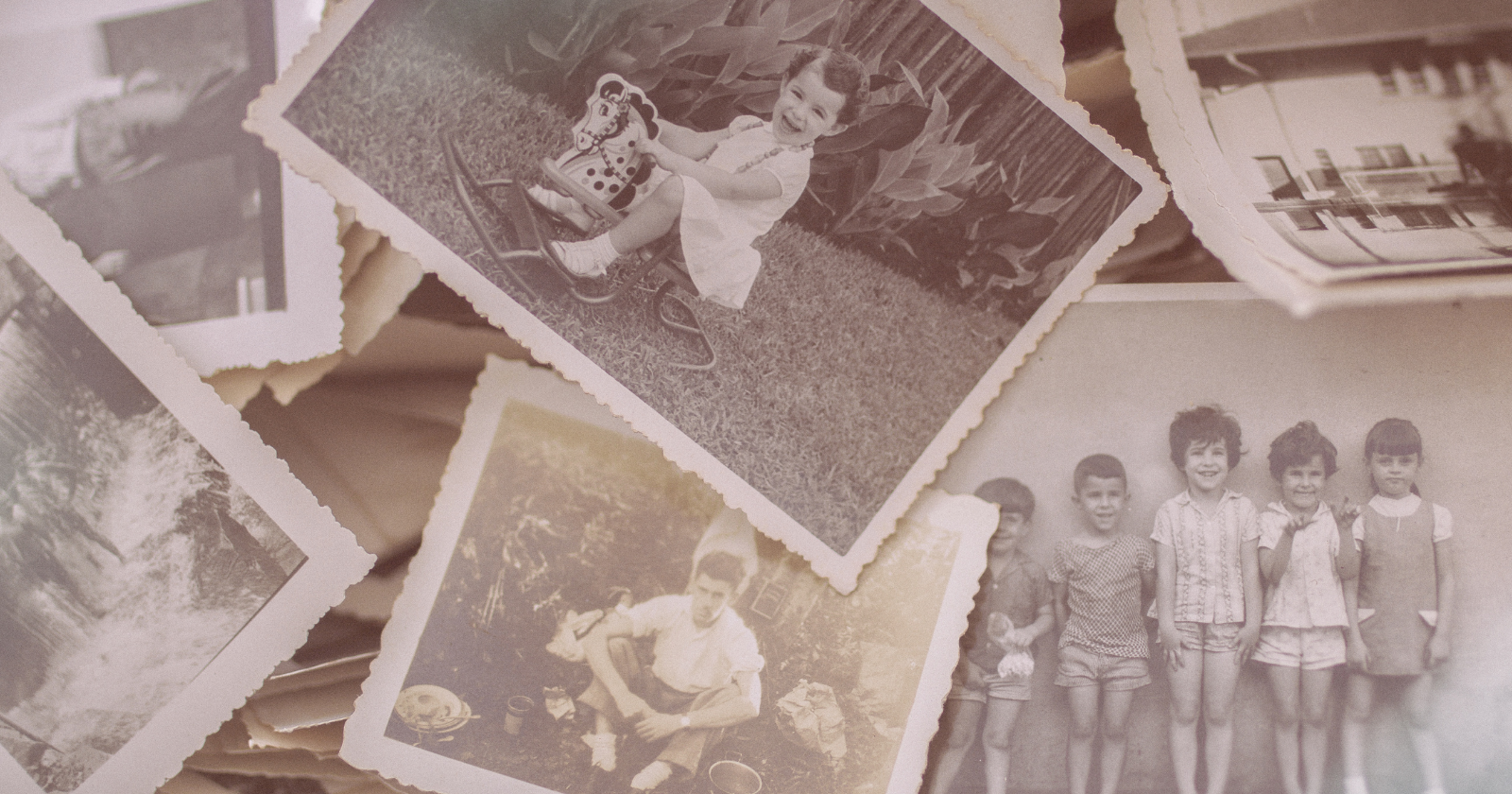
My parents have just a few photographs from their own childhoods that they keep, and you can tell by the way they hold them how much they matter. A wedding. A first communion. A black and white shot of someone’s father standing on a beach. There aren’t many. Each one is studied and known by heart, because there is nothing else competing for the attention of the memory.
That scarcity is hard to convey nowadays. Even the act of looking at old family photographs has changed. When I was small, the photos lived in a cupboard, in loose piles and a few albums with sticky pages and cellophane covers. Sitting on the floor with my mother and going through them was an event in itself. You picked them up. You passed them around. The same handful resurfaced every few years.
A grandchild now is preserved in real time
The shift in the other direction is hard to overstate. The research firm Photutorial estimated that humans took roughly 1.9 trillion photographs in 2024. The average American takes 20 photos a day. Almost all of them are taken on phones, which means almost all of them are immediately backed up, immediately reviewable, immediately shareable. A child born today is photographed within seconds of arrival, and the photographs travel onto a family group chat within minutes.
Reporting on a survey of parents across ten countries, The Conversation noted that more than 80 percent of children have an online presence by the age of two. My parents’ generation probably don’t have a single digital photograph of themselves at age two. Their grandchildren proabably have several thousand by the same age, scattered across cloud accounts, parents’ phones, grandparents’ phones and WhatsApp threads.
What is gained, and what quietly goes
There is something extraordinary about a grandparent in one country watching a toddler in another country take a wobble of a step from a video sent the same morning. That bridge did not exist a generation ago and it’s amazing that we can do this.
But there are quieter costs that researchers have started to map. Linda Henkel, a psychologist at Fairfield University, asked museum visitors to photograph some artworks and only observe others, then tested their memory the next day. The people who had photographed the works remembered less about them. The camera, she found, produces a particular kind of forgetting: “When people rely on technology to remember for them — counting on the camera to record the event and thus not needing to attend to it fully themselves — it can have a negative impact on how well they remember their experiences,” she explained when the work was published. The act of pointing a phone at a child changes, even slightly, how present you are to them.
There is also a separate concern that did not exist for previous generations at all. Stacey Steinberg, a law professor at the University of Florida who studies how children’s privacy interacts with social media, has been argued that the volume of family content posted online is not a neutral act. She told UNICEF that “when we share things about our children online without involving them in that decision making process, we’re missing out on a valuable opportunity to teach our children and model for our children the idea of consent.” A child born in 1962 had no comparable online record they would later have to renegotiate with. A child born now may, at thirteen, find a thousand images of themselves they did not choose to publish.
The piles in the cupboard
When I’m home and the family is together, my mother sometimes pulls out the old photos. They live in a cupboard in piles, not neat albums, and the ritual is the same as it was when I was small. We sit and pass them around. The same fifteen or twenty images surface, and each one carries a small story we have told before. My mother knows the shoes she was wearing in the wedding photograph. She knows the day. She knows who is missing from the frame and why.
I am not sure what the equivalent ritual will look like in forty years for a child being born now. There will be more material to choose from than any single afternoon could hold. Whether that will deepen the memory or scatter it is, to me, an open question. I find myself trusting the people who remember the other side of it — my parents’ generation, watching their grandchildren’s lives preserved in real time, holding in one hand a phone with sixteen thousand photographs of a single toddler, and in the other a creased black and white image of themselves at five — to feel the difference more clearly than the rest of us do.