I have been thinking about lullabies for a while now — partly because I find them beautiful, and partly because their universality keeps nagging at me. No other musical form shows up like this: in every culture, in every era, with the same basic structure, the same slow tempo, the same gentle rise and fall. You hear a lullaby from a tradition you know nothing about, sung in a language you don’t speak, and something in you still recognizes it.
Researchers have actually tested this. Adults from radically different cultural backgrounds, presented with recordings from unfamiliar musical traditions, can reliably identify which ones are lullabies — above chance, consistently, across studies. That should be strange. Music is usually culturally specific. You learn what sounds right, what sounds like comfort or danger or celebration. Lullabies seem to bypass that process.
Which raises the question: what exactly is doing the work here? The melody? The words? Or something else entirely?
The answer probably isn’t the music
The more I have read about this, the more I have come to suspect that what we call a lullaby is actually a delivery mechanism for something much older than any musical tradition. Not a song, but a signal — and the music is just the most effective carrier we have found for sending it.
The signal is physiological. It is addressed not to a child’s mind but to their nervous system.
Infant brains are not yet capable of processing complex acoustic information the way adult brains do. What they can detect, with remarkable precision, is the prosodic envelope of sound: the contour of pitch, the pace of rhythm, the texture of a familiar voice. Research by Sandra Trehub at the University of Toronto — who spent her career studying infants’ musical perception — has shown that babies are born with functional music perception already in place, shaped by what they heard in utero. The rhythm of a mother’s heartbeat, her gait, her breathing, her voice: all of this is already in the archive before birth.
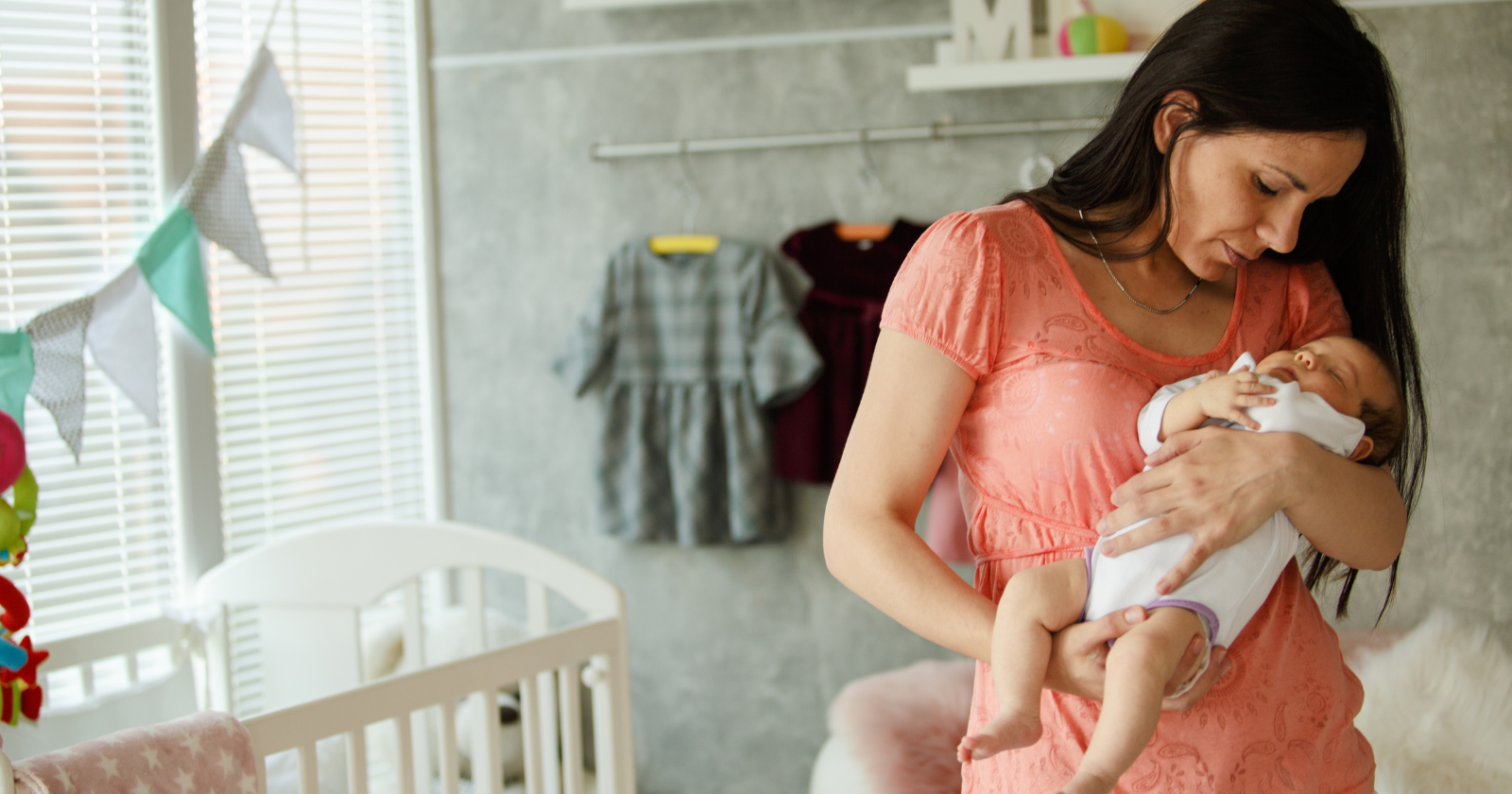
Lullabies, it turns out, replicate those signals with uncanny precision. Most lullabies are written in triple meter or 6/8 time — a characteristic swinging or rocking motion. This mimics exactly the rhythm a baby experienced in the womb as its mother moved through the world.
The tempo is slow — typically 60 to 80 beats per minute, close to a resting adult heart rate. The pitch contours are simple and gently descending. The melodic intervals are consonant. There are long pauses between phrases, diluting the rate of new information to match what an infant brain can comfortably process. Taken together, these features don’t just sound soothing — they produce measurable physiological changes. Studies in premature infants have found that lullabies slow heart rate, increase oxygen saturation, improve feeding behavior, and in some cases shorten the length of hospital stays.
This is not a metaphor. A lullaby is genuinely changing what is happening in a small body, beat by beat.
What the cultures of the world actually sing
What I find endlessly fascinating is that cultures arrived at this same sonic solution without talking to each other. They couldn’t have. And yet the structural convergence is remarkable. The words, though — the words vary wildly. And in that variation is something worth paying attention to.
“Ba, Ba, Mo Leanabh Beag” was written during the potato famine. The song mentions soft potatoes, the mother’s fears, the desperate circumstances of her life. Federico García Lorca, who studied Spanish lullabies in the 1920s, noted what he called the “depth of sadness” in many of them. His theory was that lullabies serve, in part, as therapy for the mother — a place to put what she cannot say elsewhere.
Kurdish lullabies — laylaye or lawk — have historically carried the weight of displacement and loss. Scholars note that they “usually mean the oppression and genocide of the Kurds, or a reason away from someone or homeland.” A lullaby becomes a place to grieve what cannot be grieved in front of adults.
Vietnamese lullabies — bài hát ru — are famous for their extended melismas and the difficulty of singing them well. The lyrics are pastoral: bamboo bridges, rice fields, meals made by a mother. They tend toward a melancholy tone. A Vietnamese lullaby is less a command to sleep than a world gently described: here is the life you have been born into.
In Hindi and across Indian regional languages, the lullaby is called a lori. The tradition is rich enough to have entered Bollywood — dozens of lullabies were written for Indian cinema in the 1950s alone. Many carry themes of the divine, of protection, of welcome: the child is addressed as a small god arrived in the world.
The oldest known Welsh lullaby, “Peis Dinogad” (Dinogad’s Smock), is preserved in a 13th-century manuscript but may be much older — composed in Common Brittonic, a language spoken across Britain until the 6th century. It is a father’s lullaby, listing the animals he hunts, the things he brings home. A catalogue of the world made safe by naming it.
One folk etymology of the word lullaby traces it to Lilith-Abi — Hebrew for “Lilith, begone.” In the Jewish tradition, Lilith was a night demon who threatened sleeping children. Mothers would hang four amulets on nursery walls. The lullaby was, in this tradition, a ward against something real and feared. Comfort and protection were not separate categories.
What a lullaby is actually doing
I keep coming back to a line from the music therapist Clare O’Callaghan, who wrote about what she called “lullaments” — lullabies sung to adults at the end of life, in hospice care. She found that the same songs that helped infants through the transition from wakefulness to sleep could help dying people through the transition from life to death. The soothing mechanism, she argued, was not about age. It was about the presence of a human voice, patterned in a way that signals: you are not alone, the rhythm continues, something larger than this moment is holding you.
That is, I think, what a lullaby actually is. Not a musical form. Not a cultural artifact. A form of co-regulation — one nervous system reaching across the dark toward another one, saying: here is the sound of safety. Here is the rhythm of a body that loves you. Let your own body follow mine into rest.
The music is beautiful, across every tradition I have read about. But the music is not the point. The point is the voice. The presence. The fact that someone is there, and that they are singing.
That is old enough to have no origin. And common enough to be, essentially, human.