

Last Saturday, Ellie came running in from the backyard absolutely covered in mud — hair matted, fingernails black, the biggest grin I’ve ever seen.
She’d spent the past hour building a “fairy village” in the garden with nothing but sticks, rocks, and her imagination.
Zero dollars spent. Pure magic created.
It got me thinking about how we’ve become convinced that great childhood memories require tickets, admission fees, or at least a trip to Target. But some of my kids’ happiest moments haven’t cost us a single cent.
I’m not going to pretend we never do paid activities — sometimes the zoo or children’s museum saves my sanity on a rainy week. But there’s something about free outdoor play that feels different. More spacious. Less rushed. The kind of afternoon where you lose track of time because everyone’s just… present.
So here are eight outdoor activities that have created genuine, lasting memories for our family without touching our budget.
1) Create a backyard mud kitchen
This is embarrassingly simple to set up: an old table from your neighborhood Buy Nothing group, some thrifted pots and wooden spoons, a bucket for water.
That’s it. Kids collect leaves, grass, dandelions, whatever they find, and spend absurd amounts of time “cooking.”
What makes this so magical is the open-ended nature. There’s no right way to make mud soup. Older kids create elaborate recipes and tell stories about who they’re serving. Younger ones just love the sensory experience of squishing and pouring.
The mess? Yes, it’s real. But it hoses off, and I’ve stopped caring about dirt under fingernails. Some battles aren’t worth fighting, and this isn’t one of them.
Our mud kitchen has been in constant rotation for years now. I’m talking daily use, even in winter when we bundle up for 20-minute sessions. It never gets old because the play changes as kids grow and their imaginations develop.
Related Stories from The Artful Parent
- I’m 37 and I watched my parents retire with everything they worked for – a paid-off house, savings, good health — and then slowly, year by year, become two people who sit in separate rooms scrolling their phones because they forgot how to be interesting to each other
- Longevity researchers found that people who live past 95 don’t share diet or exercise habits – they share something behavioral scientists call ‘sustained social usefulness,’ the feeling that someone still needs what only they can provide
- Research says people who browse social media but never post or comment often display these 9 distinct characteristics
2) Start a nature collection walk
We do this at least twice a week, sometimes more. Each person brings a small basket or bag, and we walk the neighborhood or nearby trail collecting treasures.
Smooth rocks. Interesting sticks. Seed pods. Feathers. Leaves in every color. Acorns by the handful.
Here’s the thing — it’s not about the destination. You might only walk two blocks before someone spots something that requires 15 minutes of examination.
Kids fill their pockets with pebbles and declare each one “special.” I’ve learned to slow way down and follow their pace instead of dragging them along mine.
When you get home, they sort through their collections, make patterns, build little scenes. Sometimes the treasures get incorporated into art projects. Sometimes they sit on the windowsill for a week before cycling back outside.
The walk itself costs nothing, but the conversation it creates is priceless. Kids learn plant names, ask questions about why leaves change color, wonder aloud about where birds sleep. These are the moments you want them to remember.
3) Build forts with found materials
Matt keeps a small pile of scrap wood in the garage, and it’s perfect for fort building. Add some fallen branches from the yard, maybe an old sheet, and suddenly you have an entire afternoon of construction happening.
I’ll be honest, these forts never look like the ones in magazines. They’re wobbly and imperfect and sometimes collapse.
But the process of building together, problem-solving when something doesn’t work, and celebrating when it stands? That’s where the memory gets made.
Even without wood, you can build stick forts that are really just leaning branches creating a small shelter. Or rock forts that are more like circles of stones. The specific structure matters less than the collaborative creating.
Kids learn to work together, negotiate, compromise, all while playing outside for free. Sure, there are disagreements about architecture and design, but working through those conflicts is part of the learning.
4) Plant a small garden together
You don’t need acres or even a yard for this. Start with a few pots on your back step before expanding to raised beds. Kids can each have their own small plot where they choose what to plant and help care for it.
Sunflowers are great because they grow tall and dramatic. Cherry tomatoes are perfect for impatient kids because they produce quickly and taste amazing straight off the vine. Even herbs in pots give children something to tend and watch grow.
The investment of seeds is minimal, sometimes even free from the library’s seed exchange or community garden swaps.
As noted by Richard Louv in his work on nature-deficit disorder, direct contact with nature is essential for healthy childhood development. Gardens offer that consistent, hands-on connection right at home.
We’ve had plenty of failures. Squirrels destroyed our strawberries. The lettuce bolted in the heat. But even garden failures become stories that get retold at dinner tables for years.
5) Create outdoor art with natural materials
Set up a simple table outdoors where kids can gather materials from nature and arrange them into temporary art on pieces of cardboard or directly on the ground.
Sometimes families make nature mandalas, arranging items in circular patterns. Sometimes it’s faces made from twigs and petals. Other times it’s completely abstract, which younger kids prefer since fine motor control is still developing.
The best part is nothing needs to be preserved or kept. You admire it, maybe take a photo, then release it back to nature. This becomes a subtle lesson about impermanence and appreciating beauty in the moment without needing to possess it forever.
You can also paint rocks with leftover paint and hide them around the neighborhood for others to find. Draw with sidewalk chalk on the driveway. Make leaf prints by rubbing crayons over paper. Use sticks to draw in dirt.
All free. All outside. All creating memories through making something together.
6) Go on “adventure walks” to new places
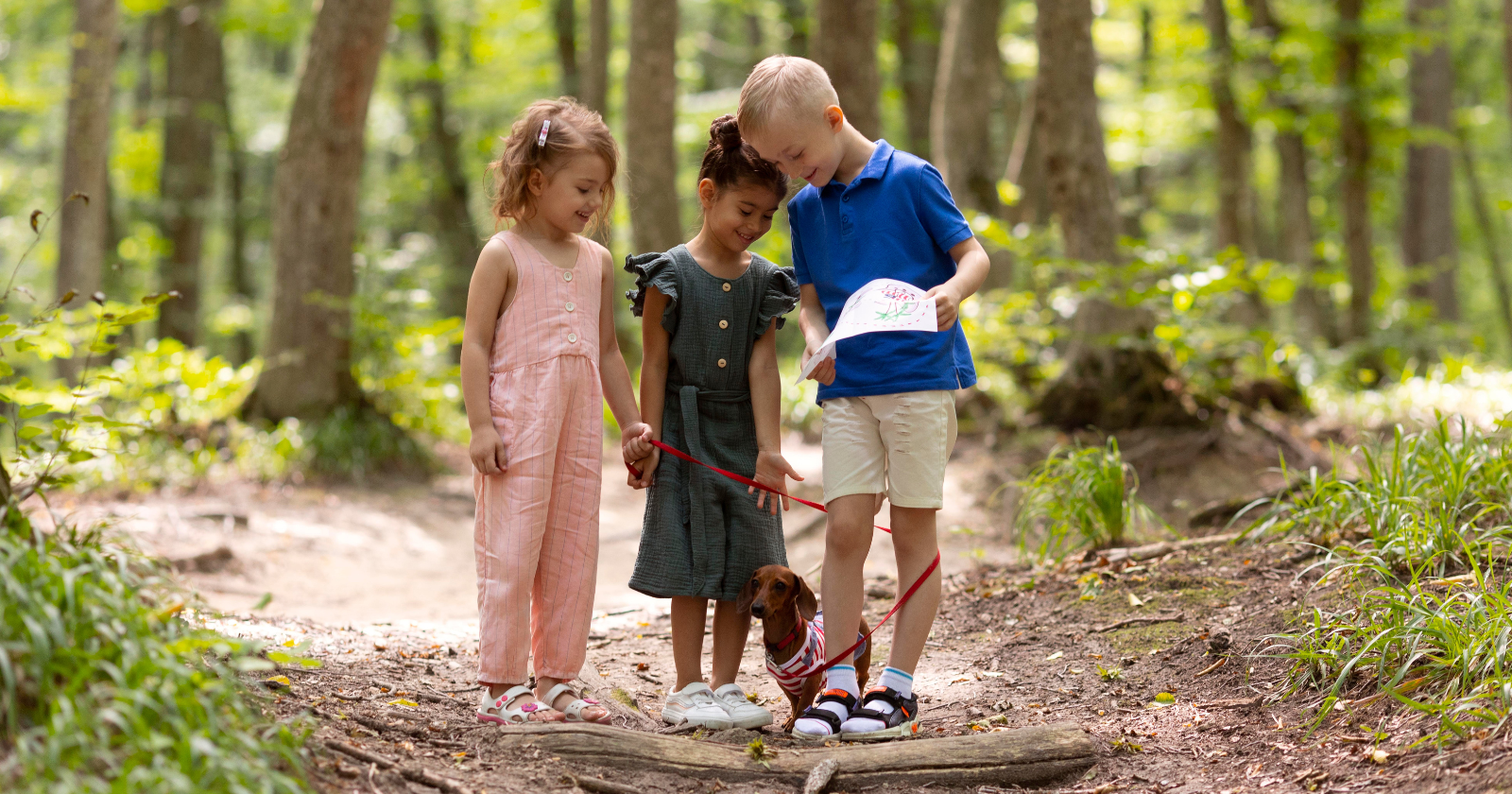
This is literally just walking, but reframed. Instead of “taking a walk,” you go on adventures.
Pick a direction you haven’t explored recently and see what you discover. A new playground tucked behind a church. A little creek running through someone’s backyard. A garden full of flowers you can admire from the sidewalk.
Let kids choose which way to turn at each intersection, which gives them ownership and makes them feel capable. They take this responsibility seriously and sometimes lead you in circles, but that’s part of it.
Bring water and maybe a snack, but that’s all. No equipment needed. Just curiosity and willingness to explore.
These walks often become the richest conversation times. Away from the house and its tasks, just walking together, kids open up differently. They tell you about friendships and worries you didn’t know they had. You stop to watch bugs. Count cars. Notice changing seasons.
When the whole family joins, these adventure walks become sacred time. Phones mostly stay in pockets. You’re just together, moving, noticing.
7) Set up a backyard obstacle course
This takes about 10 minutes to create and provides hours of entertainment. Use whatever’s around: cushions to jump on, a laundry basket to crawl through, rope stretched between trees to duck under, stepping stones to balance across.
Kids race through it, time themselves, modify it to make it harder or easier. Older ones might start creating obstacle courses for parents, which is hilarious and humbling — turns out most of us adults aren’t as agile as we think.
Younger children’s version of completing the course might just be running wildly and laughing, occasionally following the actual path. But they’re building gross motor skills and coordination without realizing it’s anything other than play.
Change the course every time so it stays interesting. Sometimes it’s about speed, sometimes balance, sometimes just silly movements like hopping or walking backward.
The physical activity is obviously great, but there’s also this lovely element of children challenging themselves, pushing their own limits, feeling capable and strong in their bodies.
8) Start a regular picnic tradition
Pick a day each week when weather allows, pack lunch and eat outside. Sometimes it’s your backyard. Sometimes the park a few blocks away. Occasionally walk to a community garden or favorite spot.
The food is nothing special — sandwiches, fruit, crackers, whatever you’d eat inside anyway. But eating outdoors transforms it. Kids eat better. Everyone’s more relaxed. You linger longer.
Consider inviting other families occasionally, which builds community without requiring anyone to host or clean their house. Just bring your lunch, throw down a blanket, and gather.
Regular outdoor picnics often become the thing kids remember most fondly. Not because the food is special or you go anywhere exciting, but because it’s your thing. Predictable, simple, together.
Conclusion
I think we get caught in this trap of believing good parenting requires constant enrichment, like classes and outings and experiences that cost money. And sure, some of those things are lovely when they fit the budget and schedule. But they’re not what builds the foundation of a happy childhood.
What builds that foundation is time. Presence. Freedom to explore and create and get messy. Nature as a backdrop and playground.
These eight activities have given our family some of our best days. The ones where everyone’s content and connected, where nobody’s asking for screens, where I actually feel like I’m doing this parenting thing halfway decently.
Try one this week. See what happens when you prioritize free, outdoor, open-ended time together. My guess? You’ll find that the best memories don’t come from what you spend — they come from how you show up.
