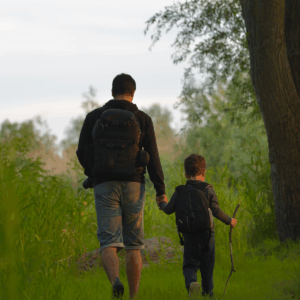

Walking through the park last week, I watched a mother frantically disinfecting the swing before her child sat down, and it struck me just how much things have changed.
We boomers often get criticized for being too tough on our kids. “You were too strict,” they say. “You didn’t protect us enough.”
But here’s the thing: many of those supposedly harsh choices we made? They actually gave our children the tools they needed to navigate real life.
Now that I’m watching my own sons raise their kids, I can see the long-term effects of those old-school parenting decisions. Some of them seemed downright mean at the time, but looking back, they built character in ways we couldn’t have imagined.
Let me share eight parenting choices that seemed harsh then but actually did our kids a world of good.
1. Making them walk to school alone
Remember when kids as young as seven or eight would walk to school by themselves? My boys started walking the six blocks to elementary school when they were in second grade.
Did it make me nervous? You bet. But it taught them independence and street smarts that served them well later.
These days, I see parents driving their teenagers two blocks to school. What message does that send? That the world is too dangerous to navigate alone? That they can’t be trusted to get themselves from point A to point B?
My sons learned to read traffic patterns, understand timing, and develop situational awareness. They figured out shortcuts, made friends with crossing guards, and yes, occasionally got rained on. But they also learned they could handle themselves without Mom or Dad hovering nearby.
2. Letting them fight their own battles with teachers
When one of my boys came home complaining about an unfair grade in fifth grade, my wife Linda and I told him to talk to the teacher himself. It was hard watching him struggle to articulate his case, but that experience taught him advocacy skills he still uses today in his career.
Too many parents today rush to school at the first sign of conflict. They email teachers, demand meetings with principals, and fight every battle for their kids. But what happens when those kids grow up and face a difficult boss or unfair situation at work? They’ve never learned to stand up for themselves respectfully and effectively.
Related Stories from The Artful Parent
- I’m 65 and I stopped arguing politics with my daughter three years ago — not because I gave up on her, but because I finally understood that protecting our relationship mattered more than being right about things neither of us can control
- Psychology says the hardest part of watching your parents age isn’t the physical decline – it’s the moment you realize they’ve started performing competence the same way you performed adulthood when you first moved out, and you’re both pretending not to notice the act
- Psychology says people others describe as ‘easy to talk to’ aren’t being casual — they’re performing one of the hardest social skills that exists
3. Not bailing them out when they forgot homework or lunch money
I still remember the phone call from my younger son in middle school: “Dad, I forgot my science project. Can you bring it?”
My answer was no. He got a zero on that project, and you know what? He never forgot another assignment.
Natural consequences are powerful teachers. When we constantly rescue our kids from their mistakes, we rob them of learning opportunities. My sons learned planning, organization, and the importance of double-checking their backpacks the night before.
When it comes to building resilience, sometimes the best thing we can do for our kids is nothing at all.
4. Requiring them to get summer jobs at 16
Both my boys had to find summer employment once they turned sixteen. No exceptions. They complained endlessly about missing out on hanging with friends or sleeping in, but those jobs taught them more about life than any classroom could.
Working in retail and food service showed them how to deal with difficult people, manage their time, and appreciate the value of a dollar. They learned that showing up late had consequences and that respect is earned through hard work, not given automatically.
Watching them navigate workplace dynamics as teenagers prepared them for professional life in ways that internships in college never could have.
5. Limiting screen time without negotiation
We had one TV in our house, and viewing time was strictly limited. Video games? An hour on weekends, if chores were done. No discussions, no negotiations.
This seemed draconian compared to their friends’ households, where TVs blared constantly.
But you know what happened? My boys read books. They played outside. They learned to entertain themselves without constant electronic stimulation. They developed imagination and creativity that screens simply don’t foster.
Today, I watch my grandkids struggle when Wi-Fi goes down, and I’m grateful my sons learned early that boredom breeds creativity.
6. Making them pay for their own car insurance and gas
When my older son got his license, he assumed we’d cover his car expenses. Wrong. If he wanted to drive, he had to pay for insurance and gas. This meant keeping that summer job during the school year and budgeting carefully.
Friends called us cheap. Other parents said we were being unnecessarily harsh. But my son learned financial responsibility that many of his peers didn’t grasp until well into their twenties. He understood the true cost of independence and made choices accordingly.
7. Not intervening in sibling disputes
Unless blood was drawn, Linda and I stayed out of our boys’ arguments. They had to work things out themselves.
This led to some epic battles over Nintendo controllers and whose turn it was to mow the lawn, but it also taught negotiation, compromise, and conflict resolution.
I see parents today immediately jumping in to mediate every disagreement. But in the real world, there’s no referee. Learning to resolve conflicts independently is a crucial life skill that starts with sibling squabbles.
8. Expecting them to contribute to household chores without payment
Our boys had chores from age five. Not for allowance, but because they were part of the family. Taking out trash, doing dishes, mowing the lawn—these weren’t optional or paid positions. They were expectations.
This taught them that sometimes you do things simply because they need doing, not because there’s a reward.
In their adult lives, this translates to understanding civic duty, workplace teamwork, and family responsibility.
Closing thoughts
Looking back, we were hardly perfect parents. There are things I’d do differently, especially around balancing work and family time during those crucial teenage years. But those “harsh” choices we made weren’t harsh at all. They were preparation for a world that doesn’t coddle or make exceptions.
My sons are now raising their own children, and I see them struggling with these same decisions. The world tells them to protect, cushion, and smooth every path. But sometimes they remember their own childhoods and choose the harder route—the one that builds character instead of comfort.
So here’s my question for you: What “harsh” parenting choice shaped you the most?