
I’ll be the first to admit that every generation thinks they had it tougher than the next. But watching the pendulum swing from one extreme to another when it comes to raising kids, I’ve gained some perspective on what really matters.
The generation that raised us Boomers wasn’t perfect by any stretch. They had their flaws, sure. But looking back now with the wisdom of age, I can see they got some things right that today’s parents seem reluctant to try.
I’m not here to shame anyone or claim that the old ways were better in every respect. But there’s a middle ground worth exploring, and some lessons from that generation that shouldn’t be forgotten just because they feel uncomfortable in our modern, safety-obsessed world.
Let’s dig into eight things that generation did right, even if it makes some folks squirm.
1) They let kids experience natural consequences
When I forgot my lunch as a kid, my mother didn’t drop everything to bring it to school. I went hungry until dinner, and you can bet I never forgot my lunch again.
Today’s parents often rush to rescue their children from every uncomfortable situation. According to research, three out of four millennial parents practice gentle parenting and believe their approach is superior to past generations.
But here’s the thing: shielding kids from consequences doesn’t prepare them for a world that won’t always cushion their falls. My parents understood that small failures in childhood prevent bigger ones in adulthood.
They weren’t being cruel. They were teaching responsibility through experience, not lectures.
2) They expected kids to contribute to the household
When I was growing up, everyone had chores, no exceptions. Lawn care, dishes, laundry – we all pitched in without expecting payment or praise.
We weren’t treated like guests in our own home. We were part of a family unit that functioned because everyone contributed.
This taught us that we weren’t the center of the universe. It built work ethic, responsibility, and an understanding that comfort isn’t a given, it’s earned through effort.
Related Stories from The Artful Parent
- Psychology says the empty nest doesn’t create loneliness — it reveals the loneliness that was already there, hidden underneath the noise and the schedules and the daily evidence that someone in the house still needed you to function
- Psychology says the thing children need most from their parents costs nothing and takes almost no time — it’s the 8-second pause between when a child starts talking and when the parent actually listens instead of preparing a response
- Psychology says the emotional distance many fathers maintain isn’t a personality trait — it’s a learned survival strategy passed down through generations of men who were taught that closeness was weakness, and their children pay the inheritance tax
Modern parents often feel guilty asking their kids to do household tasks. They want their children to focus on homework and activities. But what they’re actually teaching is that someone else will always pick up the slack.
3) They valued respect for authority
Now, I’m not talking about blind obedience or shutting down a child’s voice. But my parents’ generation understood that teachers, police officers, and other adults in positions of responsibility deserved a baseline level of respect.
When my teacher sent a note home about my behavior, my parents didn’t immediately assume the teacher was wrong. They trusted that the adult in charge probably had good reason for the complaint.
Today, I’ve watched parents go to battle with teachers over the smallest perceived slight to their child. The message sent to kids? Authority figures are obstacles to overcome, not guides to learn from.
Research shows that authoritative parenting leads to better outcomes than permissive approaches that avoid setting firm boundaries.
There’s wisdom in teaching kids that the world has structure and hierarchies, and learning to navigate them respectfully is a crucial life skill.
- I’m 37 and I’ve noticed that whenever there’s a crisis everyone turns to me like I have answers – and the hardest part isn’t solving the problem, it’s that nobody ever asks if I’m okay because they need me to be the steady one and I’ve forgotten how to be anything else - Global English Editing
- I’m 73 and I keep the television on from six in the morning until I fall asleep — not because I’m watching it, but because the sound of other people talking fills the exact shape of the silence my family left when they stopped needing this house, and some mornings a commercial says “good morning” before anyone real does - Global English Editing
- Do Branded Promotional Products Still Work? What Bloggers Should Know Before Investing - The Blog Herald
4) They encouraged outdoor, unsupervised play
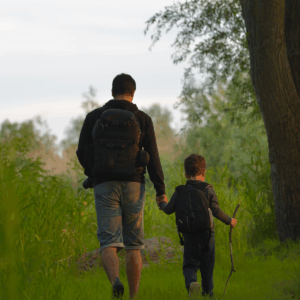
I spent entire summer days roaming the neighborhood with friends. My mother’s only rule was to be home when the streetlights came on. We climbed trees, built forts, scraped our knees, and learned to settle our own disputes without an adult referee.
Today’s children have become what some call “bonsai trees,” carefully pruned and protected. Studies show that risky outdoor play is crucial for children’s health and development, yet modern parents often feel anxious letting their kids out of sight.
The irony? Crime statistics show children are actually safer today than they were in the 1970s and 80s. What’s changed isn’t the danger, it’s our perception of it, fueled by 24-hour news cycles and social media.
By keeping kids constantly supervised, we rob them of the chance to develop independence, problem-solving skills, and confidence in their own abilities.
5) They didn’t treat every emotion as a crisis
My parents acknowledged feelings, but they didn’t make every emotional moment a therapy session. When I was upset, I got a pat on the shoulder and told to shake it off. And somehow, I learned to regulate my emotions.
I’m not suggesting we go back to telling boys they can’t cry or dismissing genuine emotional distress. That was wrong, and we’ve rightfully moved past it.
But there’s something to be said for not treating every disappointment like a catastrophe. Sometimes kids get so much emotional processing that they seem more anxious, not less.
Kids need to learn that uncomfortable feelings are temporary and manageable. By constantly intervening and analyzing every negative emotion, we’re inadvertently teaching them that they can’t handle discomfort on their own.
6) They prioritized family meals without devices
Dinner at my childhood home meant everyone at the table, no exceptions. No TV, no radio, just conversation. My father would ask about our day, my mother would share neighborhood gossip, and we’d actually talk to each other.
These days, I’ve been to family dinners where everyone’s on their phones, including the parents. The kids aren’t the only ones with the problem.
Those family meals taught me communication skills, table manners, and the value of shared time. It was where I learned about my parents’ day, their concerns, their humor. It created bonds that lasted.
Research consistently shows that regular family meals improve academic performance and strengthen family relationships. Yet they’re increasingly rare in modern households.
7) They let kids be bored
“I’m bored” was met with a shrug and “Go find something to do” in my house. No one scrambled to entertain me or offered me a screen to zone out with.
That boredom was fertile ground for creativity. It’s when I taught myself to build model airplanes, when I’d read books for hours, when my imagination ran wild.
Today’s kids have their days scheduled down to the minute. Between school, sports, music lessons, and screen time, there’s no space for unstructured thought. Parents feel guilty if their children aren’t constantly engaged.
But child development experts emphasize that unstructured play is crucial for healthy development. Boredom isn’t the enemy, it’s the birthplace of innovation and self-reliance.
8) They taught self-reliance, not self-esteem
Here’s a big one: my parents didn’t constantly tell me I was special or praise every little thing I did. Compliments were earned, not automatic.
Modern parenting seems obsessed with building self-esteem through constant affirmation. Every child is a winner, every attempt deserves a trophy, every artwork is museum-worthy.
But my parents’ generation understood something crucial: true self-esteem comes from actual competence, not empty praise. When I finally mastered something difficult, when I succeeded through genuine effort, that’s when I felt proud of myself.
They taught me to be self-reliant first, and self-esteem followed naturally. I learned to tie my own shoes, make my own breakfast, solve my own problems. Each skill mastered built real confidence, not the hollow kind that crumbles when life gets tough.
Research indicates that authoritative parenting cultivates better self-esteem than approaches that prioritize constant validation over real achievement.
Final thoughts
I’m not suggesting we return to the 1950s wholesale. My parents’ generation got plenty wrong, especially when it came to emotional availability and acknowledging mental health.
But they understood something about raising resilient, capable humans that we seem to have forgotten: children are tougher than we think, and our job isn’t to prevent all struggle but to prepare them for it.
The goal isn’t to be “hard” or “soft.” It’s to find the balance between protection and preparation, between nurture and challenge.
Today’s kids are growing up in a different world than I did, but human nature hasn’t changed. Kids still need to fall and get back up. They still need to learn that effort matters more than talent. They still need space to discover who they are without constant adult intervention.
Maybe it’s time we borrowed a bit of wisdom from that older generation, even if it makes us uncomfortable. Because raising kids who can handle life’s challenges isn’t about being soft or hard. It’s about being wise enough to let them struggle, fail, and ultimately succeed on their own terms.
And that’s a lesson that never goes out of style.