
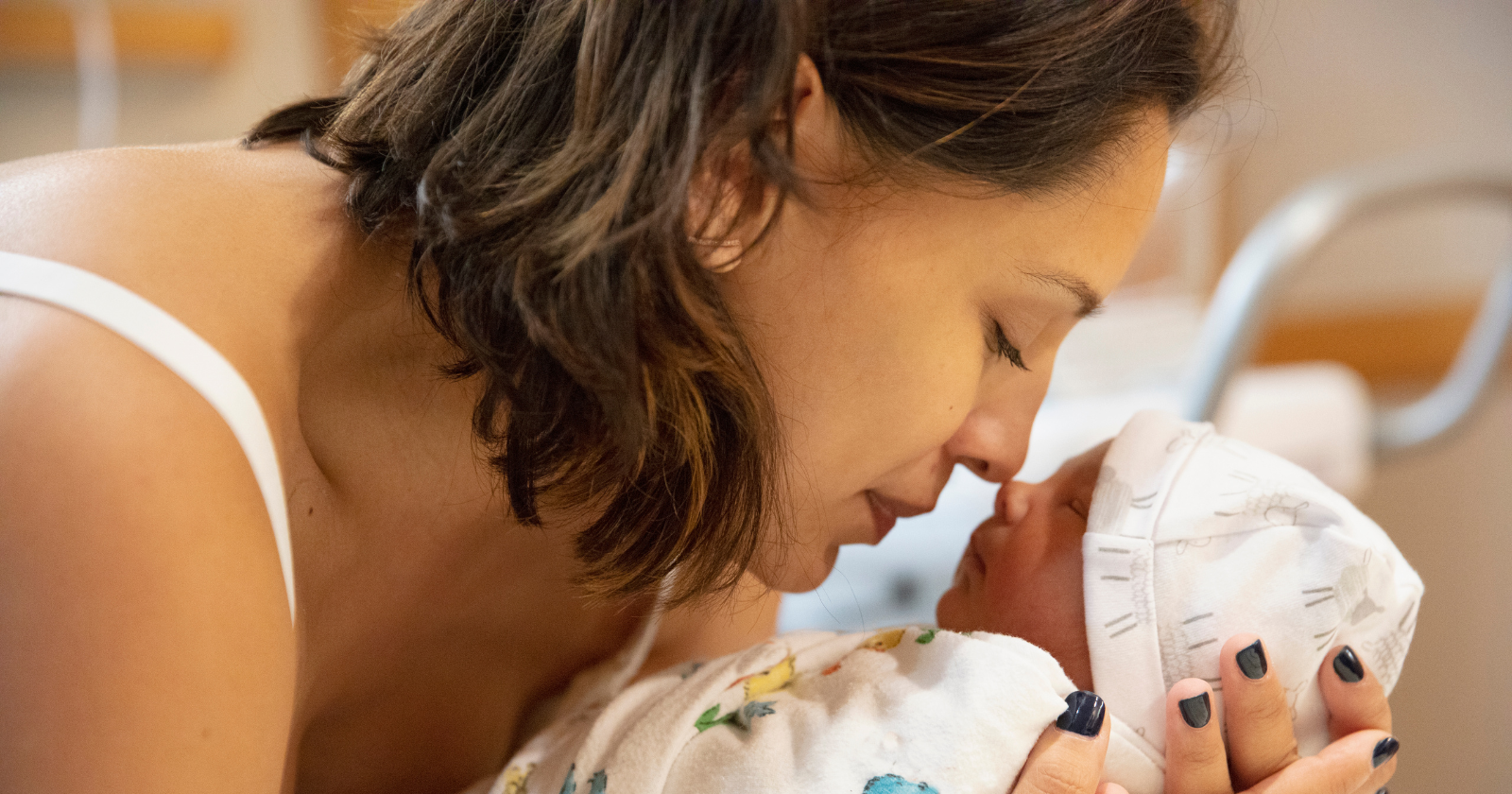
A baby is three hours old. The room is loud with the ordinary business of a maternity ward — carts, monitors, other families — and the newborn is fussing in the bright, unfamiliar air. Then the mother speaks. Not a special word, just whatever a person says to a baby. And something in the small body loosens. Parents describe this moment all the time, half-believing it: she already knows me.
The interesting part is what the research suggests about why. The voice is not new. By the time a baby quiets to it in a delivery room, that voice has been part of the background of the only world the baby has known — heard muffled and rhythmic, from the inside, for weeks before birth.
We write about families and child development, and we read the original studies rather than the parenting-blog summaries of them. The science here is narrower and quieter than the headlines that grew out of it, and the narrowness turns out to be the good part.
The Artful Parent
Family-life ideas and sharp reads, in your inbox.
What the newborns actually did
The foundational study is older than most parents reading this. In 1980, Anthony DeCasper and William Fifer published “Of Human Bonding: Newborns Prefer Their Mothers’ Voices” in Science. They worked with ten newborns, all younger than three days. Each baby was given a nipple to suck that was wired to recording equipment, so that the timing of its sucking — specifically the length of the pauses between bursts — decided which of two recordings it heard: its own mother reading a Dr. Seuss story, or a different infant’s mother reading the same story.
The babies adjusted. Eight of the ten shifted their sucking pattern in the direction that produced their own mother’s voice. To rule out the easy explanations, the researchers had built in controls — half the infants had to pause longer to reach their mother, half had to pause less, and each woman’s recording served as the “other” voice for some other baby. Then they did something cleaner still: for four infants they reversed the rule a day later, so the opposite timing now summoned the mother. Those babies reversed too, working their way back to her voice.
It is worth being precise about what was measured. The babies were not soothed on command, and the study did not test crying or calming. What it captured was preference: given a way to choose, newborns chose their mothers. And they did so with almost no waking time together. These infants were cared for in a group nursery and had spent, at most, twelve hours in their mothers’ company before testing. Whatever drew them to the voice was largely in place before the relationship outside the womb had really begun.
Listening before birth
That points to an obvious question, and it is the one DeCasper’s lab spent the following years on: where could the preference come from, if not from time spent together after birth? The 1980 paper was careful about this. It allowed that prenatal hearing “may also be a factor,” but stated plainly that the significance of intrauterine sound for human infants was, at that point, not known.
The cleaner evidence arrived in 1986. DeCasper and Melanie Spence asked pregnant women to read the same passage aloud each day through the last six weeks of pregnancy — for many, a stretch of The Cat in the Hat. After birth, the newborns were tested with the same sucking method. The babies preferred the rhythm of the passage their mothers had read before they were born. The telling detail: they preferred it even when a stranger read it, not only their own mother.
That is what lifts the finding above a single woman’s voice. What a third-trimester fetus seems to take in is not the mother specifically, and not the words, but the music underneath them — the cadence, the rises and falls of a particular stream of speech. By the time we meet a baby, it has spent weeks studying the shape of human language from the inside.
It helps to picture the conditions. Sound reaches a fetus through fluid and tissue and the steady noise of the mother’s own body, and the journey strips away most of the high, crisp detail that lets us tell one word from another. What survives best is the low, rhythmic part — the beat and contour of speech rather than its content. So it makes sense that the babies in 1986 latched onto a passage’s cadence, and that it carried even in an unfamiliar voice. They were not remembering a story. They were recognizing a shape they had heard often enough to find familiar.
This is one body of research, not a settled verdict
The findings deserve to be held loosely. The original samples were small — ten infants, then a sixteen-infant confirmation run, and the 1986 follow-up was small too — and small studies overstate as readily as they hold up. And the broad picture has only grown sturdier with better tools: in a 2013 brain-imaging study, newborns showed stronger electrical brain responses to a made-up word they had heard on a recording in the months before birth than babies who had never encountered it — and the response was larger the more they had heard it. Still, the exact reach of fetal hearing in humans is debated, and no one is suggesting a fetus understands a story. It registers pattern, not plot.
The word “bonding” deserves particular care, because the popular version of it has done real harm. The 1970s idea — that a mother and infant must bond in a narrow window right after birth or lose the chance — was overstated from the beginning and has been heavily revised since. Nothing in this research supports a biological deadline, and nothing in it says a baby who doesn’t visibly calm to a voice is failing to attach. Attachment is built over months of ordinary care, by whoever provides that care.
What this can, and cannot, tell you
So this is not advice, and it is certainly not a test that anyone is passing or failing. We are writers and parents, not clinicians, and what we can offer is a clearer reading of the studies, not guidance for your particular child. A baby who arrives through adoption or surrogacy, a baby spending its first weeks in intensive care behind glass, a baby whose earliest days are mediated by tubes and rotating strangers — none of them is starting from behind. A familiar voice is one early thread, not the whole rope. If you are ever worried about your newborn’s hearing or how it responds to sound, that belongs with your pediatrician, who can actually examine the baby, rather than with an essay.
What the research can do is reframe a small, common moment. The calm that spreads through a newborn at a familiar voice is easy to read as the very start of something. It may be closer to the middle.
The voice was never new
A newborn cannot tell you it remembers anything. But it can tilt the rhythm of its own sucking toward one voice out of two, in the first days of life, having barely met the person that voice belongs to. The recognition runs backward — into a time the baby will never recall, and the mother spent waiting. Long before the introduction we think we are making, the listening had already been going on.