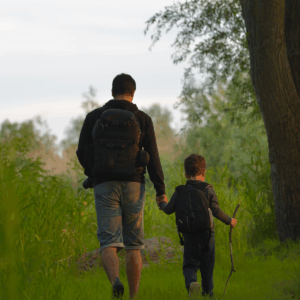

The man who used to bark orders about bedtime and homework now sneaks extra cookies to giggling kids behind their parents’ backs. The same guy who once grounded you for a week now defends his grandchildren’s every misstep with “Oh, they’re just being kids.”
Sound familiar?
Watching your father transform into a grandfather is like discovering a completely different person was hiding there all along. I’ve been on both sides of this equation now, and let me tell you, there are some profound truths about your old man that only become clear when you see him with his grandchildren.
I spent years puzzling over my own father’s quirks and contradictions. Now, as a grandfather myself with four grandkids ranging from three to eleven, I finally get it. Those weekend park visits with my grandchildren have taught me more about my relationship with my own father than decades of Father’s Days ever could.
Here are eight revelations that might help you see your dad in a whole new light.
1) His strictness came from fear, not anger
Remember all those rules? The curfews, the lectures about grades, the endless warnings about “bad influences”? When I watch my two sons navigate parenthood with their own kids, I see that familiar tension in their faces. It’s not anger. It’s pure, unadulterated terror.
Your father wasn’t trying to control you because he enjoyed it. He was scared out of his mind that something would happen to you. Every news story about a car accident, every tale of a kid gone wrong, every worst-case scenario played on repeat in his head.
With grandchildren, that fear transforms. The responsibility sits one step removed. Sure, I worry about my grandkids, but their parents carry the real weight. This distance allows grandfathers to relax into pure enjoyment. When your dad seems completely different with your kids, it’s because that crushing fear of failing as a parent has finally lifted.
2) He sacrificed more than he ever told you
My sons don’t know about the promotion I turned down because it would have meant traveling three weeks out of every month. They don’t know about the hobby band I quit or the marathon training I abandoned. Parents rarely advertise their sacrifices.
But grandchildren have this magical way of loosening tongues. Just last week, while pushing my youngest grandchild on the swings, I found myself telling her about dreams I’d put aside. Things I’d never mentioned to my sons because, well, what was the point? Parents don’t burden their kids with what-might-have-beens.
Your father probably gave up more than you realize. Career opportunities, personal dreams, friendships that required more time than parenting allowed. He made these choices silently, without expecting gratitude, because that’s what fathers of his generation did.
Related Stories from The Artful Parent
- A clinical psychologist explains that today’s parents give children more freedom, more voice, and more emotional validation than any generation before them, and the children are more anxious than ever — not because freedom is harmful, but because a child’s brain was never designed to carry the weight of unlimited choice before it can carry a conversation
- Most people assume the grandmother who keeps calling even when nobody picks up is lonely — they don’t realize she’s doing the only thing she knows how to do with love that no longer has anywhere to land
- The hardest lesson of parenthood doesn’t arrive when your children are small, it arrives when they’re grown and you hear yourself described through their memories — because the parent you thought you were and the parent they experienced are almost never the same person, and sitting with that gap is the real work of later life
3) Work wasn’t his first choice
For years, I thought my job defined me. Then retirement hit, followed by a period of depression that caught me completely off guard. Watching colleagues get made redundant over the years had taught me that loyalty to a company is rarely returned, but I still wasn’t prepared for how lost I’d feel without that daily structure.
Your father probably felt the same torn loyalty between work and family. Those long hours weren’t about choosing the office over you. They were about providing, about security, about doing what he thought fathers were supposed to do.
Watch him with grandchildren, and you’ll see his real priorities. The man who missed school plays for meetings now clears his entire schedule for a grandchild’s soccer game. He finally has permission to choose what he wanted all along.
4) He was making it up as he went
Every parent thinks everyone else has it figured out. We don’t. We’re all fumbling in the dark, hoping our mistakes won’t be the ones our kids talk about in therapy.
With grandchildren, this pressure evaporates. I can admit to my grandkids that I don’t know everything. “Let’s figure it out together” rolls off my tongue easily now. With my sons? I felt I had to have all the answers.
Your father’s seeming confidence was probably an act. Those decisive pronouncements that brooked no argument? He was likely terrified of appearing weak or uncertain. Grandfathers can finally drop the all-knowing facade because the stakes feel different.
5) His emotional range was always there
The grandfather who tears up at a grandchild’s kindergarten graduation is the same man who kept a stiff upper lip at your wedding. The difference isn’t that he’s gotten softer with age. It’s that he finally has permission to show what was always there.
Men of previous generations learned early that emotions were dangerous things. Showing vulnerability meant weakness. Expressing too much joy seemed unmanly. These lessons ran deep.
Grandchildren crack that armor wide open. Society smiles at grandfathers who gush over babies, who play silly games, who show obvious affection. That emotional person was always your father; he just needed cultural permission to let him out.
6) He remembers everything about your childhood
When I watch my grandchildren play, I’m transported back thirty years. Suddenly, I’m remembering the exact way my older son used to scrunch his nose when he laughed, or how my younger one would line up his toys in perfect rows.
Your father holds a treasure trove of memories about you that grandchildren unlock. Details you’ve forgotten, moments that seemed insignificant, little quirks and habits that made you uniquely you. He just might not have known how to share them before.
7) He wishes he could do it over
Not because he thinks he failed, but because now he knows what really mattered. Every grandfather I know says the same thing: “If I could go back, I’d worry less and play more.”
This isn’t regret, exactly. It’s wisdom earned too late to use. When your father spoils your kids or lets them get away with murder, he’s not undermining your parenting. He’s taking his do-over, living out the relaxed, joyful parenthood he was too stressed to enjoy the first time around.
8) His love for you multiplied, not divided
Here’s what surprised me most: seeing my sons as fathers didn’t diminish them in my eyes. It magnified them. Watching them navigate the same challenges I faced, seeing them love their children with the same fierce protection I felt for them, it’s like watching your love echo through time.
Your father looks at you differently now. Not as someone who needs his guidance, but as a fellow traveler on the hardest journey there is. The pride he feels watching you parent your children runs deeper than any report card or job promotion ever could.
Closing thoughts
After retiring, I learned that meaning doesn’t come automatically; you have to build it. Becoming a grandfather handed me the blueprint. Those weekend park visits with my grandchildren aren’t just the highlight of my week. They’re windows into understanding my whole life’s journey.
If your father is still around, watch him with fresh eyes the next time he’s with your kids. That grandfather showing unlimited patience, sneaking treats, and getting down on creaky knees to play? That’s who he always wanted to be.
What parts of your father do you see differently now?