
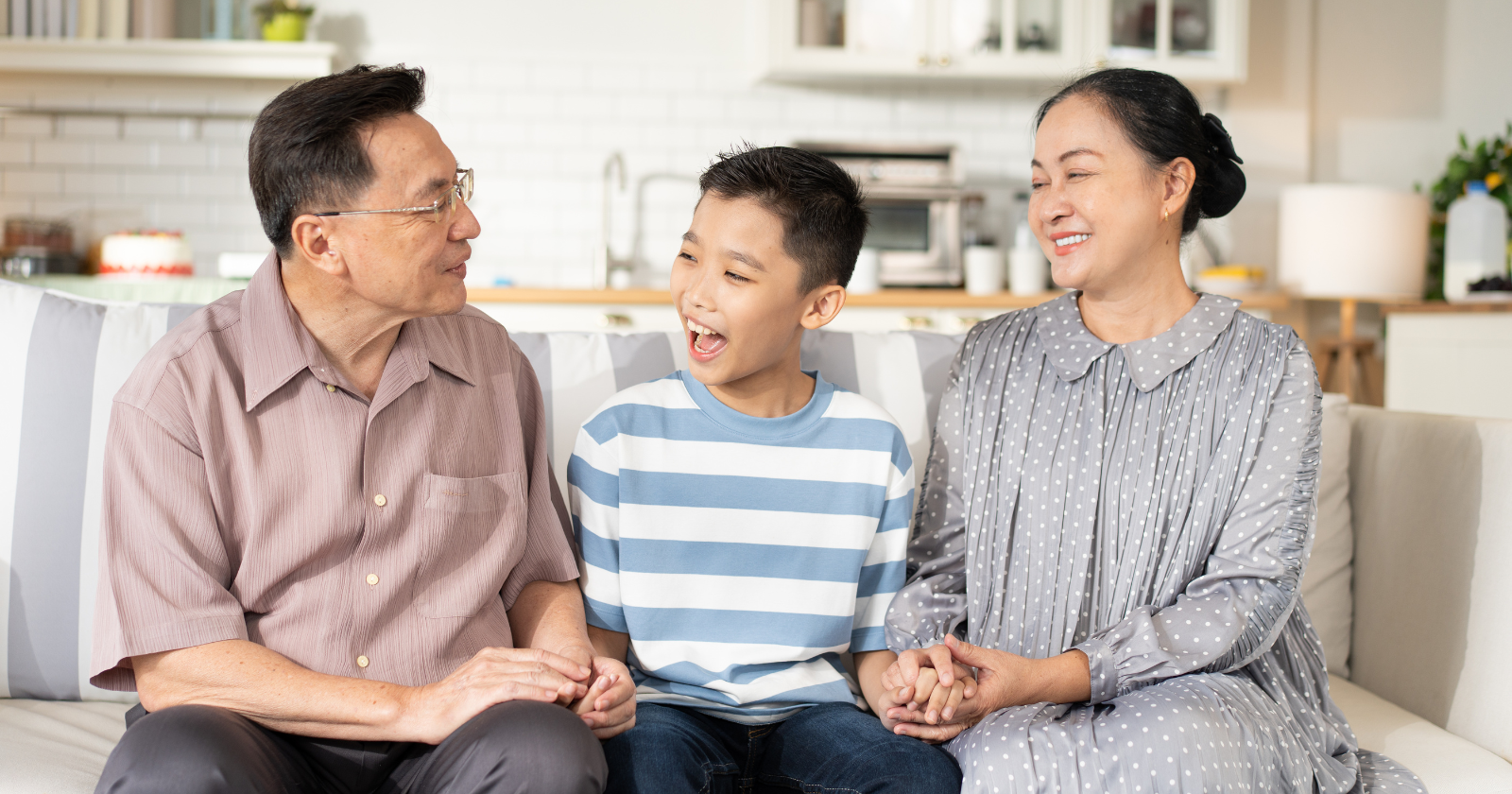
You spend months teaching your little one about body autonomy, only to have grandma insist “Give me a kiss!” at the family reunion.
Or maybe you’ve been working on emotional regulation with your preschooler, and grandpa drops the classic “Big boys don’t cry” when tears start flowing over a scraped knee.
Sound familiar?
Look, I love my parents.
They raised me in a small Midwest town with good values and plenty of structure, but sometimes their well-meaning comments can unravel weeks of gentle parenting faster than my two-year-old can demolish a freshly folded laundry pile.
The thing is, our parents’ generation grew up with different ideas about raising kids.
What worked for them might clash with the intentional, attachment-focused approach many of us are trying to nurture.
While they mean well (they really do!), certain phrases can confuse our kids and undermine the foundations we’re building.
After navigating this dance with my own parents for five years now, I’ve noticed some patterns.
These are the comments that tend to pop up at Sunday dinners and holiday gatherings, leaving me scrambling to do damage control on the drive home.
1) “Stop crying or I’ll give you something to cry about!”
This one makes me wince every time.
Related Stories from The Artful Parent
- 10 things grandparents notice about their adult children’s parenting that they will never say out loud—because they learned the hard way that unsolicited honesty is the fastest way to lose weekend visits
- 7 money conversations families need to have before the parents turn 75—and the one everyone skips is the one that tears families apart
- There’s a specific kind of anger that builds in mothers who spent 30 years putting everyone first—and it doesn’t arrive when you expect it, it arrives when the house goes quiet
We’re teaching our kids that all feelings are valid, that it’s okay to feel sad or frustrated or disappointed.
Then along comes this phrase that basically says emotions are punishable offenses.
Last week at the park, my son fell and started crying.
Before I could reach him, another grandparent nearby told him to “toughen up.”
I gently intervened, telling my little one, “You’re upset because that hurt. Tell me more about how you’re feeling.”
The grandparent looked at me like I’d grown a second head, but validating emotions is how kids learn to process them healthily.
- Psychology says people who constantly apologize for things that aren’t their fault aren’t being polite. They grew up in an environment where someone else’s bad mood was always their responsibility to fix. - Global English Editing
- Children who grew up trying to win over a parent or sibling who quietly disliked them often become adults who can sense dislike in a room within thirty seconds – and they spend the rest of the interaction trying to fix something that was never theirs to repair - Global English Editing
- I’m 65 and I’ve never been happier. The secret was removing these 8 things from my life that everyone told me I needed. - Global English Editing
Grandparents who use threats to stop tears make kids learn to stuff down their feelings instead of working through them.
All that emotional regulation work? Out the window.
2) “You’re such a good girl/boy.”
Seems harmless, right?
But here’s the thing: When we constantly label kids as “good” or “bad,” they start believing their worth depends on their behavior.
I’ve been working hard to praise effort and specific actions instead of slapping on those blanket labels.
“You worked really hard on that puzzle” hits different than “You’re so smart!”
One teaches persistence; the other creates pressure to always appear intelligent.
When grandparents default to “good girl” for everything from eating vegetables to sitting quietly, it muddies the waters we’re trying to clear.
3) “Give grandma a hug and kiss!”
Body autonomy is huge in our house.
My daughter gets to choose who she hugs, when she hugs them, and whether she wants physical affection at all.
Teaching consent starts early, and forced affection sends the opposite message.
I’ve had to have several conversations with family members about this.
“Would you like to give grandma a hug, a high-five, or wave goodbye?” gives choices while still being polite.
Some family members were skeptical at first (okay, they called it “hippie parenting”), but they’re slowly coming around as they see my confident five-year-old setting healthy boundaries.
4) “When I was your age…”
The comparison game never ends well.
Whether it’s “When I was your age, I walked five miles to school” or “Children were seen and not heard,” these phrases dismiss kids’ current experiences and feelings.
Your preschooler doesn’t care that grandpa milked cows at dawn when he was six.
They care that their tower fell down and they’re frustrated.
Meeting them where they are emotionally means so much more than comparisons to a different era.
5) “You’re the smartest/prettiest/best!”
Superlatives create pressure and competition where there doesn’t need to be any.
Plus, what happens when your “smartest” kid encounters someone smarter?
Their whole identity crumbles.
I focus on teaching my kids that everyone has different strengths.
Grandparents who heap on the superlatives defeat the message that worth isn’t comparative.
We’re all valuable for who we are.
6) “Don’t tell your parents…”
Secret keeping with grandparents might seem fun and harmless when it’s about an extra cookie, but it sets a dangerous precedent.
We’re teaching our kids about safe adults and open communication, and secrets undermine that completely.
Even innocent secrets create a framework where kids learn that hiding things from parents is acceptable.
That’s not a door I want opened, especially as they grow older and face more serious situations.
7) “Boys will be boys…” or “That’s not ladylike…”
Gender stereotypes box our kids in before they even figure out who they are.
My daughter loves dirt and bugs and climbing trees, while my son enjoys snuggling and playing with dolls.
Both are perfect exactly as they are.
When grandparents excuse rough behavior with “boys will be boys” or criticize girls for being “unladylike,” they’re reinforcing limitations we’re trying to break down.
Kids should be free to explore their interests without arbitrary gender rules.
8) “You’re being too sensitive.”
Sensitivity is part of being human.
When kids hear they’re “too sensitive,” they learn to doubt their own feelings and instincts.
That inner voice that says “something feels wrong” gets quieter each time it’s dismissed.
I teach emotional regulation through phrases like “Tell me more” and “I’m listening.”
Grandparents who dismiss big feelings as oversensitivity contradicts our approach of allowing kids to feel without rushing them to “fine.”
9) “Because I said so!”
Kids deserve age-appropriate explanations.
Not lengthy dissertations, but simple reasons that help them understand the world.
“Because I said so” teaches blind obedience rather than critical thinking.
“We need to clean up our toys so nobody trips” makes sense to a toddler.
“Because I said so” just creates power struggles and resentment.
When grandparents default to authority without explanation, it clashes with our respectful parenting approach.
Moving forward with grace
Setting boundaries with family about parenting choices isn’t easy.
Trust me, I’ve been there through awkward conversations and eye rolls about my “hippie ways.”
Most grandparents genuinely want to help and connect with their grandkids; they’re working with the tools they have, just like we are.
Having gentle, private conversations about your parenting approach helps.
Share articles, explain your reasoning, and give specific alternatives they can use.
“Instead of telling him big boys don’t cry, you could say ‘You seem really upset. Want to tell grandpa about it?'”
Remember, you’re the parent.
While we want our kids to have beautiful relationships with their grandparents, those relationships shouldn’t come at the cost of undoing the intentional parenting work we’re doing every single day.
It means stepping in politely but firmly, debriefing with kids afterward, and limiting exposure if boundaries aren’t respected.
The goal is progress, understanding, and keeping our kids’ emotional wellbeing at the center of our decisions, even if that means a few uncomfortable Sunday dinners along the way!