
The funny thing about a handwritten shopping list is that it sometimes works even when you forget to bring it.
You stand in the dairy aisle, looking at the milk, and suddenly remember the eggs, the yoghurt and the butter. Not because the paper is in your hand, but because your hand helped put the list into your memory in the first place.
The headline version of this idea is often shared as a simple finding: handwriting wakes up more of the brain than typing. The public research trail is a little more complicated than that shorthand, but the broader evidence strongly supports the everyday observation. In a 2024 high-density EEG study in Frontiers in Psychology, researchers found that writing by hand produced far more elaborate brain-connectivity patterns than typing the same words on a keyboard, especially in brain regions linked with memory and learning.
That does not mean every reminder must be written on paper or that a phone list is somehow useless. Digital tools are often brilliant, especially for busy families trying to keep track of school forms, groceries, library books and the one specific glue stick needed by tomorrow morning.
But it does explain why writing something down can feel different from tapping it into a screen. The pen is not just recording the thought. It is making the body rehearse it.
Why the hand changes the memory
Typing is wonderfully efficient. Once you know the keyboard, every letter is made with a quick press. The movement for one word is not wildly different from the movement for another. Your fingers do the work quickly, often before you have fully noticed the shape of the word.
Handwriting is slower and more particular. To write milk, your hand has to make an m, then an i, then an l, then a k. The lines change direction. The pressure changes. Your eyes follow the marks as they appear. Your brain coordinates vision, movement, attention and language at the same time.
That extra work can be annoying if you are trying to write a long report. But for memory, extra work is sometimes the point. A handwritten word carries more cues. You may remember not only the item, but where it sat on the page, the slightly rushed shape of the letters, the moment you added it under apples and above nappies.
The Frontiers study did not test grocery lists. It recorded the brain activity of university students while they wrote or typed visually presented words. Still, the finding helps explain why handwritten notes, lists and labels can feel stickier than their digital versions. Handwriting creates a richer pattern of activity for the brain to return to later.
The shopping-list effect
Most parents already know the shopping-list effect, even if they have never named it.
You write a list on the kitchen bench, tuck it into a pocket, then leave it on the bench anyway. At the supermarket, you can still picture half of it. Not perfectly, but enough to get you through the shop with only one forgotten ingredient instead of six.
A phone list can be practical, searchable and shareable. But it can also become part of a blur. You tap a few words, lock the screen, and the list disappears into the same device that holds messages, photos, school reminders, news alerts and a dozen other small claims on your attention.
Paper behaves differently. It is plain. It asks for only one kind of attention. It lets the word sit in space. Your hand has to move across the page, and the page keeps the shape of that movement.
That may be one reason longhand notes have also performed well in memory research. In a widely cited 2014 Psychological Science study, Pam Mueller and Daniel Oppenheimer found that students who took notes by hand performed better on conceptual questions than students who took notes on laptops. The researchers argued that typing made it easier to transcribe more words, while handwriting nudged students to process and select ideas as they went.
That distinction matters. Handwriting is not powerful because it is old-fashioned. It is powerful because it tends to slow the mind just enough for meaning to pass through.
What this means for children
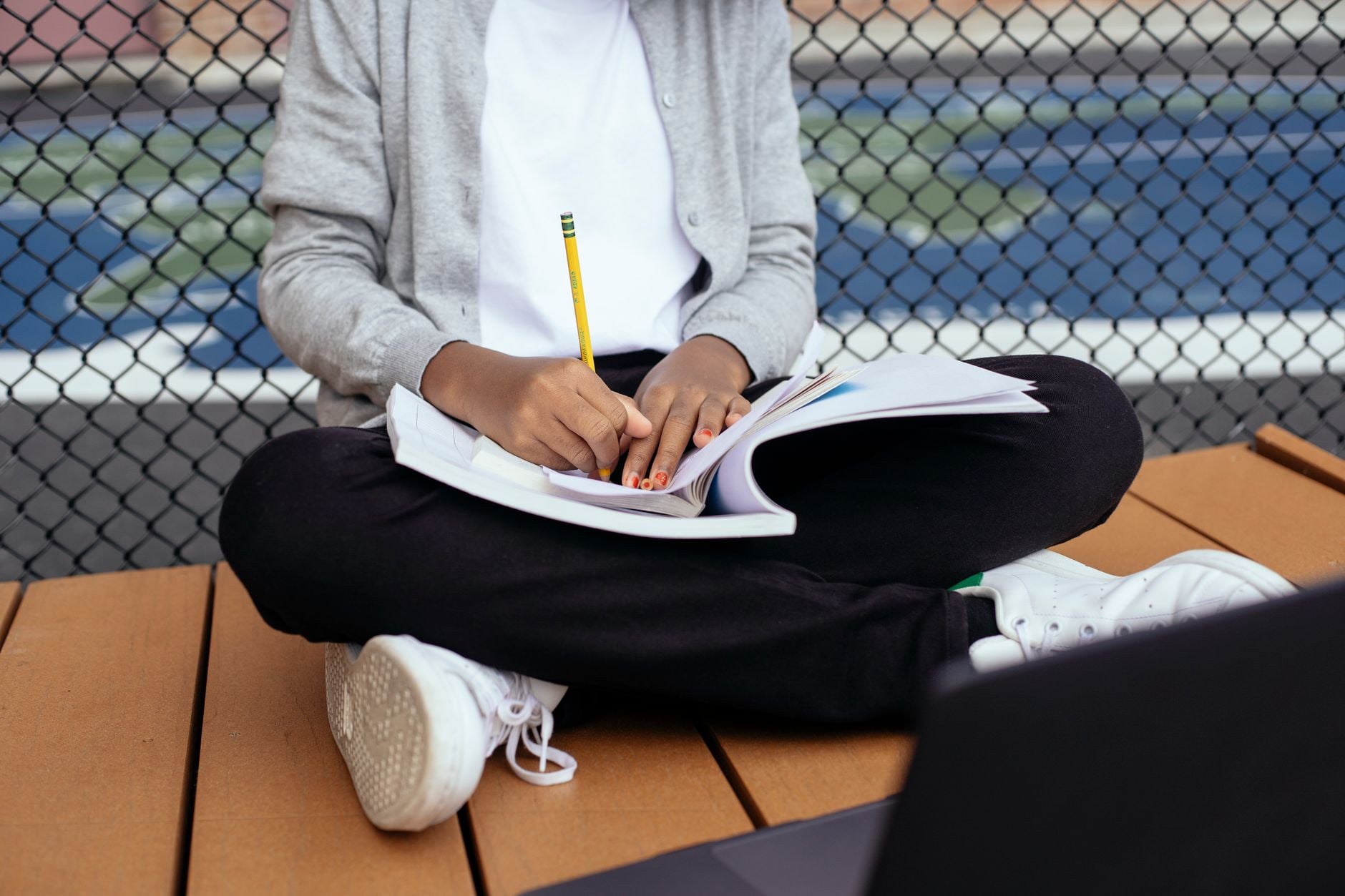
For children, handwriting is more than a school skill. It is a small, physical way of connecting symbols, sounds, ideas and memory.
When a child writes a label for a drawing, copies a recipe ingredient, makes a birthday card or writes a treasure-map clue, they are not simply producing neat letters. They are building a link between what they see, what they know, what they mean and what their hand can make.
This is why handwriting can sit so naturally inside artful family life. It does not have to look like formal handwriting practice. It can be part of play: writing names on pretend cafe menus, labelling seed trays, making signs for a block city, adding speech bubbles to a drawing, writing a list of colours to look for on a walk.
Children who resist handwriting often resist it for good reasons. It may feel slow, tiring, embarrassing or frustrating. Some children have motor difficulties, dysgraphia, vision issues, attention differences or other learning needs that make handwriting genuinely hard. For those children, typing, dictation and assistive technology can be freeing rather than second best.
The point is not to romanticise paper or turn handwriting into another pressure. The point is to notice that when handwriting is comfortable enough to be useful, it gives the brain a different kind of experience from typing.
Tiny ways to bring handwriting back
Families do not need a new handwriting curriculum at the kitchen table. In fact, the best uses are often small and ordinary.
Invite a child to add one thing to the grocery list. Let them write a label for their artwork before it goes on the wall. Keep a pad near the craft supplies for plans, notes and invented signs. Ask them to write the first letter of each item on a scavenger hunt. Let a younger child make marks beside your words, then read the list back together.
For older children, handwritten planning can be surprisingly useful. A quick paper list before homework. A messy mind map before typing an essay. A handwritten checklist before packing for camp. These do not need to be beautiful. Messy counts. Crossed-out counts. Half-cursive, half-print counts.
There is a lovely permission in that. The value of handwriting is not always in the finished page. Sometimes it is in the making of the page.
Typing still has a place
It is worth saying this clearly: typing is not the enemy of learning.
Typing lets children get ideas down quickly. It helps many writers revise. It can remove barriers for children whose handwriting cannot keep up with their thinking. It is also a real-world skill, and children deserve to learn it well.
The useful question is not whether handwriting or typing is better in every situation. It is which tool fits the job.
If the job is speed, sharing, accessibility or long-form editing, typing may be the kinder tool. If the job is remembering, noticing, sketching, planning or slowing down enough to think, handwriting may have an advantage.
That is a gentler and more realistic lesson for children than a battle between paper and screens. Tools have different strengths. Good thinkers learn when to reach for each one.
A small argument for paper
There is something quietly encouraging about the shopping-list effect. It suggests that memory is not only a thing inside the head. It is also shaped by tiny interactions with the world: the pen, the page, the movement of the hand, the place where the word appeared.
For parents, that makes handwriting less like a nostalgic rule and more like a simple invitation. Leave some paper where life happens. Let lists be visible. Let children see adults writing things down by hand. Let a note be useful even if it is not neat.
The phone list will still have its place. So will the family calendar, the shared reminder app and the emergency text message that says, “Please buy milk.”
But every now and then, there is still a good reason to pick up a pen. Not because paper is morally better, or because technology is making everyone forgetful, but because the hand gives the brain one more way to hold on.
