Here are 6 sensory play activities for babies who can sit up on their own, with notes on how to set each one up for this stage. Your baby will delight in these fun experiences.
Updated July 2025. Safety update, November 2026: We have revised the materials and set-up notes in this post. “Taste-safe” means a material isn’t harmful to taste. It does not mean it can’t cause choking.
If you are a parent or caretaker of a baby, you may be wondering how to engage them as they move past the early infant stage.
The Artful Parent
Family-life ideas and sharp reads, in your inbox.
Once your child can sit up independently, a whole exciting new world begins to emerge! And then the crawling starts…
Here are a few of my favorite sensory play ideas especially for babies.
Babies explore with their mouths, so plan on everything being tasted. Edible is not the same as choke-proof: keep pieces too big to fit in your baby’s mouth, or soft enough to squash flat between your fingers, and avoid small, round or hard items. Stay within arm’s reach for the whole activity, and if your baby has any feeding or swallowing difficulties, check with your pediatrician first. The CDC’s list of choking hazards is a useful reference.
You’re not going to want to miss the delight on their faces as eyebrows raise, smiles emerge and little legs kick with excitement.
Sensory Play for Babies
1. Water
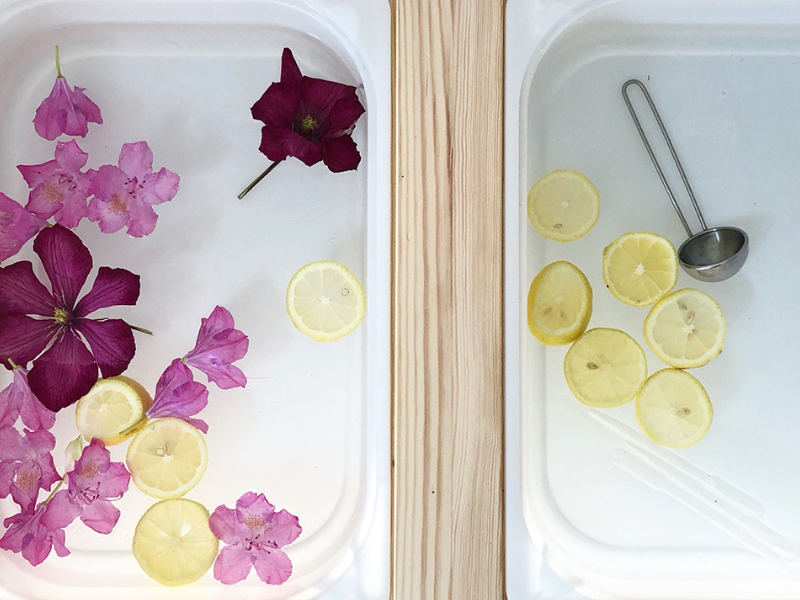
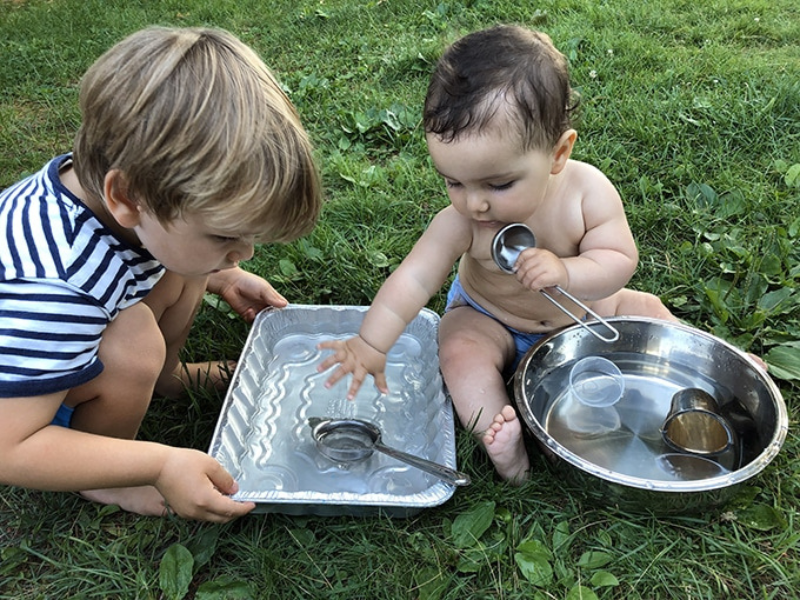
This is by far the easiest set up because water alone is enough to keep your baby engaged splish splashing.
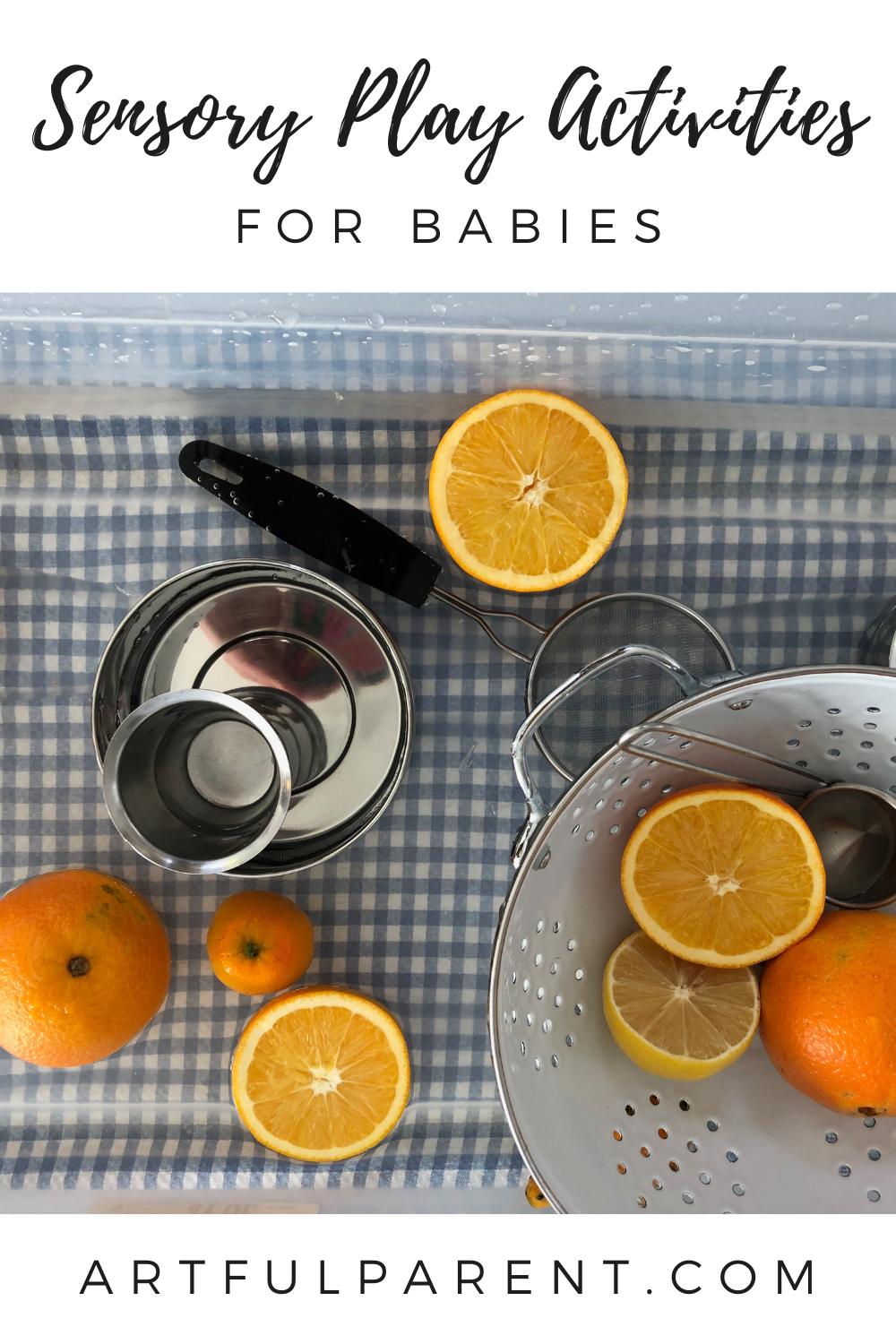
Fill a shallow container with just an inch of water. Babies can drown in very little water, so stay right beside your baby the whole time and empty the container as soon as play is over. You might add a few large flowers to float around, or a halved lemon or orange to hold and smell.
2. Ice
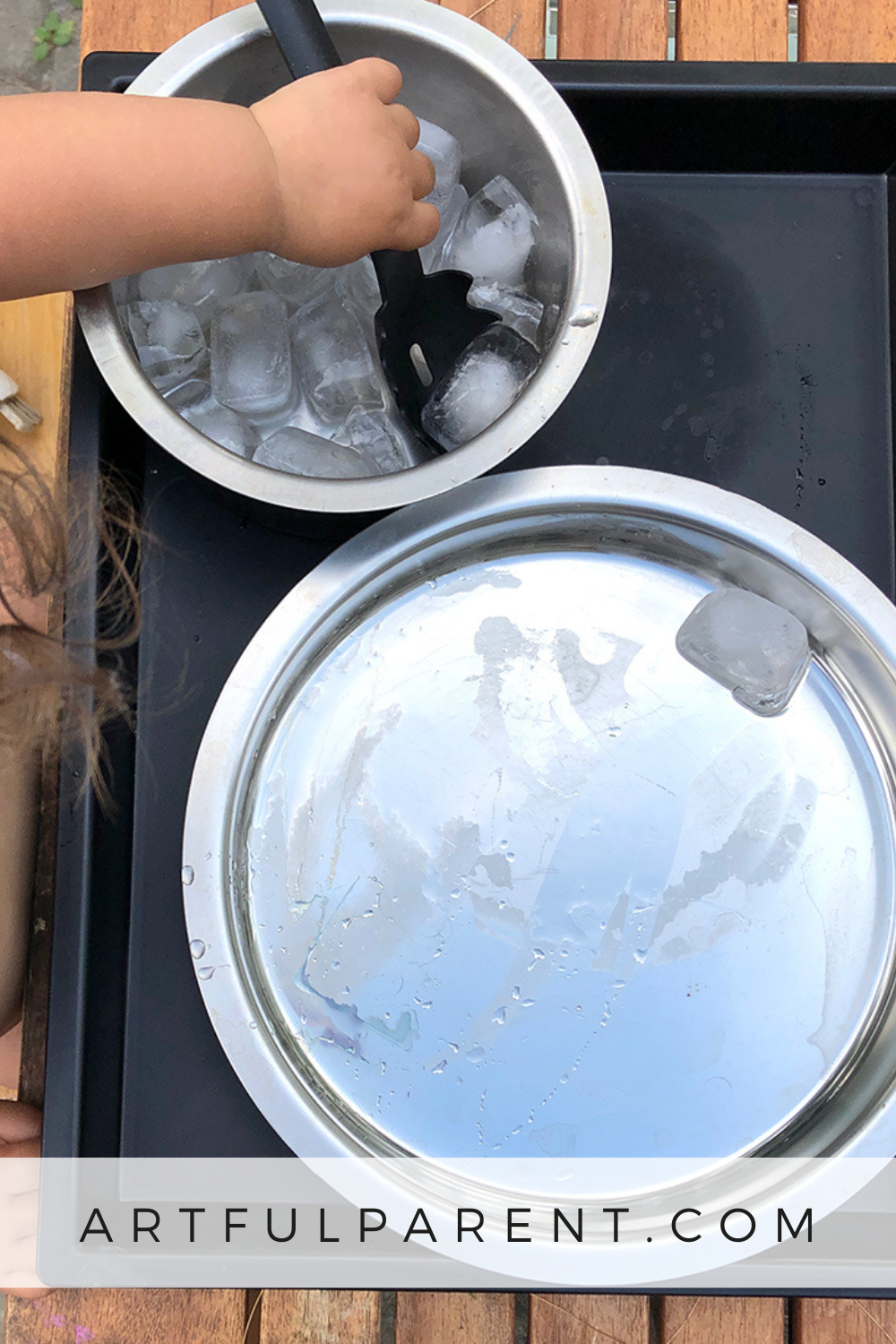
Big blocks of ice are fun for babies to try to grasp. Freeze water in a plastic tub or loaf pan so the block is far too big to fit in your baby’s mouth, then put it in a container or on a tray. Skip ice cubes and crushed ice, and take the ice away once it melts down to smaller pieces.
You can even add some food coloring to the water before you freeze it for a colorful experience.
3. Aquafaba
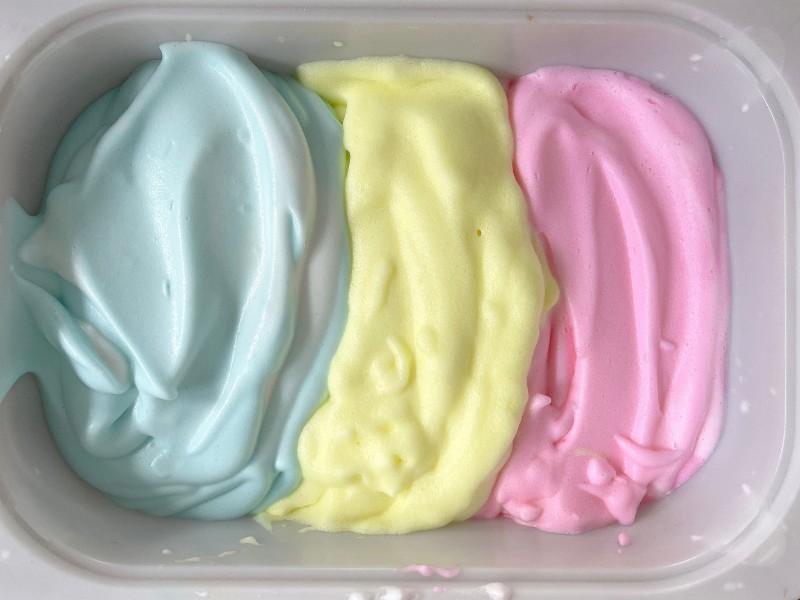
Have you ever heard of aquafaba? It’s the liquid from a can of chickpeas! Whip it with cream of tartar to add stability and you’ve got yourself a completely taste safe play material.
I heard about this material when both my children were very young and found it to be a wonderful alternative to bubble foam when they were always putting materials in their mouth.
4. Cooked spaghetti
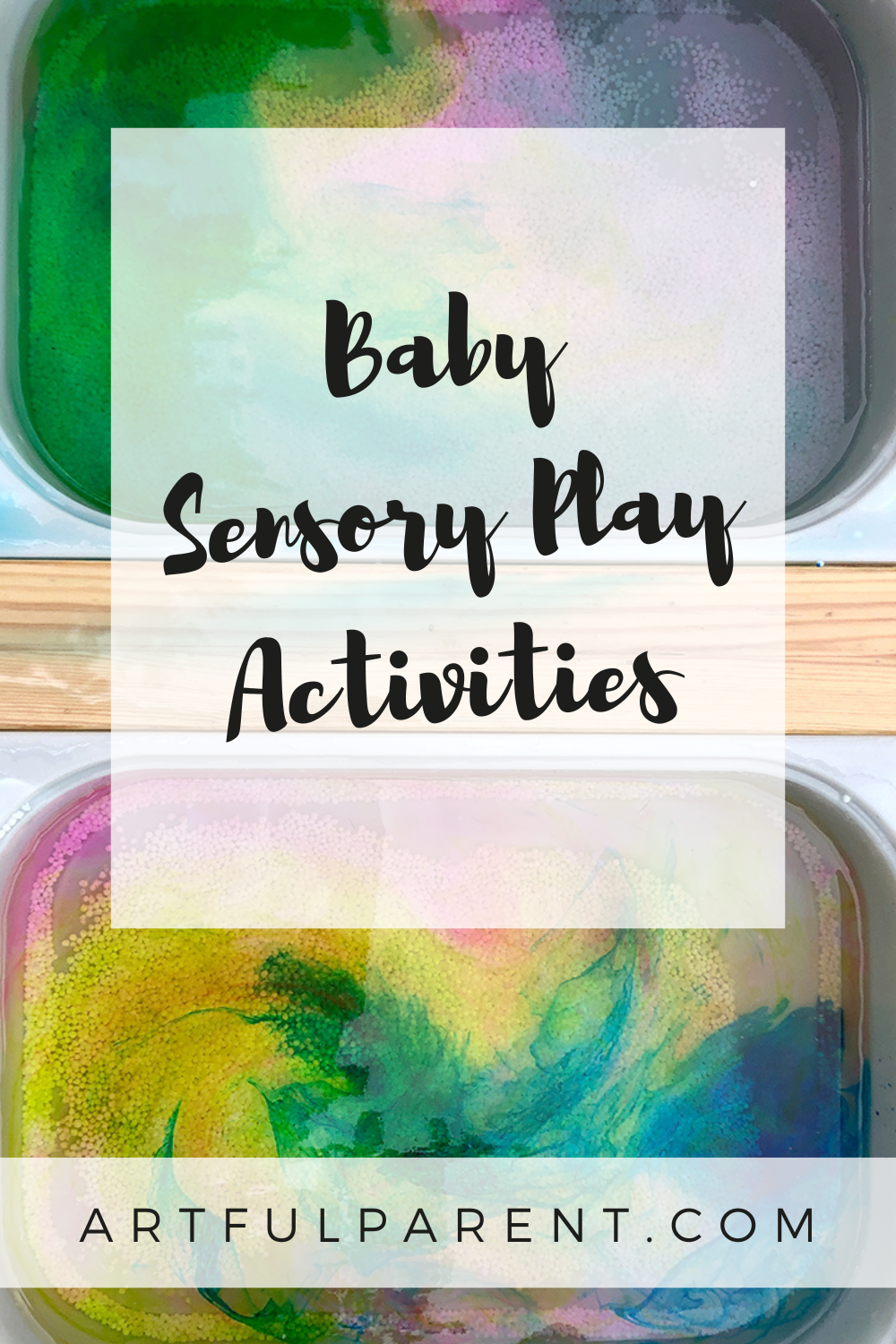
Soft, cooked spaghetti noodles are slippery, squishy and fun to pull apart. Cook them until very soft, let them cool, and toss with a little oil so they don’t clump. Drop in a little food coloring if you’d like some color.
We used to suggest tapioca pearls here as a swap for water beads, which we no longer recommend at all. Tapioca pearls are small, round and slippery, though, so we now save them for older children who are past the mouthing stage.
5. Squashed peas
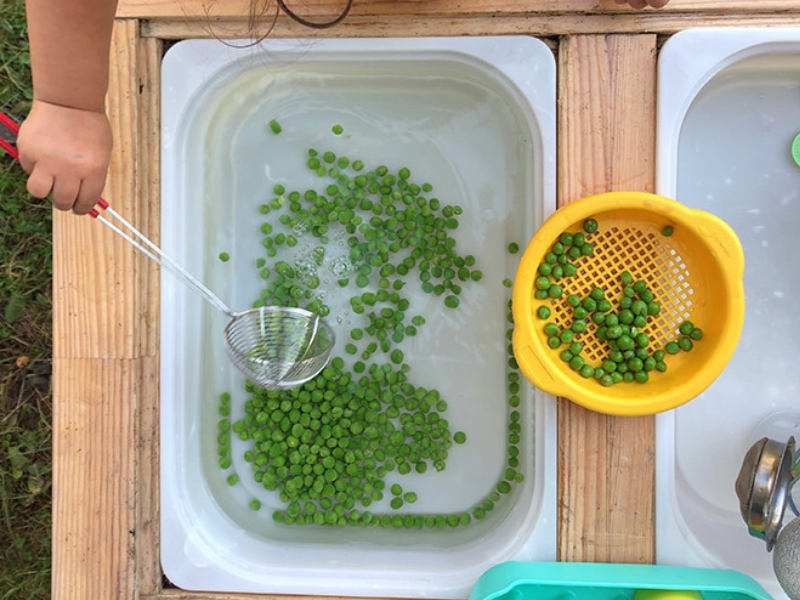
Ali from Creationspace shared the idea of using peas in water as a sensory play material. For babies, thaw frozen peas fully and squash each one flat before adding it to a shallow tray of water. Leave out corn: the CDC lists whole corn kernels as a choking hazard for young children.
It’s wonderfully easy. For older siblings who no longer mouth things, you can use whole frozen peas with strainers and vessels for pouring.
6. Cornmeal
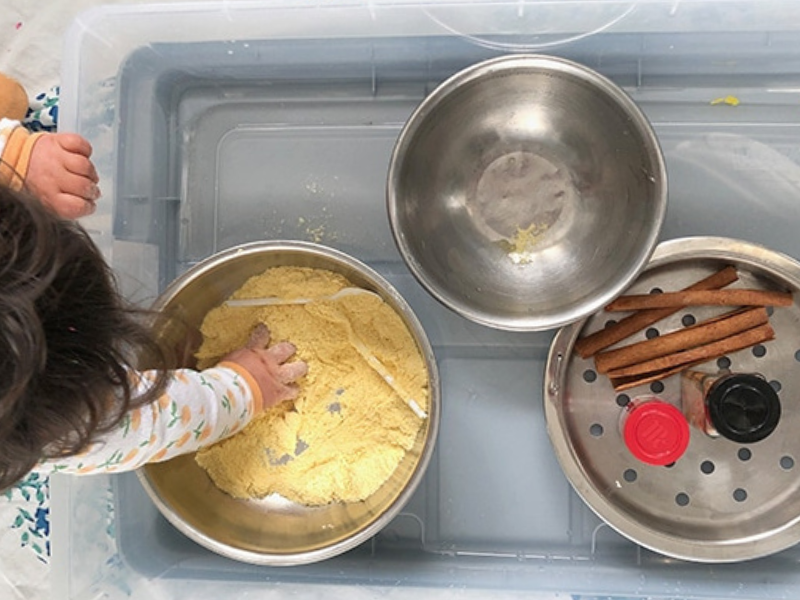
Credit for this idea also goes to Creationspace. Cornmeal is fun on its own for babies to touch; use a shallow tray so it stays away from their face. Once your child is older and past the mouthing stage, add cinnamon sticks or ground spices for a pretend bakery!
More Baby Art & Play Activities
- Sensory Play for Babies & Toddlers
- First Art Activities for Toddlers and Infants
- The BEST Baby Art Supplies
- 7 Simple Arts and Crafts Ideas for Toddlers
- 5 BEST Art Activities for Toddlers
- 5 Nature Based Play Ideas for Toddlers
Pin It For Later