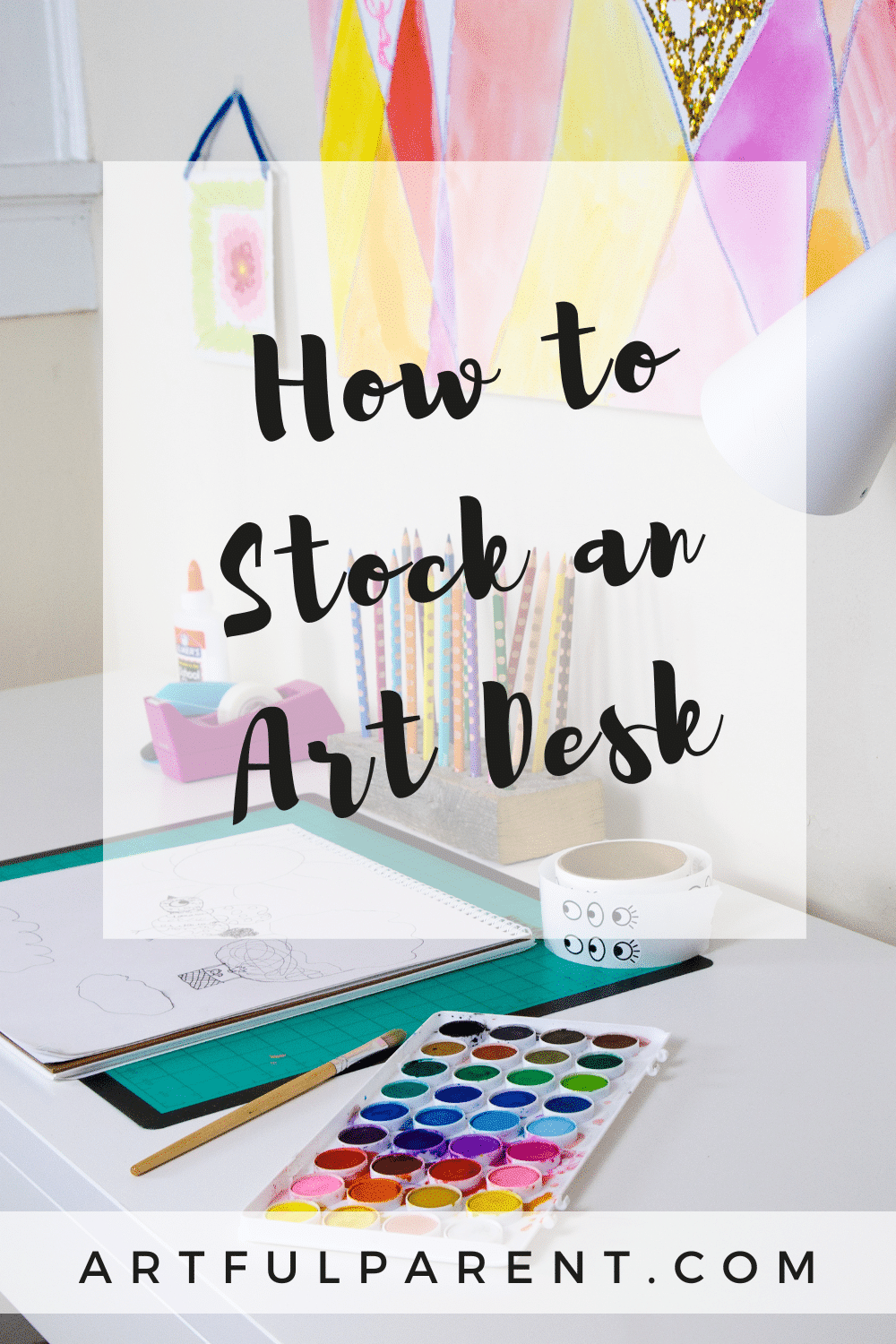
Ideas to stock a children’s art desk for creativity plus tips for setting up fun art invitations for kids regularly.
Updated July 2023
Let’s just say right off the bat that there is no one right way to set up or stock a children’s art desk or space.
The space itself will depend on all kinds of variables about you, your home, your children, and your current family dynamics.
And so will the materials you use to stock it.
Our own art spaces have changed dramatically over the years. We have made adjustments as the kids grew, our spaces changed, we moved houses, our interests changed, and throughout it all, we have tried new ideas and materials.
That said, we have some ideas to help you get started, to help you re-imagine your current kids’ art space, or to help you think of new ways to use the current art desk or table (with simple art invitations or kids’ craft kits).
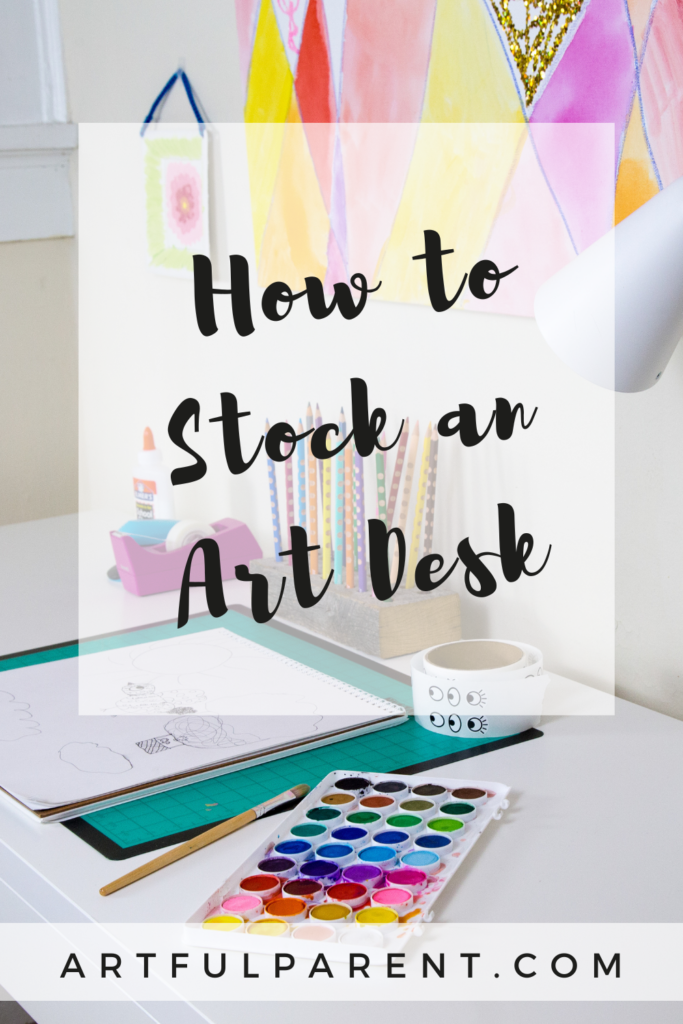
Stocking a Children’s Art Desk
Note: For those of you who will ask, the kids’ current desk is the MICKE computer desk from IKEA (which you can buy via Amazon if you don’t have an IKEA near you). Kids can use it for both homework and art, and each have a drawer for their own supplies.
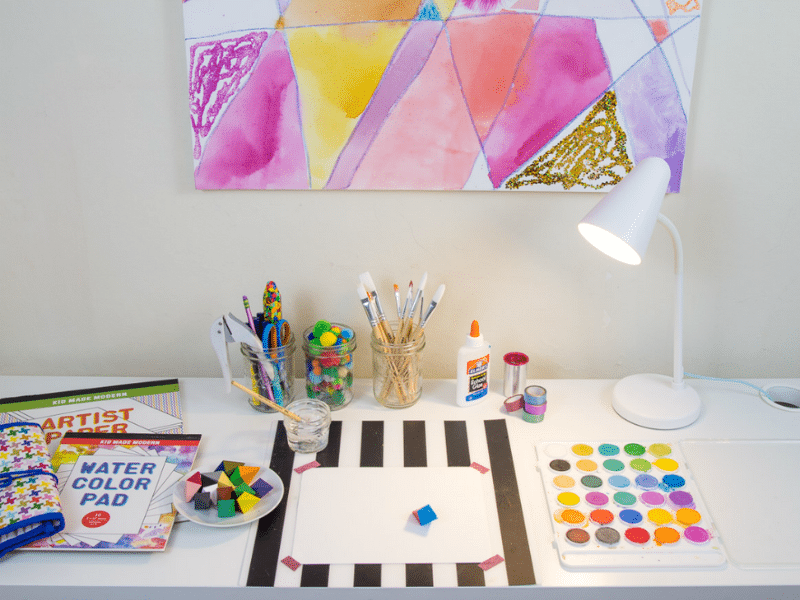
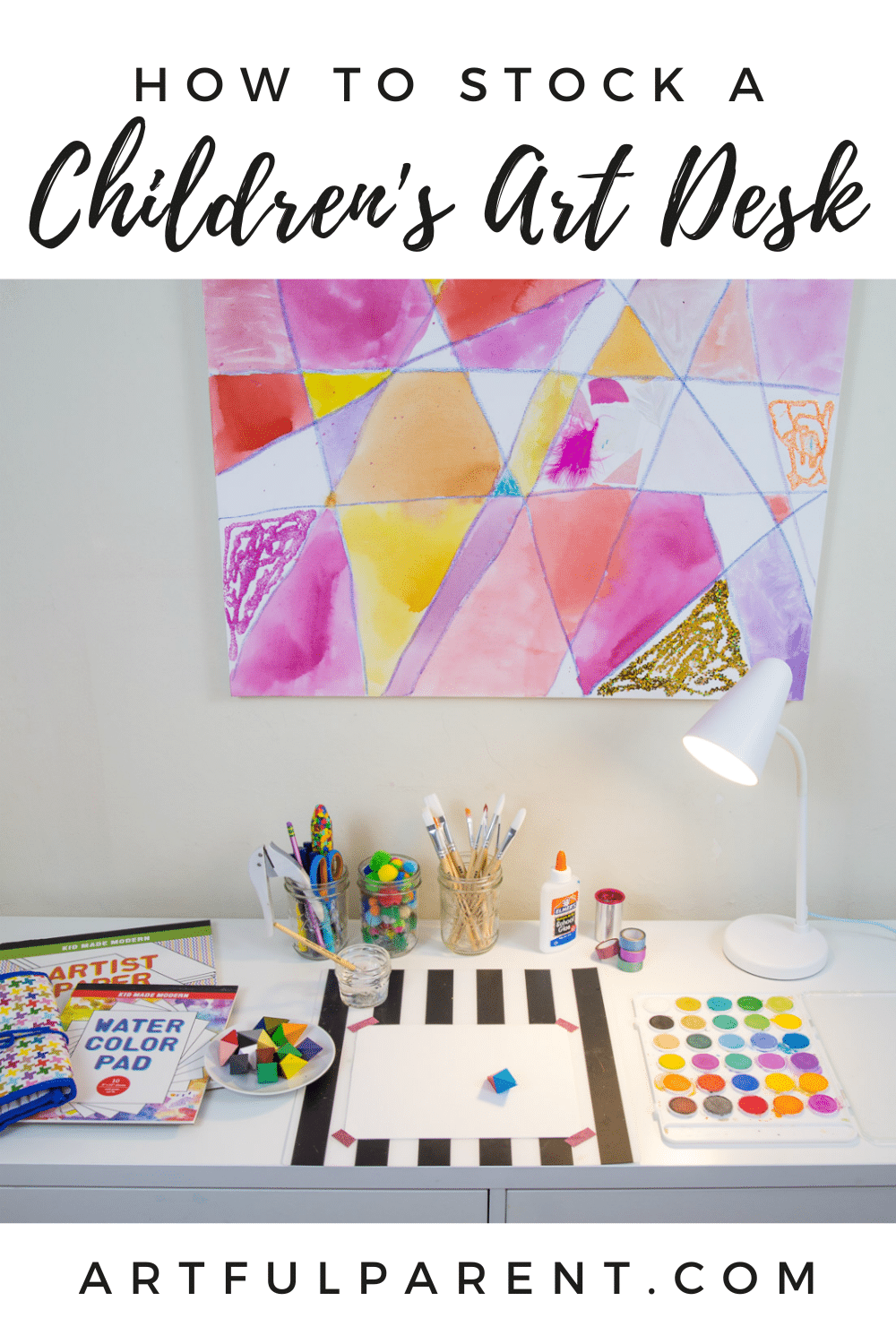
For everyday creativity and art accessibility, we suggest stocking the kids’ art desk with a few basic, open-ended art materials that can be used in a variety of ways over time. Our recommendations include:
- Some white art paper
- Drawing tools such as crayons (regular or extra fun), markers or colored pencils, pen and pencil
- A set of watercolor paints, along with watercolor paper, paint brushes, and a cup of water
- Other basic arts and crafts tools such as an art mat, scissors, glue, tape, hole punch, and pencil sharpener
- A task light and chair or stool
Simple Art Invitations to Encourage Creativity
When you want to change things up or encourage your kids to try a new art material or technique, we suggest setting up a simple art invitation. Here are three ideas using simple supplies.
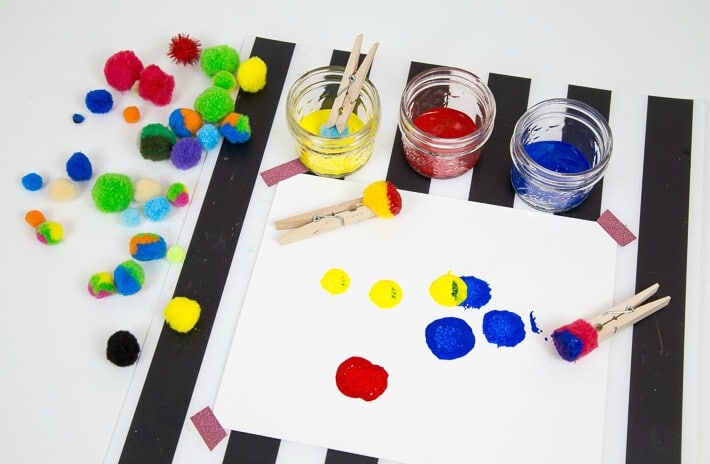
1. Pom-Pom Painting and Printing: Set out two or three small dishes of paint and some paper along with DIY pom-pom paint brushes (simply attach a clothespin to a pom-pom).
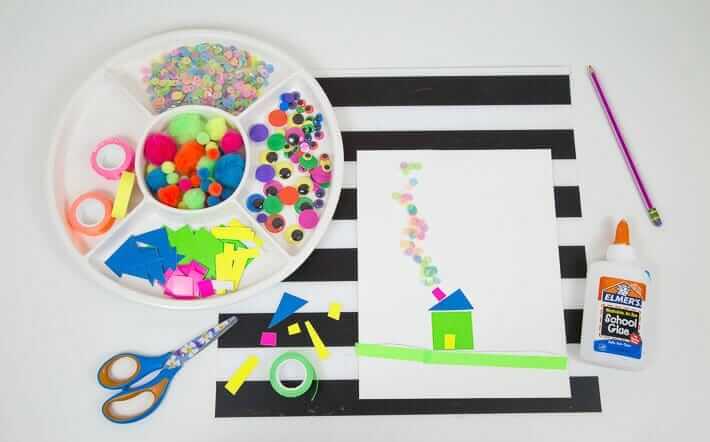
2. Mixed-Media Collage: Set out paper, glue, and scissors with assorted collage items such as colored card stock, sequins, and colored tape
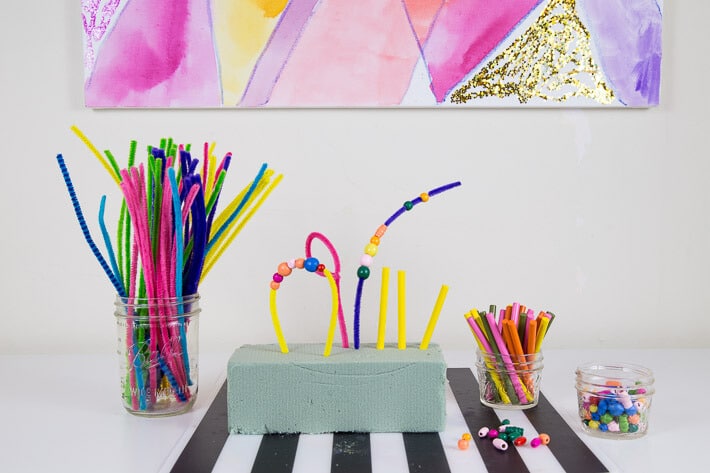
3. Sculpture Fun: Set out a foam base along with a cup of pipe cleaners, chunky beads, and wooden skewers or craft sticks.
These supplies are just a few of many from the big Arts and Crafts Supply Library. You can use floral foam, as shown here, or packing styrofoam for the base of the sculpture.
I hope you found ideas here that you can use to create or update your children’s art desk! Or new ways to use it.
More Resources for Kids’ Art Spaces
- 6 Ideas for a Home Art Space for Children
- How to Set Up A Kids Art Cart
- How to Create a Kids Art Space That Will Actually Get Used
- Why Having An Art Space Isn’t Just About Art
- 6 Tips and Ideas for an Art Room
- How to Set Up a Kids’ Art Caddy
Pin It for Later
Again, thank you to Kid Made Modern for sponsoring this post. All opinions expressed are my own.