Creating an art room in your home can be about so much more than just art. See how you can incorporate exploration and experimentation in your kids’ art room! Guest post by Megan Schiller of The Art Pantry
Updated February 2025
When you think about having a kids’ art room in your home, what comes to mind?
Whenever I talk about my kids doing art in our home, most people think I’m talking about painting, drawing, or crafting.
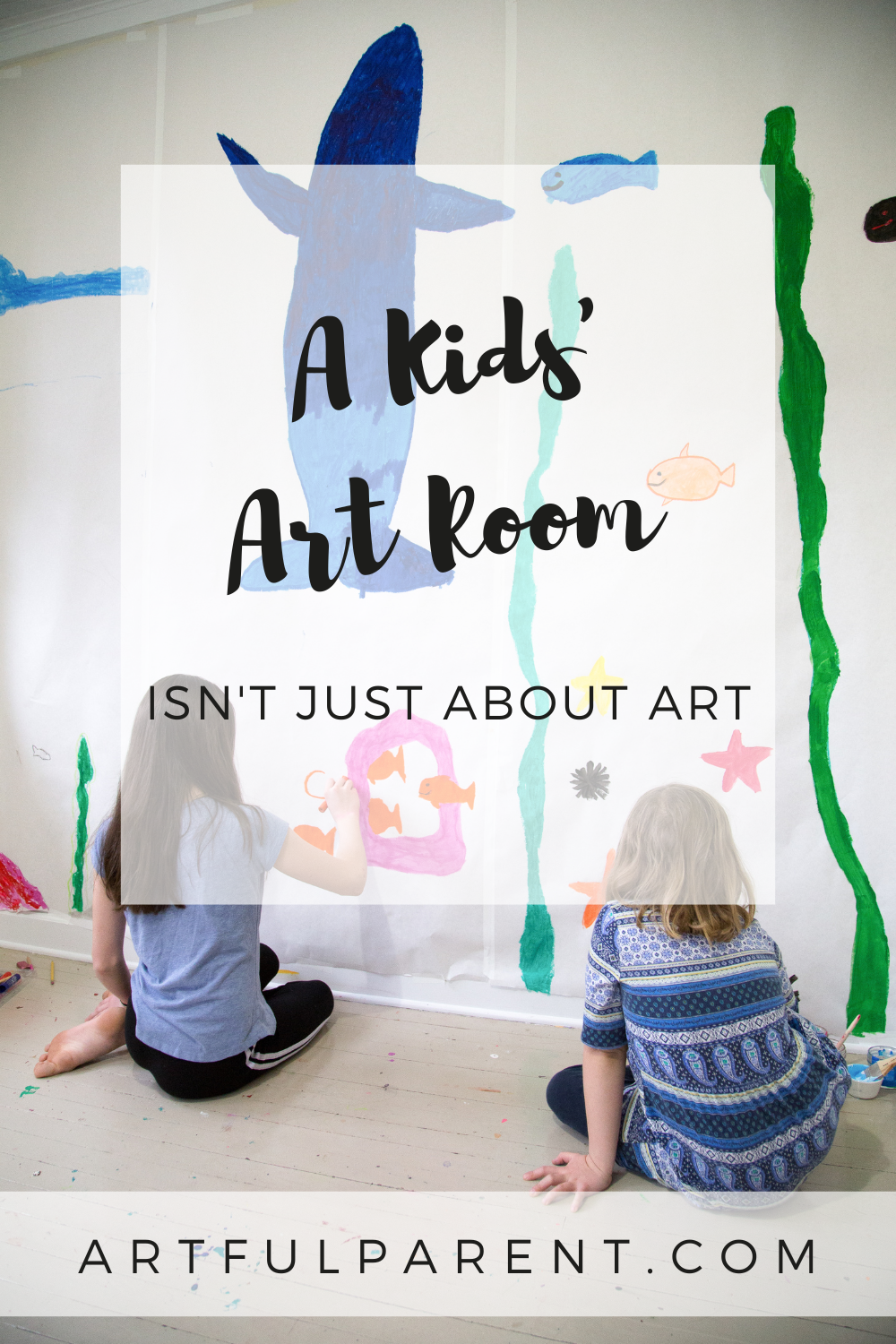
We’ve had a dedicated space for creating in our home for almost 9 years, ever since my oldest daughter was 18 months old. My girls do a lot of painting, drawing, and crafting, of course, but I’ve learned over the years that an art space isn’t just about art.
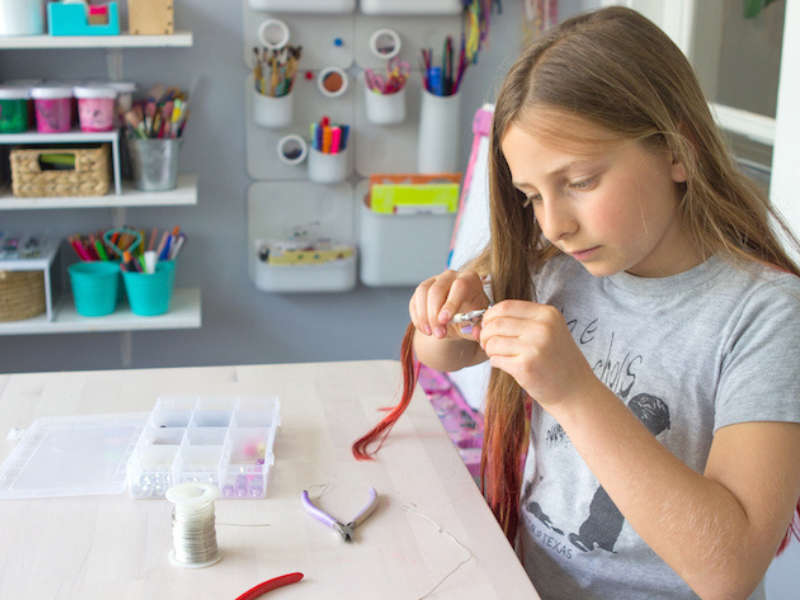
An art space is really more like a workshop or a science lab. It’s a place where kids explore materials, investigate ideas, experiment with ingredients, learn new skills, build things, and make astonishing discoveries!
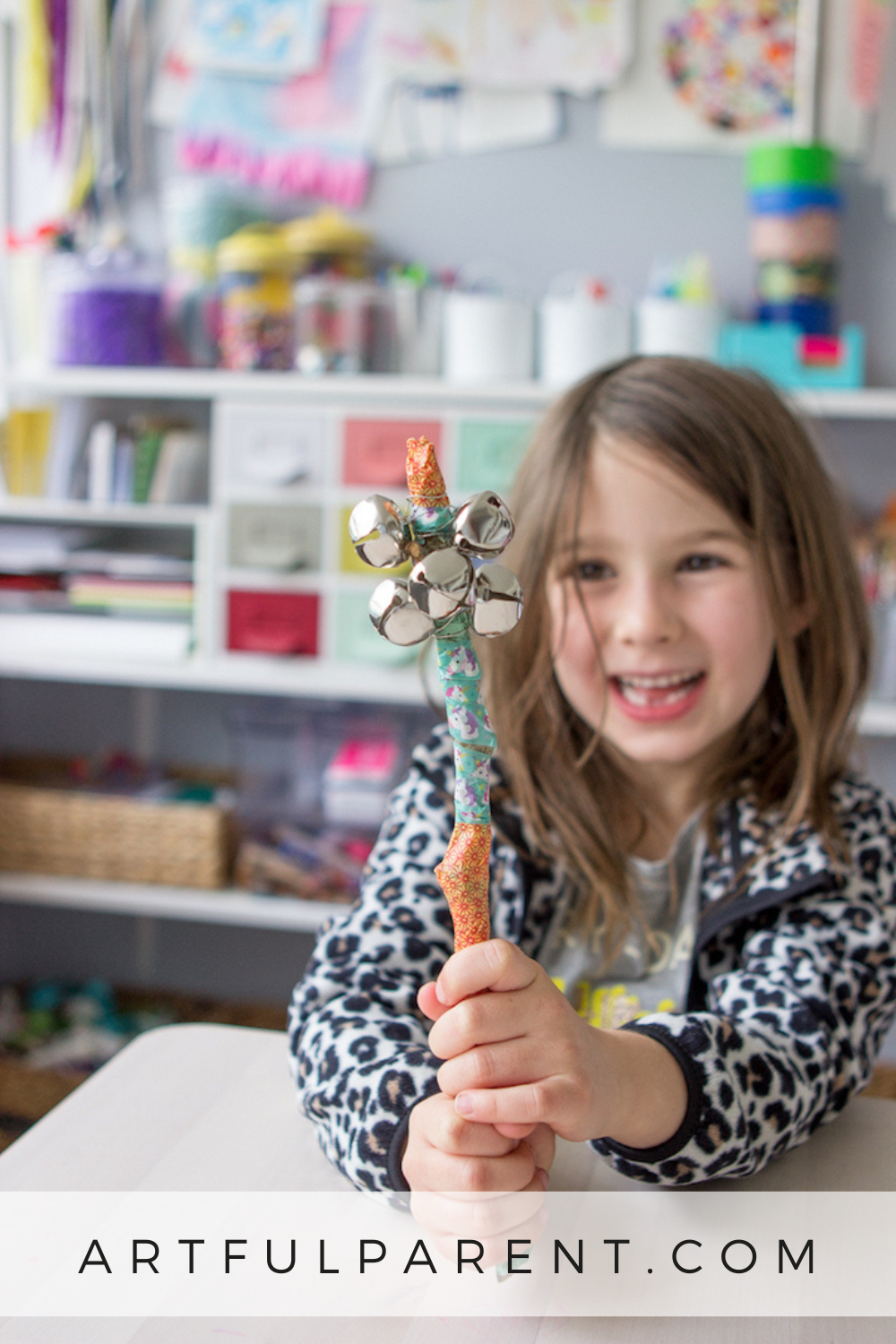
Over the years, my kids have used our art space to write stories and songs, they’ve built their own toys, they’ve made family card games, they’ve made musical instruments… I could go on and on.
What I love most is that my kids have become resourceful, expressive, and confident creators in this art space.
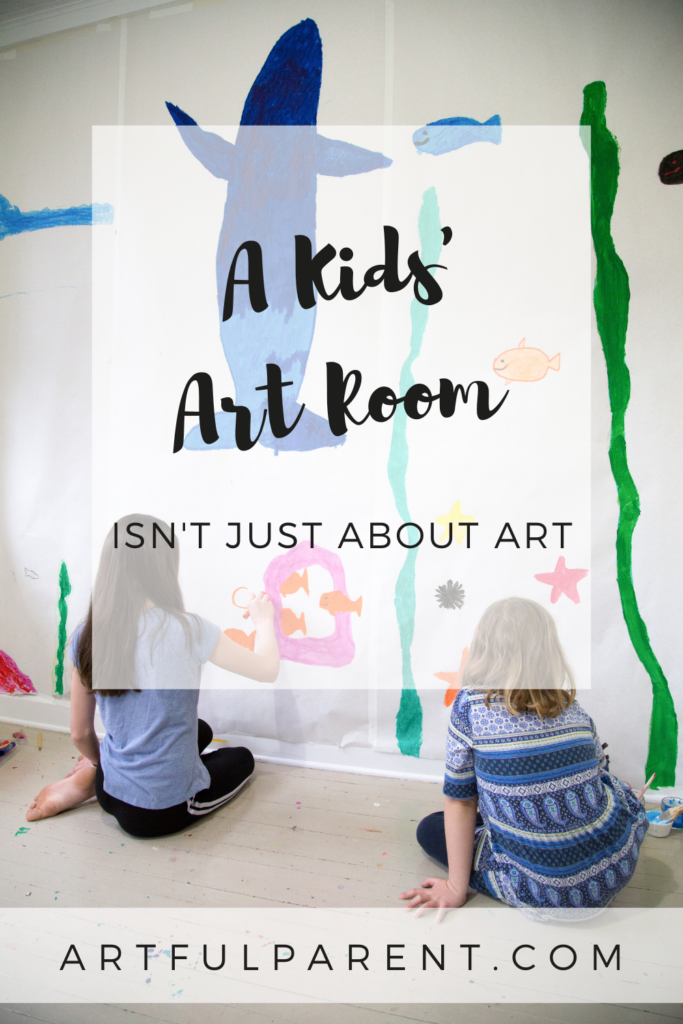
If you want to expand your kids’ creative exploration here are 4 tips to get started.
How To Go Beyond Art in Your Kids’ Art Room
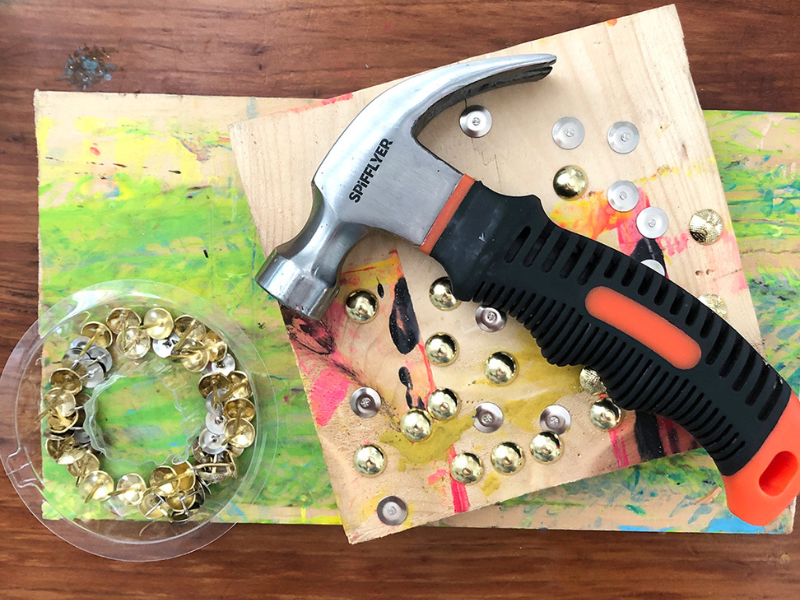
1. Offer A New Art Prompt
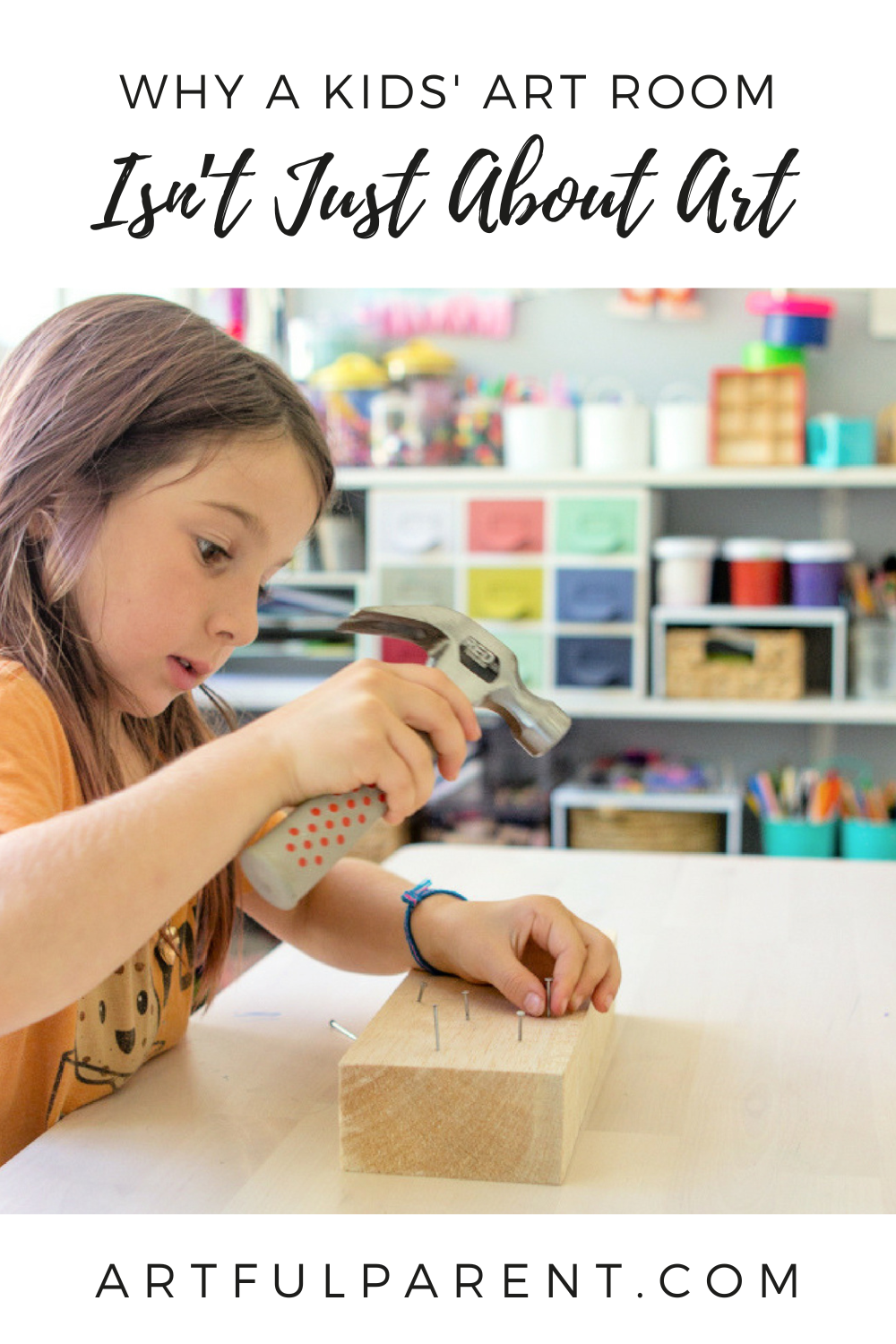
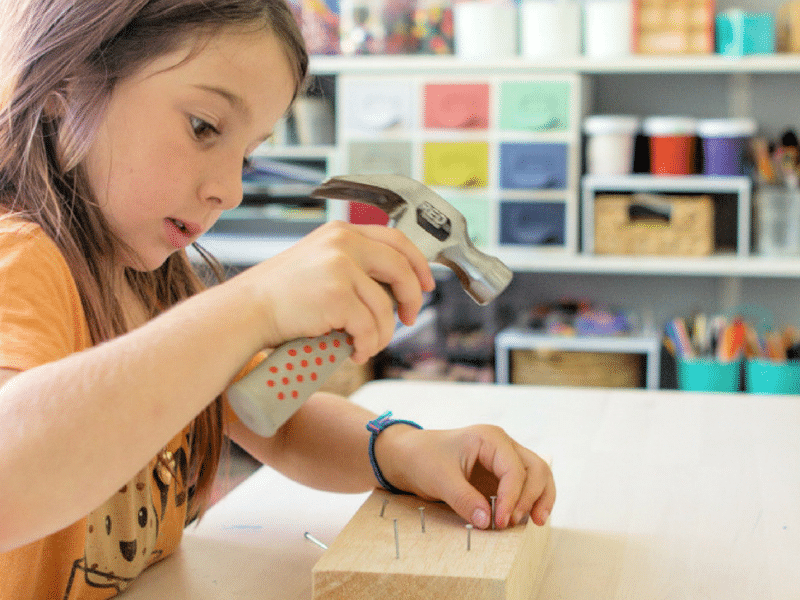
Set up an art prompt with some new tools and materials that aren’t typical art supplies, like a child-sized hammer, wood, and nails. Show your kids how to use them and supervise until they get the hang of it.
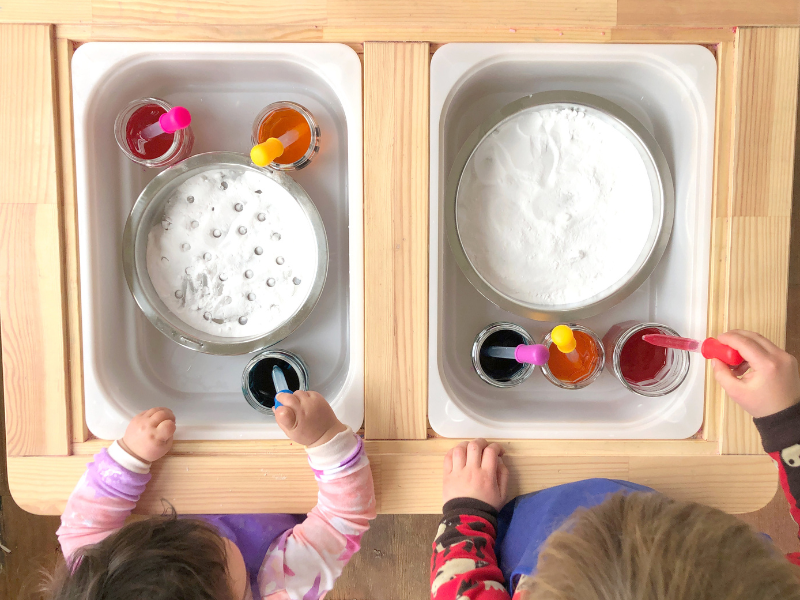
2. Set Up A Mini Science Lab
Set out a tray of ingredients for science experiments like baking soda, vinegar, and liquid watercolors (or food coloring). Kids love to mix and pour so make sure to include a few jars or beakers for multiple experiments.
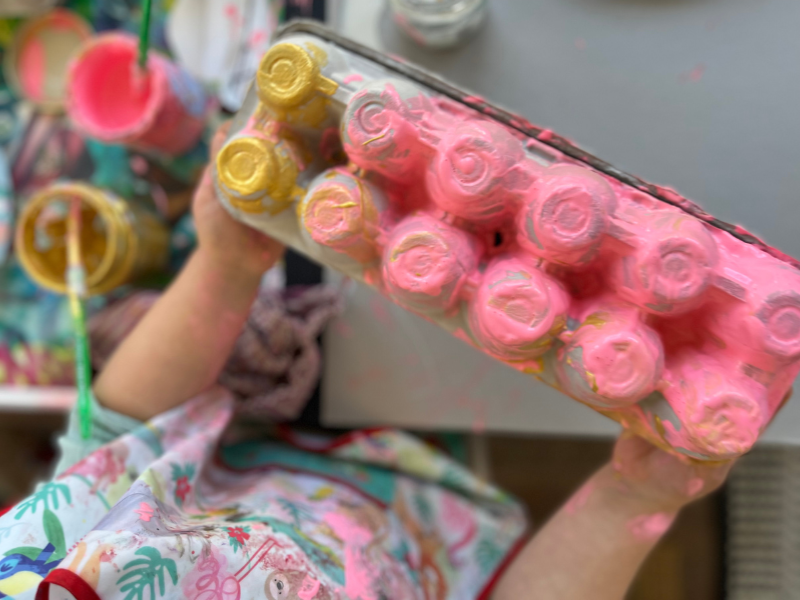
3. Upcycle Broken Toys & Recyclables
Save your recyclables or broken toy bits and keep them in a bin near your art supplies. A low temperature hot glue gun works wonders with these “junk” items. This has been our number one resource for making toy accessories in our home!
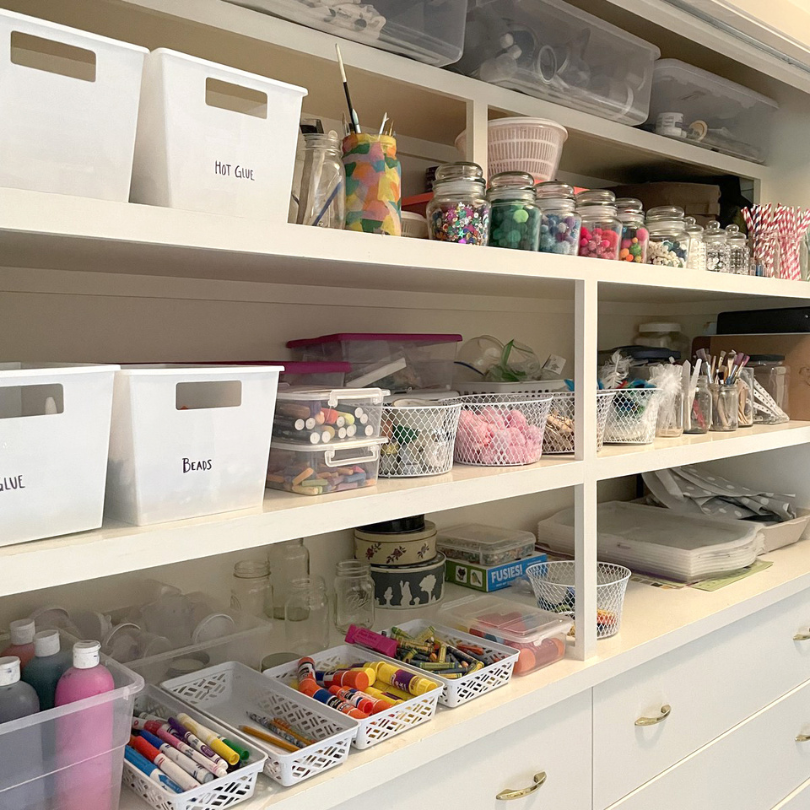
4. Try New & Exciting Combinations
Keep writing materials, art supplies, basic tools, and science materials all in one place so your kids can easily mix things up and try new combinations of materials.
Need help setting up your kids art room?
I’m dedicated to helping more kids have access to creative tools and materials. So if you want help setting up an creative space in your home, I’m here for you!
- My online course, Art Pantry Design Camp, will guide you through the process of setting up an organized and inviting space for your kids (no matter your budget or the size of your space!).
Design Camp is a 5 week course with step-by-step instructions, clickable product lists, videos, group accountability, inspiration, and support. I guide you through the process and answer every question that comes up for you!
And if Design Camp isn’t for you, I have plenty of free resources and inspiration on The Art Pantry site to help you set up an art space and encourage creative exploration.
More Kids’ Art Room Tips and Ideas
- 6 Tips and Ideas for a Kids’ Art Room
- 6 Craft Room Ideas for Kids
- Create a Kids Craft Room that Gets Used!
- Set Up an Art Room for Kids That Builds Creative Confidence
- 21 Kids Artwork Display Ideas for Your Home
- How to Organize Art Supplies for Kids
Pin It For Later